Numbers look clean. Reality often isn’t.
With the end of the FY at hand, most of the SMEs in Gujarat are celebrating the increases in revenues and stable margins. However, balance sheets tend to conceal silent risks. Promoters are concerned about the increase of turnover and ignore structural flaws.
SMEs in Ahmedabad, Rajkot, Surat, and Vadodara are the supply chain drivers of textile, chemical, engineering and exports. Compromising billing cycles generate confidence. Blind spots can be generated by accounting comfort.
And, before this financial year ends, these are seven wayward weaknesses Gujarat SMEs need to face.
Inflated Receivables Disguised as Growth
Increasing revenue does not necessarily imply increasing cash. Numerous SMEs demonstrate good top-line results and receivables remain longer than 90 or 120 days.
Late payments cause a strain on working capital. Companies then rely on overdrafts or unsecured loans to clear the shortfall. Margins quietly are consumed by interest costs. This is a common problem with export-based units within the textile clusters in Surat. Big clients make a bargain with longer cycles. SMEs will take terms to keep the business.
Growth requires punitive collection periods. Follow-up monthly on debtor aging. Associate sales incentives with collections, not billing.
Cashless revenue generates spurious power.

Inventory Piling Up as “Asset Strength”
Inventory is a type of an asset on paper. In fact, slow inventory will slow down cash flows. The SMEs that are engineering and chemical accumulate raw materials beforehand in case prices increase. Sluggish inventory is associated with falling demand.
High efficiency is reflected in high inventory turnover. Low turnover signals risk. Excess inventory to a large extent increases the cost of storage, insurance and obsolescence. It also enlarges balance sheets artificially. Checking physical prior to ending the FY. Write off dead stock. Re-consider the procurement strategy.
Good companies are not vanity-based but liquidity-oriented companies.

Hidden Short-Term Debt Pressure
Total debt is moderately experienced in many SMEs. However, the debt composition is the true tale. Borrowings that are short term in the assets that are long term are not matched. Promoters finance equipment using working capital.
This comparison raises pressure on refinancing. When there is economic uncertainty, banks place constraints. Cash crunch follows. There should be discipline of finance. Long-term assets should be used with term loans. Set aside operational cycles of working capital.
Good debt balance enhances credit rating and bargaining strength.

Underestimated Contingent Liabilities
Contingent liabilities are not much considered. They hide in footnotes.
GST disputes, statutory arrears or legal claims which are pending can become financial shocks. Inter-state trading SMEs that deal with inter-state trade usually encounter complexities in compliance. Exposure is aggravated by ignoring notices. Clearly provisioning is a sign of maturity. Conservative accounting safeguards image.
Check tax reconciliations and then make final statements. Resolve disputes early. Realize there is no surprise to hurt investor confidence. Good governance establishes long term valuation.
Profitability Without Cash Flow Clarity
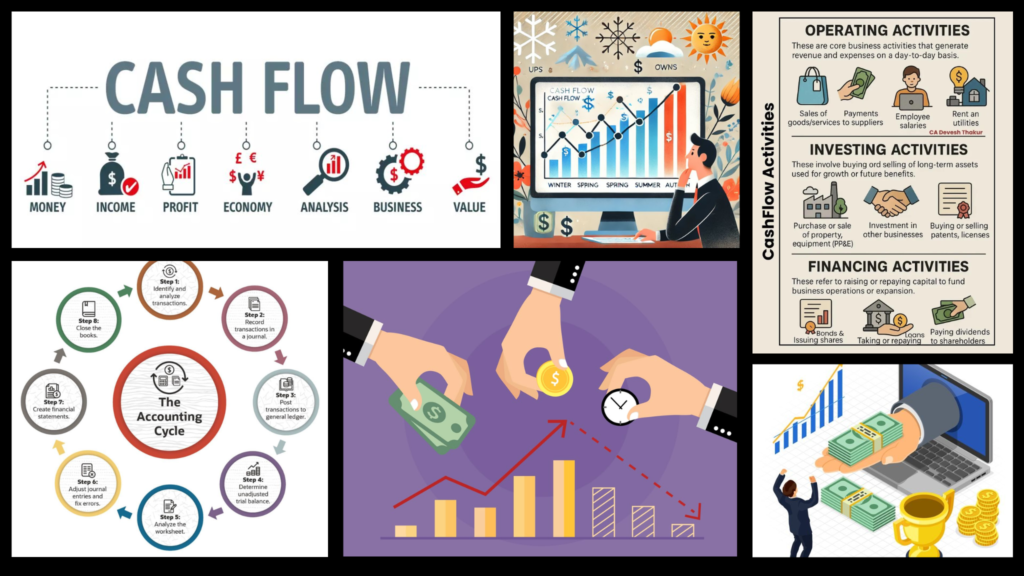
The amount of net profits impresses the stakeholders. The facts are shown in the statements of cash flow. Few Gujarat SMEs have operating cash flow values of negative but healthy profit margins.
Depreciation benefits are high which decreases taxable income. However, actual liquidity is based on the cycle of receivables and payables. When suppliers have a higher rate of payment than customers, cash becomes tight. Tracking operating cash flow. Event procurement and collection schedule.
Liquidity constrained profit reduces growth expansion and capex planning.
Overdependence on Few Large Clients
Concentration of revenue brings about latent weakness.
Most SMEs provide half or even more of the revenue to two or three customers. A single loss of a contract will disrupt operations. This risk is common with textile exporters, suppliers of auto-components, and pharma intermediaries.
Diversification lowers the amount of shock exposure. Increase local and global customer base. The number of orders on a book is not dependent but rather a sign of breadth. Diverse client base enhances valuation in the funding negotiations.
Promoter Withdrawals and Informal Transaction
Unstructured withdrawals of promoters compromise the integrity of the balance sheet. Unplanned drawings interfere with liquidity. The informal related-party transactions distort the actual performance.
Investors and lenders are becoming more and more demanding. Financial reporting is made cleaner to enhance credibility. Individual and corporate cash flows. Making the dealings with the related parties clear. Professional governance increases scalability on long-term scale.
Why These Weaknesses Matter in Gujarat’s SME Landscape
The state of Gujarat is one of the leading exporters of MSMEs in India and the country of production. The entrepreneurial culture in the state is aggressive towards growth.
Unless financial discipline is practiced, aggressive growth, however, causes fragility. During FY closing season, promoters target on optimization of tax. Structural balance sheet risks are rarely analyzed.
Good accounting practices distinguish scalable businesses and those ones that are struggling. Banks, non-bank financial institutions as well as personal investors consider stability of the cash rather than the size of revenue. Clean books have a higher appeal to capital.
The Strategic Advantage of Financial Transparency
Balance sheets must not cause confusion but rather explain the message. By having clear receivables cycles, working capital ratings are enhanced. Logical inventory enhances the return ratios. The structured debt reduces the financial risk.
Disciplined accounting is imperative when SMEs plan to go to the IPO, PE, or succession planning. Promoters have to change attitude towards compliance to strategy. Competitive edge is made by financial intelligence.

Final Word: Audit Your Illusions Before They Cost You
The process of FY close provides an elusive opportunity to look back. It is not to be taken as paperwork ritual. Treat it as strategic reset. Hard questions to ask: cash flow, liabilities, concentration risk and governance. The numbers of today are clean to make crisis tomorrow. The illusion of balance sheets is erased. Good companies welcome such examination without shyness.
Build Numbers the Market Trusts
With Gujpreneur, you can access sharp insights of the SME, actual Gujarat case studies as well as expert-endorsed financial strategies that are more than superficial growth. Always be updated, always be ready and create a balance sheet investors will be confident with. Think smarter. Scale stronger. Lead with Gujpreneur.