Over the last ten years, there have been drastic changes in the café culture in Ahmedabad as compared to the changes seen in the last ten years before that. Ten years ago, a café visit was very simple and just involved entering the café, placing an order for a coffee and a sandwich, and then watching a movie or hanging out with a couple of friends and then leaving. There was no expectation for anything beyond that and people were more than happy to make it a very simple experience. The interiors were plain. The menu was predictable. That was the deal. However, all of that changed with the introduction of various themed cafés and restaurants in the late 2010s. The first generation of new themed cafés started to shift the mindset of café visitors away from the idea that cafés were just places to get food. Instead, the new visitors to these themed cafés started to view them as immersive worlds. Café owners began to design and arrange their cafés in ways similar to movie and event production set designers and owners as opposed to food production restaurant owners and designers. People weren’t coming just to eat anymore. They were coming for the experience. And they were posting about it.
How the Concept Café Idea First Took Root
One of the earliest examples that pushed beyond “just a café” is Seva Café. But Seva didn’t go the visual route – it went in a completely different direction. The concept there is simple but unusual: you get a bill with zero amount on it. You’re free to pay forward for whoever walks in after you. The café runs through volunteers and goodwill, not standard restaurant economics. That idea travelled far. It drew attention across India and quietly inspired similar models in other countries. This new perspective helped more visitors understand that the café experience was much more than the food on its menu.
Instagram Changed What Owners Were Building
Once social media became part of how people chose where to eat, café owners started designing with the phone camera in mind. A wall with good lighting, a neon sign, a corner that looks like something out of a Pinterest board – these things started driving footfall in ways a new menu item never could. Crazy Plant Lady Café is probably the best local example of this done well. The space is essentially a plant boutique that also serves food and coffee. Every corner is green. Natural light comes through well. The founders describe it as a “plant boutique café” – a space that combines healthy eating, good coffee, and a plant store under one roof.
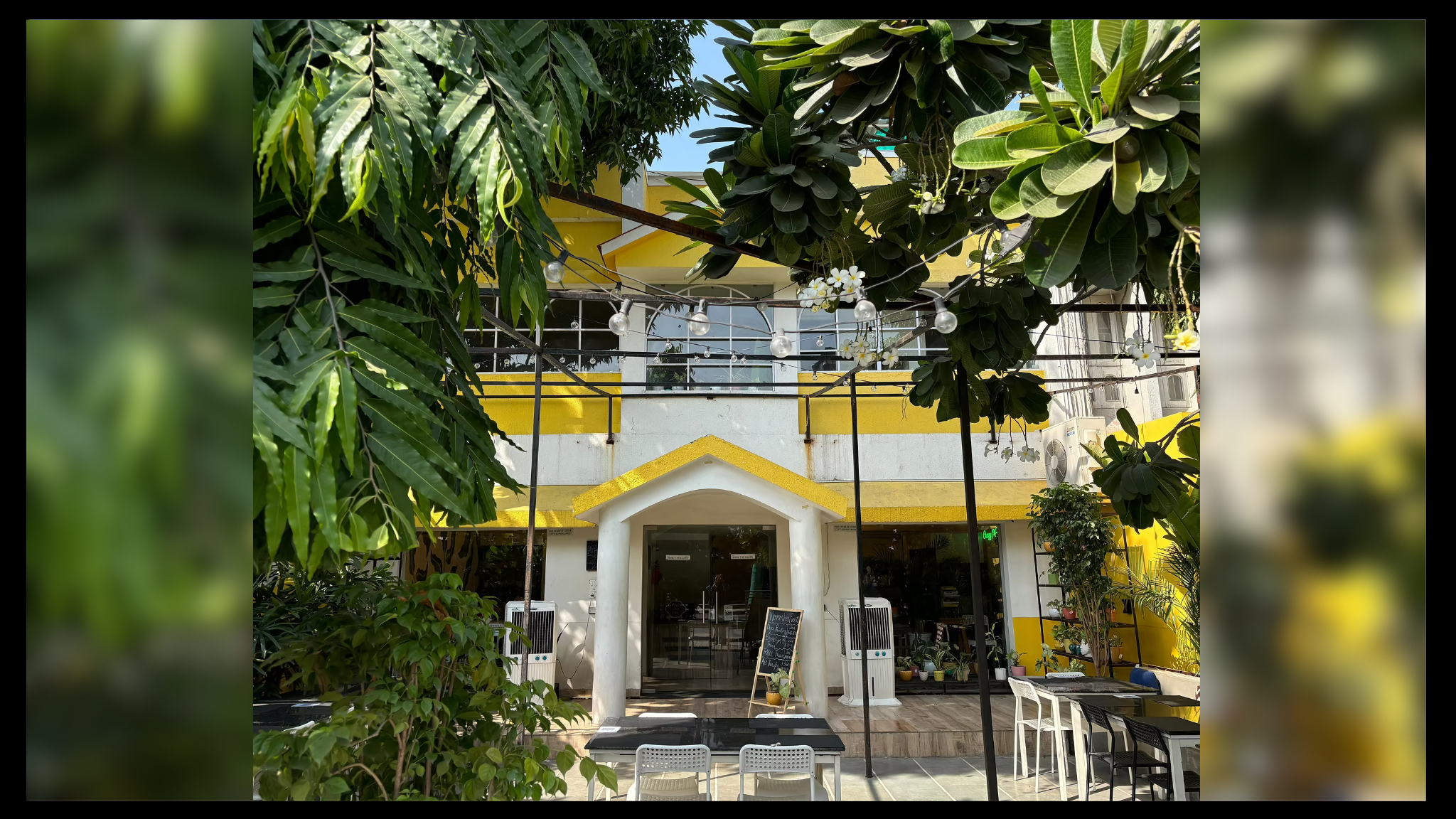 Image Source: https://www.crazyplantladycafe.com/ The idea works because the space itself becomes part of what you’re paying for. People spend time browsing the plants, clicking photos, attending small events the café organises. It’s not just a meal – it’s time spent inside a concept. Beanzy Café, near the Sindhubhavan and Mumatpura area, took a different angle – late-night hangout, colourful interiors, trending menu items. The kind of place young Ahmedabad heads to after 9 pm when most other spots are winding down.
When Pop Culture Came to the Table
Another phase in Ahmedabad’s café evolution came when owners started experimenting with pop-culture themes. Cafe Hogwarts went after Harry Potter fans directly. The interiors carry references to the book and film series throughout, and for someone who grew up reading those books or watching those films, walking in feels like stepping into something familiar in a new way. Listings on restaurant directories confirm that the café operated in Ahmedabad and was popular among visitors at the time. However, the café eventually shut down and is now listed as permanently closed on restaurant platforms. The Space6 Café is a Friends-themed café designed around Central Perk, the fictional coffee shop from the sitcom. For people who binge-watched the show growing up, that kind of nostalgia hits differently than a regular café ambience. These places didn’t need a huge marketing budget. The theme itself did the work of pulling in their audience.
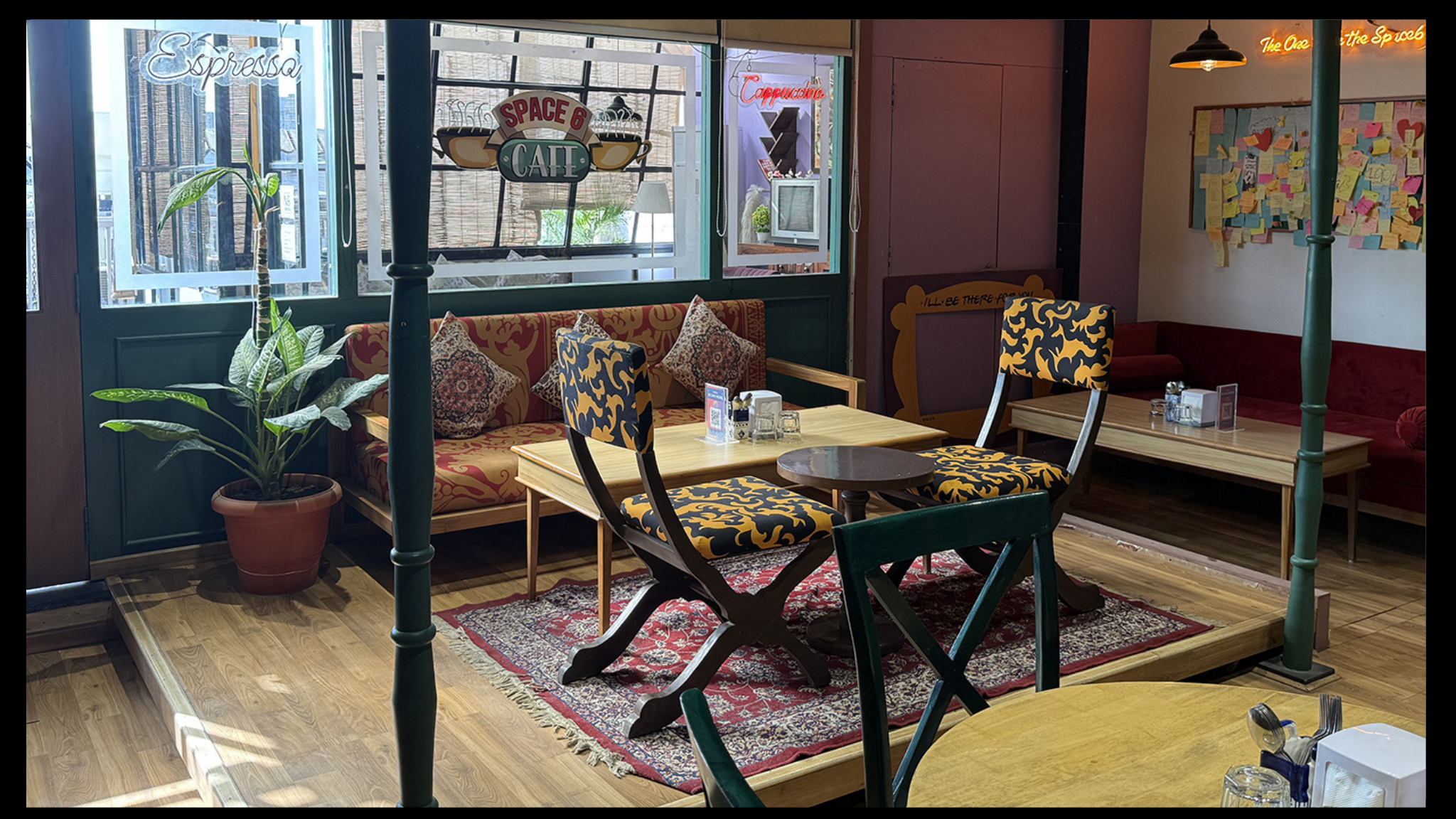 Image Source: https://space6cafe.in
Ahmedabad Got Its First Manga-Inspired Space
Konbawa Café came with a very specific audience in mind – anime and manga fans who rarely find spaces in Indian cities designed around what they love. The interiors draw from Japanese pop culture, with manga references and cosy corners that feel pulled from a different world entirely. That niche focus is actually what helped it stand out. It wasn’t trying to be everything to everyone. It was built for one community, and that community showed up.
Concept Cafés Got Bigger – Literally
Themed cafés eventually outgrew the idea of being small niche spots. The newer generation went large. KOMO by Kaffa is one of those. The space is known for its scale and its interiors – designed to impress before you’ve even ordered anything. It positions itself as one of the biggest café spaces in Ahmedabad, where the ambience and visual storytelling carry as much weight as the menu. Another space that took design seriously is Project Café Ahmedabad, a place that mixes art, retail, and food in the same environment. The café regularly collaborates with artists and designers, turning the space into a changing creative studio.
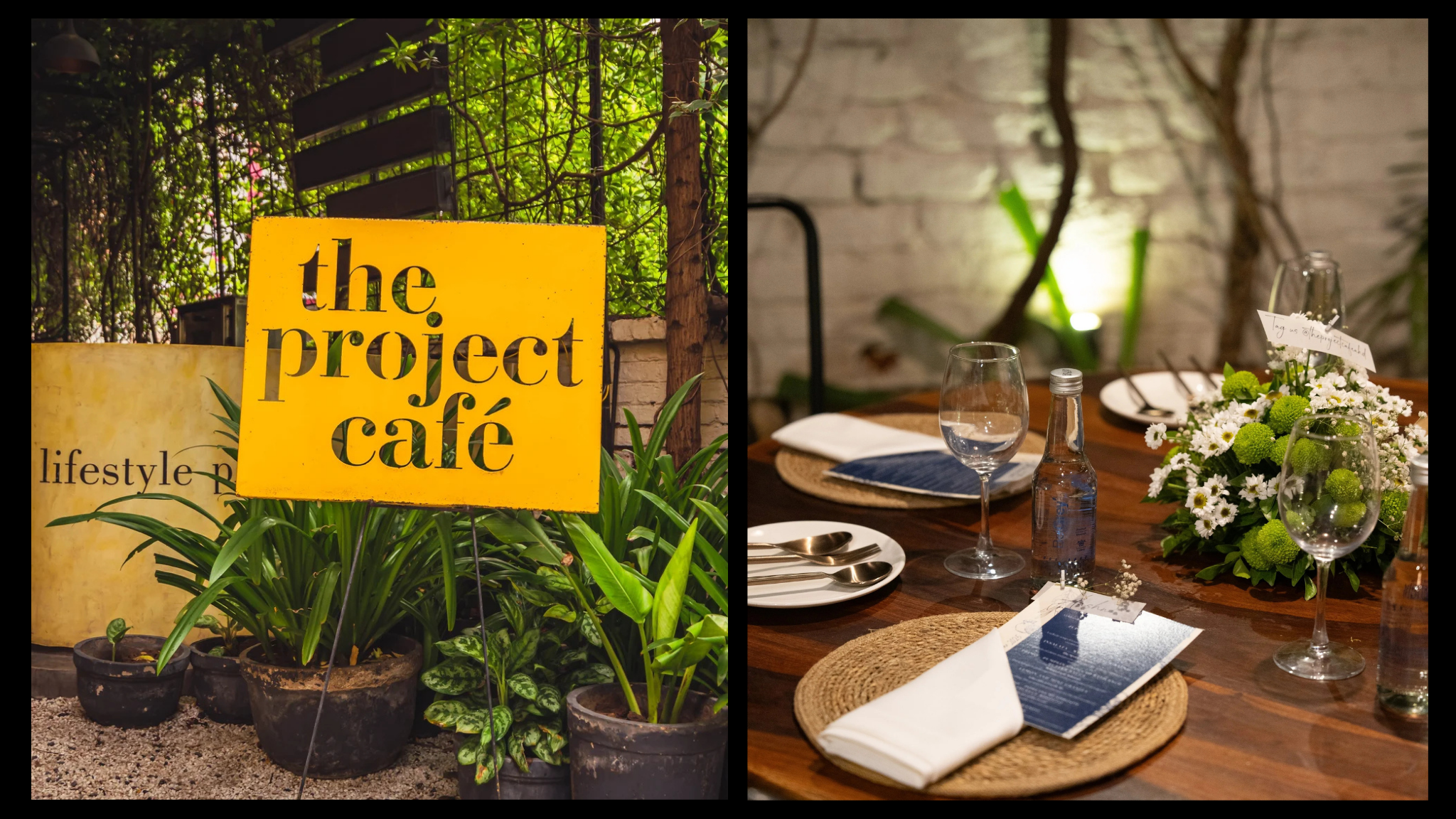 Image Source: https://www.theprojectcafe.co/
Why Many of These Places Don’t Survive
Here’s the honest part. A lot of themed cafés in Ahmedabad – and everywhere else – open to big crowds and shut down within a year or two. The reason is almost always the same: novelty wears off fast. Most people visit a themed café once, maybe twice. They get the photos, they experience the concept, and then they move on to whatever just opened next. Keeping that same crowd coming back regularly is a completely different challenge, and most themed cafés aren’t built for it. The costs don’t help either. Custom interiors, props, lighting setups, specific décor – all of that burns money before a single customer walks in. If the food is average or the pricing feels off, people don’t give it a second chance. They just go to the next trending spot. And then there are the operational realities. Some cafés run into compliance issues with local authorities. Permits, food safety regulations, licensing – when these aren’t handled properly, it can end a business that might otherwise have survived.
Why Ahmedabad Became a Hub for Creative Cafés
This is the interesting bit. Ahmedabad isn’t just another city where cafés happen to do well. There’s a design culture here that runs deep – shaped over decades by institutions like the National Institute of Design and CEPT University. A large number of café founders in the city come from design, architecture, or creative fields. That’s not a coincidence. When your founder thinks like a designer, the space gets treated differently. The layout, the furniture choices, the way light moves through the room – these decisions get made with intention. That’s why so many Ahmedabad cafés feel like someone actually thought hard about the space, rather than just filling it with tables.
The Future of Themed Cafés in Ahmedabad
The café scene here is still moving. The first phase proved that people in this city want more than just good food in a plain room. The second phase is now asking a harder question – can you build something that lasts beyond the initial hype? Some cafés will keep chasing pop-culture moments. Others are moving toward community-driven experiences, sustainability, or combining food with art, architecture, or social ideas. Both directions have an audience in Ahmedabad.
A Story That’s Still Being Written
The run of themed cafés in Ahmedabad – from Seva Café’s gift economy to Crazy Plant Lady’s plant-filled corners, from Café Hogwarts’ wizarding references to Konbawa’s manga aesthetics, to the grand scale of KOMO by Kaffa – tells you something real about this city. It’s genuinely willing to experiment. Not every concept survives, and most don’t. But the willingness to try keeps producing new ideas, new spaces, and new conversations about what a café can actually be. Stay connected with Gujpreneur for more!