How Gujarat Built a Scalable, Life-Saving System
Public health is not just about hospitals or doctors. It is about how fast help reaches someone in danger. The 108 emergency service Gujarat stands as a powerful example of this, built on Dhandho thinking—a mindset focused on solving real problems through efficiency, scalability, and smart systems.
It is not just an ambulance service; it is a well-designed system that has transformed emergency healthcare across the state.
Before 108: When Emergencies Had No System
Before 2007, Gujarat did not have a structured emergency response system. In most cases, people relied on:
- Private vehicles
- Delayed hospital access
- Untrained local help
In critical moments, these delays often proved fatal. There was no central number to call, no coordinated response, and no guarantee of timely medical support.
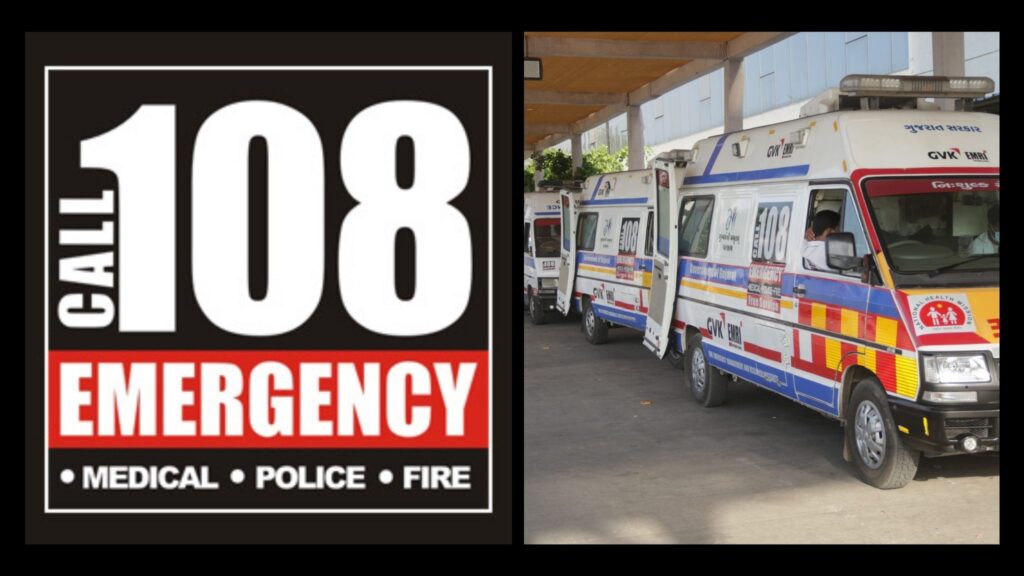
The launch of the 108 Emergency Service changed this completely. It introduced a free, 24/7 emergency helpline that anyone could access with a simple number—108.
The Dhandho Thinking Behind 108
What makes this model truly powerful is not just the service, but the thinking behind it. The 108 Emergency Service was built as a public-private partnership (PPP) between the Government of Gujarat and GVK EMRI. This approach reflects a key principle of Dhandho:
Create maximum impact using minimum and optimised resources
Instead of relying only on government systems, Gujarat collaborated with a professional organisation to ensure:
- Operational efficiency
- Scalable infrastructure
- Consistent service quality
This blend of public purpose and private efficiency is what makes the model sustainable.
A System, Not Just a Service
The real strength of 108 lies in its structured and process-driven approach.
Every emergency call follows a standard flow:
- Call received at a centralised call centre
- Situation assessed by trained professionals
- Nearest ambulance dispatched
- Hospital informed and prepared
This system eliminates confusion and reduces response time. It brings predictability and trust into emergency care, something that was missing earlier.
Saving Lives During the Golden Hour
In medical emergencies, the first hour known as the golden hour, is critical. Quick response during this time can significantly increase survival chances. The 108 Emergency Service ensures that patients receive immediate medical attention, even before reaching the hospital.
Its impact is massive:
- Over 1.86 crore emergency calls attended
- More than 18 lakh lives saved
These numbers highlight not just scale, but consistency and reliability.
From a Dhandho perspective, this is a system that delivers high impact at large scale without unnecessary cost escalation.
Transforming Maternal and Child Healthcare
One of the most meaningful contributions of the 108 service has been in maternal and child health. In many rural areas, access to hospitals during pregnancy emergencies is limited. The 108 service bridges this gap by providing timely transportation and on-the-spot medical care.
- Over 1.57 lakh childbirths handled in ambulances
- Significant reduction in Maternal Mortality Rate (MMR) and Infant Mortality Rate (IMR)
This is a strong example of social Dhandho, where success is measured not in profits, but in healthier families and safer births.
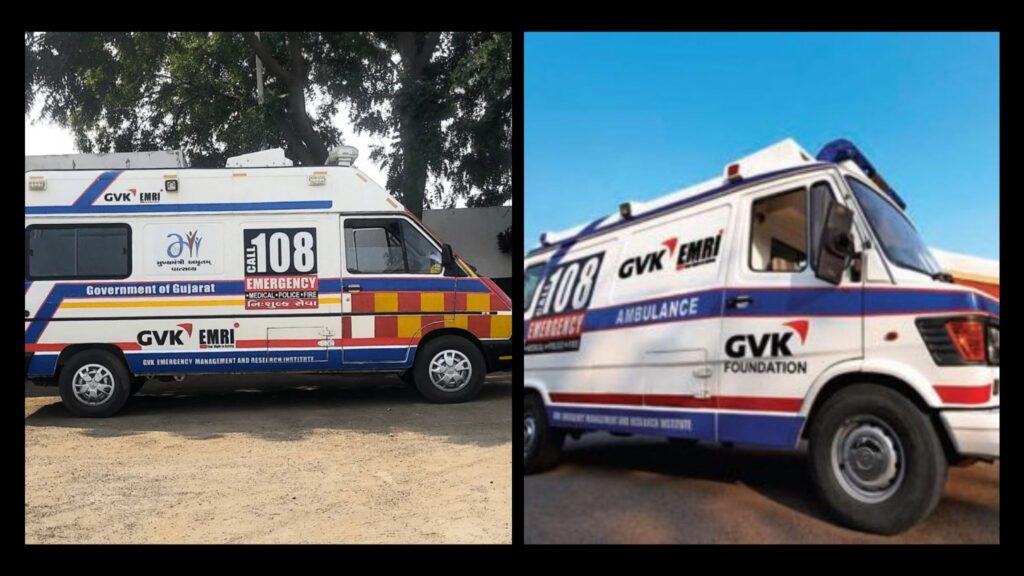
Reaching Every Corner of Gujarat
Accessibility is one of the biggest challenges in public health. The 108 Emergency Service addresses this by building a statewide network that covers:
- Urban cities
- Small towns
- Remote villages
- Highways
Different types of ambulances ensure appropriate care:
- Basic Life Support (BLS)
- Advanced Life Support (ALS)
- ICU-on-wheels
With GPS-enabled tracking and centralised dispatch, the nearest ambulance is sent quickly, reducing delays and improving efficiency.
Data-Driven and Integrated Response
Another strength of the 108 system is its data-driven approach.
Real-time data helps in:
- Monitoring ambulance movement
- Analysing response times
- Optimising resource allocation
The service is also integrated with other emergency systems like:
- 181 Women Helpline
- 104 Health Helpline
- 112 Emergency Services
This creates a connected emergency ecosystem, especially useful during disasters or large-scale incidents. This level of coordination reflects how modern systems thinking can elevate public services.
Strengthening Pre-Hospital Care
Traditionally, ambulances were seen only as transport vehicles. The 108 service changes this perception. Each ambulance is equipped as a mobile medical unit, staffed with trained Emergency Medical Technicians (EMTs) who provide:
- First aid
- Oxygen support
- Cardiac care
- Patient stabilisation
This pre-hospital care plays a crucial role in saving lives, often making the difference before reaching the hospital.
The Bigger Lesson: Dhandho Beyond Business
The 108 Emergency Service is more than a healthcare initiative. It is a case study in applying Dhandho thinking to solve large-scale social problems.
It shows that:
- Efficiency and empathy can work together
- Systems can be designed for both scale and impact
- Public services can operate with the discipline of a business
Gujarat did not just create an emergency service. It built a replicable, scalable model that delivers value every single day.
Final Thought
The 108 Emergency Service proves that true Dhandho is not limited to profit-making ventures. It is about building systems that serve people, operate efficiently, and create long-term impact. In a world where public systems often struggle with scale and efficiency, Gujarat’s 108 model stands as a reminder:
When the thinking is right, even life-saving systems can be built to scale.
For more such insights on Gujarat’s dhandho, systems, and real impact stories, keep exploring Gujpreneur.