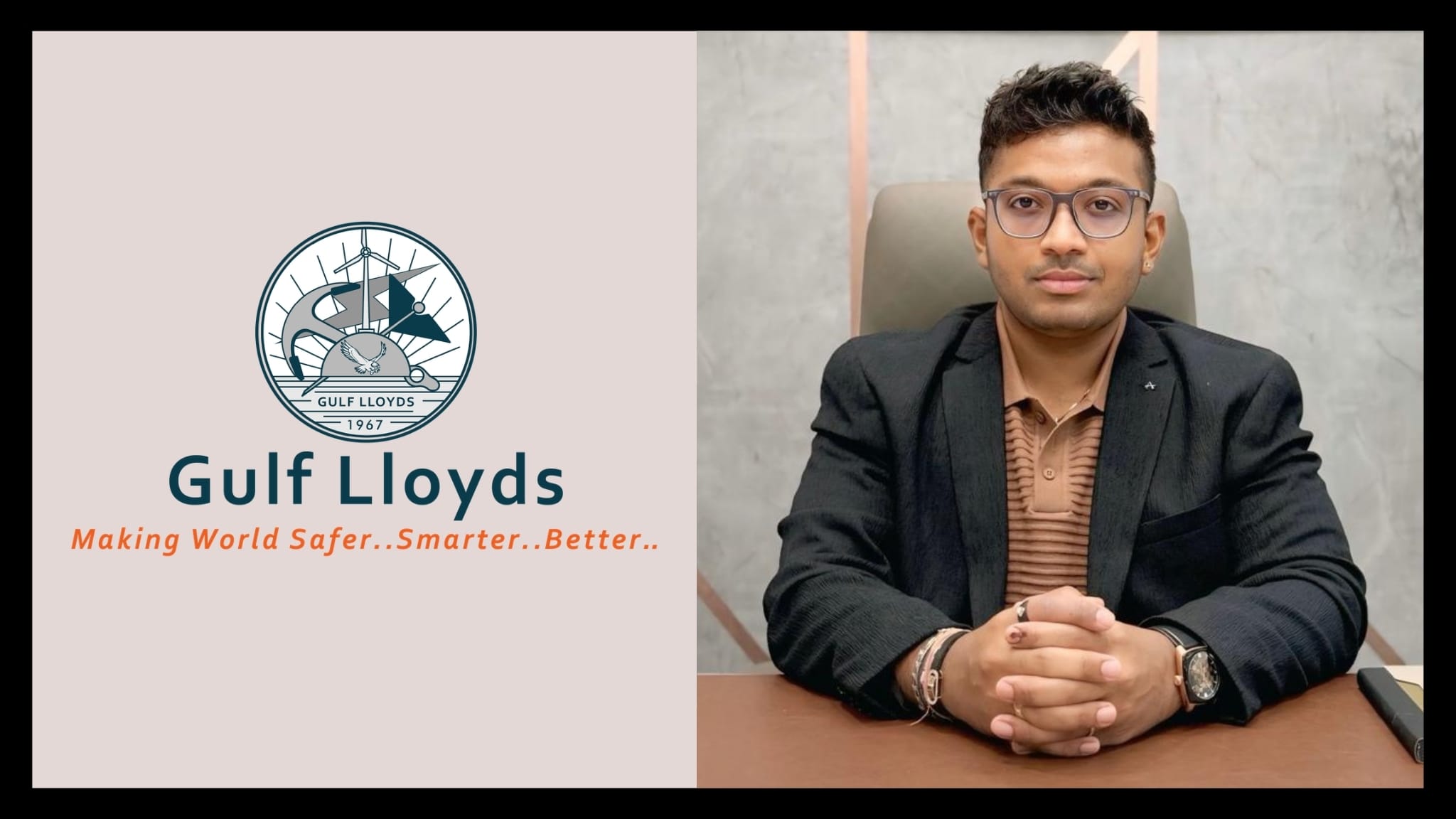
For decades, Gujarat built products for the world. Today, it is building brands the world remembers.
Every morning, thousands of trucks roll out of Gujarat’s industrial towns. Some carry ceramic tiles from Morbi. Some leave Surat loaded with textiles. Others transport snacks from Vadodara, dairy products from Anand, handcrafted textiles from Kutch, or engineering products from Rajkot. These products reach homes across India and travel to countries thousands of kilometres away. Yet, for years, very few people knew who actually made them. The manufacturer remained behind the curtain while wholesalers, distributors and retailers built the customer relationship. That story is changing.
Across Gujarat, a quiet transformation is taking place. Factories that once focused only on production are now building their own brands. Manufacturers are launching websites, opening experience centres, creating social media communities and selling directly to customers. The same machines still run inside these factories. The biggest change has happened outside them.
For Gujpreneur, this is one of the most exciting shifts in Gujarat’s entrepreneurial journey. The state has always known how to manufacture. Today, it is learning how to own the customer.
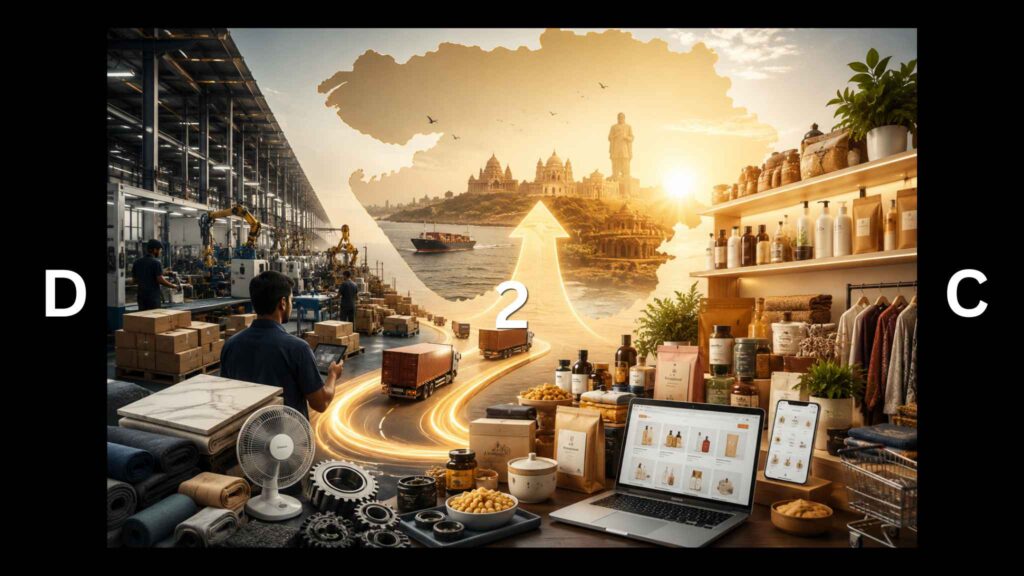
Every Manufacturing City Is Writing a New Chapter
One of Gujarat’s greatest strengths has always been specialization.
- Surat became India’s textile capital. Morbi transformed into one of the world’s largest ceramic manufacturing hubs.
- Anand changed India’s dairy industry forever.
- Kutch preserved centuries-old crafts.
- Ahmedabad developed a strong ecosystem for manufacturing, chemicals and consumer products.
Each city mastered one industry. Today, every one of these cities is learning the same lesson. Making a great product is only half the journey. Building a memorable brand completes it.
Surat Manufacturers turning into Brand Labels
Surat has always understood manufacturing. Walk through the city’s textile markets and you’ll find fabrics travelling to almost every corner of India. For decades, much of that fabric became someone else’s brand.
Entrepreneur Yogesh Kabra looked at the same industry differently. Coming from a family involved in textile trading, Kabra chose not to continue the traditional business path. Instead, he launched XYXX Apparels in 2017, focusing on premium innerwear made from advanced fabrics like MicroModal and bamboo fibres. The company combined Surat’s manufacturing strength with modern branding, thoughtful product design and a direct relationship with consumers. Today, XYXX has become one of India’s fastest-growing premium innerwear brands.
Brothers Ilesh and Bhavdip Ghevariya founded French Crown, proving that Surat’s textile ecosystem could create premium fashion brands for customers across India and overseas. The city’s manufacturing capabilities also gave rise to Sudathi, which built an online ethnic wear business using Surat’s textile expertise, while Fuaark entered the activewear segment with products designed and manufactured locally.

Innovation extended beyond apparel. Canvaloop, founded by Shreyans Kokra, developed sustainable textile fibres using agricultural waste, showing that manufacturing can also solve environmental challenges. Beauty brand LA MIOR established its own manufacturing facility to create clean cosmetics, while The Gorgeous Hair built a business around premium hair extensions and wigs produced for Indian consumers.
Surat’s food industry tells a similar story. Six childhood friends launched Alpino, transforming locally sourced peanuts into one of India’s leading peanut butter brands. Instead of remaining an ingredient supplier, they built a brand that now reaches consumers directly through online and retail channels. Surat still manufactures for the world. The difference is that more products now carry names created in Surat itself.
Ahmedabad is Manufacturing Products alongside Building Consumer Trust
If Surat represents manufacturing scale, Ahmedabad represents manufacturing diversity. The city has quietly become home to brands across skincare, nutrition, toys, home décor and lifestyle.
Companies like Brillare have built consumer trust through science-backed skincare and haircare products. Bolt Nutrition serves India’s growing fitness community, while Earth Tatva, founded by Shashank Nimkar, blends natural materials with modern home décor.
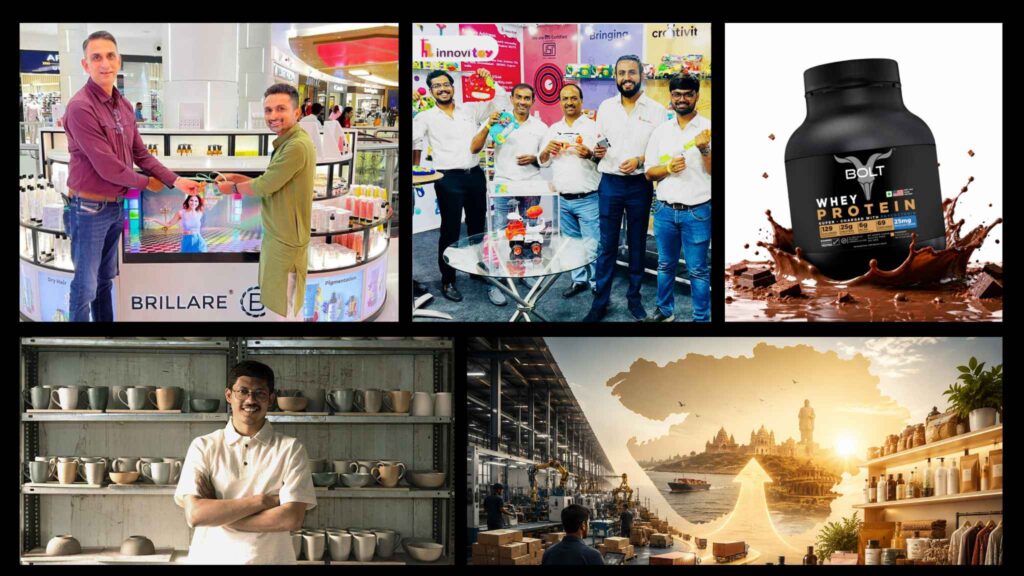
Children’s brand Innovitoy has shown that Indian manufacturers can design, develop and produce toys that compete with international brands while selling directly to families.
Ahmedabad has developed a strong ecosystem of product developers, cosmetic manufacturers and packaging specialists. Businesses no longer need to depend entirely on overseas production. They can design, manufacture and launch products much faster while keeping quality under their control. That manufacturing ecosystem has become one of Gujarat’s biggest competitive advantages.
Morbi: The Ceramic Capital Is Moving Closer to Customers
Few places represent Gujarat’s industrial strength like Morbi. The city produces nearly 90% of India’s ceramic tiles and exports products to markets across Europe, the Middle East, the United States and Africa. For decades, these factories worked almost entirely through dealers and distributors. Today, many are reaching customers directly.
One of Gujarat’s earliest success stories is Orpat Group. Founded in 1971 by Odhavjibhai R. Patel, Orpat started with clocks before expanding into fans, kitchen appliances, home electronics and electrical products. Instead of remaining a contract manufacturer, the company invested in brand building, quality and nationwide distribution.
Another example is Simpolo Ceramics, founded by Jitendra Aghara and Jayantibhai Patel in 1977. The company has moved beyond manufacturing by creating premium experience centres where homeowners can explore products before making a purchase. This approach has helped Simpolo build stronger customer relationships while moving up the value chain.
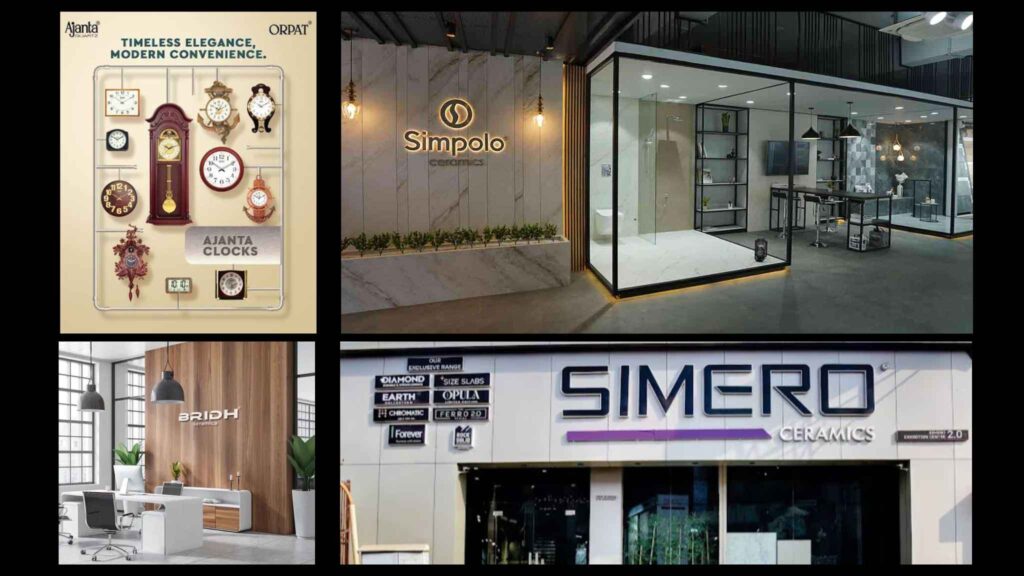
The shift is visible across the city. Platforms like MorbiTiles.store allow customers to purchase directly from manufacturers, while companies including Bridh Ceramica, Simero Ceramics are strengthening their digital presence alongside traditional dealer networks.
Gujarat’s Legacy Businesses Are Finding New Customers
Some of Gujarat’s biggest success stories began long before online shopping existed. For instance, Jagdish Farshan. Founded in 1938 in Vadodara, the family business built its reputation on authentic Gujarati snacks and sweets. Today, customers across India can order those same flavours online, proving that heritage and technology can work together.
Another Vadodara-based brand, Ribbon Candy, has carved its own space with handmade and eco-friendly children’s clothing, combining thoughtful manufacturing with direct online sales.
The story continues in Patan. For centuries, Patola sarees were purchased almost entirely through trusted family showrooms. Today, Patola by Prakash Bhai, along with renowned weaver Nirmal Salvi and brands like Sindhoi Patola Art, are reaching customers through digital platforms.
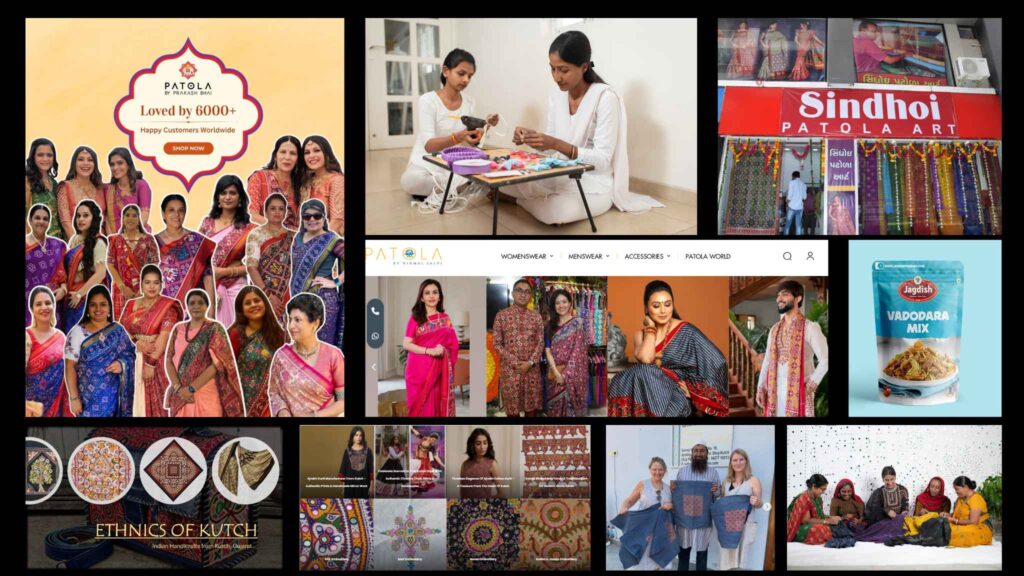
Further west, Kutch has embraced the same journey. KutchiBazaar, founded by Sufiyan Khatri, connects generations of Ajrakh artisans directly with customers. Platforms including Ethnics of Kutch, Handicrafts of Kutch have created new opportunities for artisans to showcase their work without depending entirely on traditional trading networks.
One of the most inspiring examples is Okhai. Supported by Tata Chemicals Society for Rural Development, the brand has helped thousands of rural women artisans transform traditional embroidery into premium lifestyle products sold across India and abroad. Every purchase supports craftsmanship while creating sustainable livelihoods.
These businesses remind us that digital transformation is not limited to startups. Sometimes, it begins inside a family business that has been perfecting its craft for generations.
Food Manufacturers Are Owning Their Shelf Space
Gujarat’s food industry is following the same path. Brands like Gir Organic are building trust through farm-to-consumer dairy products sourced from Gir cows.
Behind many of these brands is Gujarat Peanut & Agri Products, an agro-processing company that is steadily moving beyond commodity exports into value-added consumer products such as peanut butter, protein powder and edible oils.
The lesson is simple:
“The greatest value no longer lies only in producing food. It lies in building the brand people ask for by name.”
Conclusion
Factories have always been part of Gujarat’s identity. The sound of machines, the discipline of production and the pride of quality built the state’s economy over decades. A new generation of entrepreneurs is adding one more layer to that legacy. They are building brands.
From XYXX, French Crown, Alpino and Brillare to Orpat, Simpolo, Jagdish Farshan, Okhai, Patola by Prakash Bhai, Gir Organic and dozens of others, Gujarat’s manufacturers are proving that success doesn’t end when a product leaves the factory.
It begins when a customer remembers the name behind it. For Gujpreneur, this journey is about far more than direct selling. It is about confidence. It is about manufacturers stepping into the spotlight after decades of working behind the scenes. Gujarat has always built world-class products. Now, it is building world-class brands.