A Modern Heirloom of Business Thinking
Luxury is not about what you sell. It is about what people feel when they leave your store.
In an industry built on glitter, tradition and generational trust, Param Begani chose a different starting point. He did not begin with price or a trend. He began with experience.
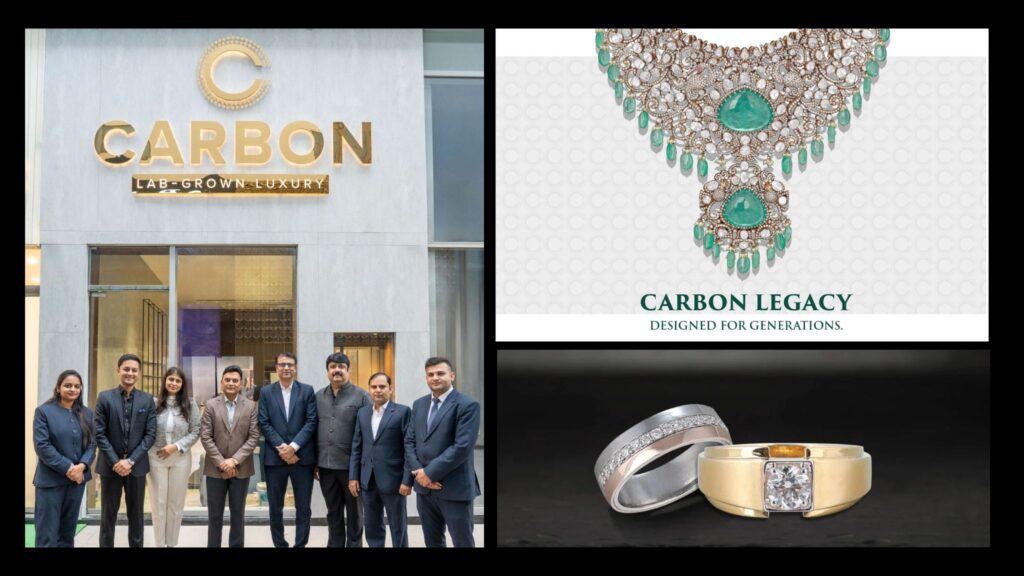
Carbon was not created to sell lab-grown diamonds. It was created to redefine what buying jewellery should feel like in modern India. And in doing so, it has quietly positioned itself among the most compelling business stories emerging from Gujarat’s evolving entrepreneurial ecosystem.
Legacy Is an Advantage, If You Reinvent It
Param Begani is a fourth-generation jeweller. His family history is deeply rooted in diamonds. But legacy alone does not build modern brands.
After completing his education at GLS in Ahmedabad, Param moved to Mumbai for hands-on jewellery exposure. He later pursued gemology at the Gemological Institute of America (GIA), studying in Carlsbad and New York. That global exposure changed his lens completely.
He observed craftsmanship standards and studied consumer psychology. He understood retail positioning. More importantly, he realised something powerful:
Experience can be inherited. Knowledge cannot.
In a high-trust industry like jewellery, knowledge becomes your strongest differentiator. Carbon was built on that principle.
Spotting the Shift Before Indian Market Did
While studying in the United States, Param noticed a rapid shift towards lab-grown diamonds. Within a year, the market share had grown dramatically.
India was still hesitant. Many consumers misunderstood lab-grown stones. Some believed they were synthetic. Others questioned their legitimacy.
Param did not see confusion. He saw an opportunity. Lab-grown diamonds are chemically and structurally identical to natural diamonds. They follow the same grading system: cut, colour, clarity and carat. The difference lies in origin, not authenticity.
The debate, he realised, was not technical. It was emotional versus practical. Carbon entered the market not as a defensive brand, but as an educational one.
Proof Before Scale Up
Carbon did not begin as a large-format store. It started as a counter within an existing showroom. Around 300 curated pieces. A controlled experiment.
The response was immediate. Customers were curious. They wanted to understand. They wanted transparency. Within a year, the proof of concept was clear. Carbon could stand independently.
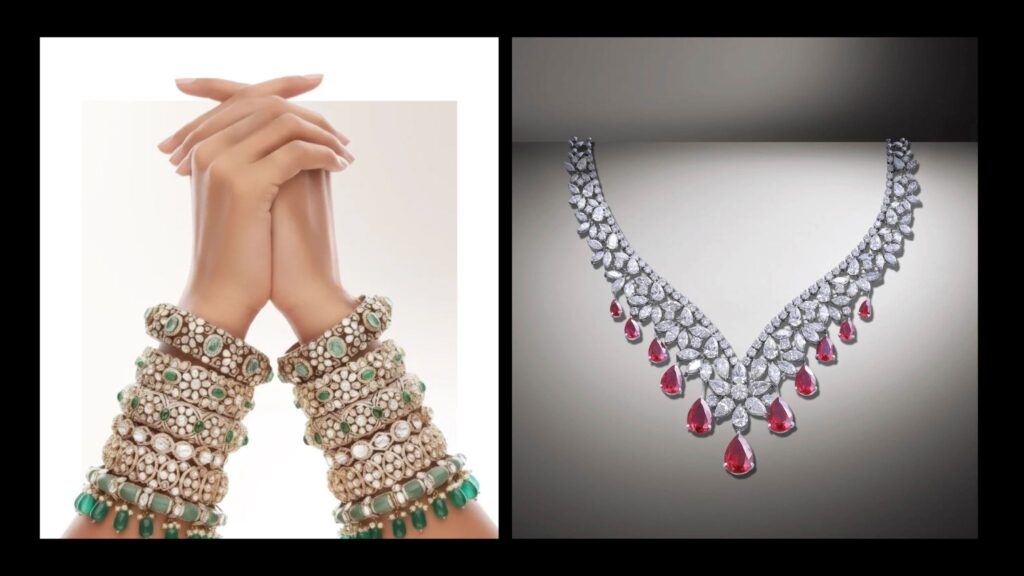
Today, the brand holds one of the largest stocks of lab-grown diamond jewellery in India, particularly in bridal and polki categories. That scale did not happen overnight. It was calculated.
This reflects one of the most important lessons in entrepreneurship: validate before you expand.
Systems Before Expansion
Many young businesses rush into growth. Carbon did the opposite. For nearly eighteen months, the focus was internal. Building systems. Defining KPIs. Establishing KRAs. Creating training frameworks. Developing in-house software.
Every stakeholder at Carbon operates under structured performance metrics. This is not a traditional family-run jewellery shop. It is a process-driven luxury brand.
Without systems, you cannot expand, Param believes.
This discipline has allowed Carbon to grow from Ahmedabad to Jamnagar and Gurgaon, with plans to scale further. Running a business at this level requires structure, not sentiment.
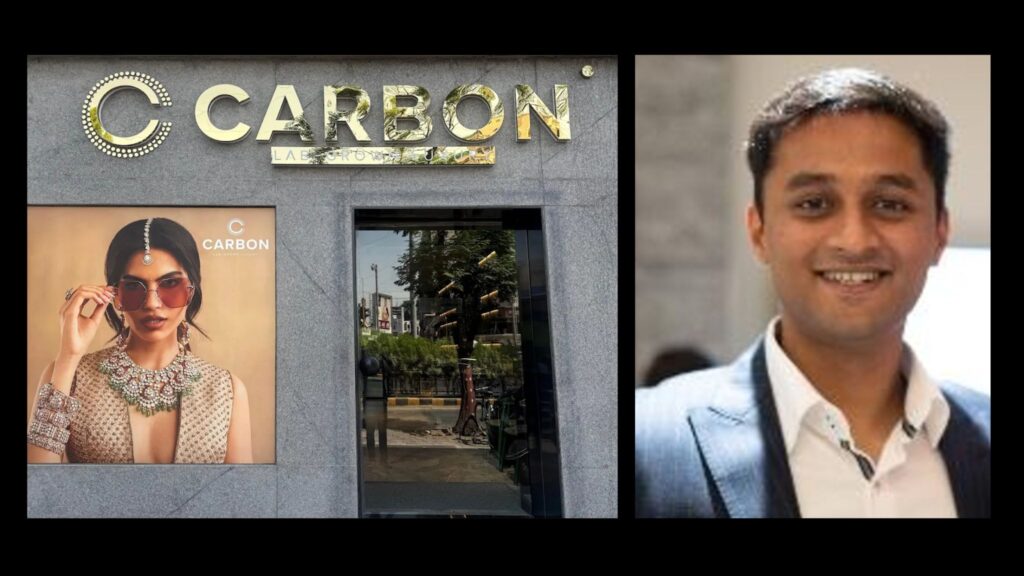
Carbon Store At Jamnagar Was Strategy, Not Chance
Carbon’s expansion into Jamnagar raised eyebrows. Why not Mumbai first? Why not Delhi before a tier-two market?
The answer was research.
Jamnagar is undergoing significant infrastructural growth. Increased global presence. Rising aspiration. Changing consumer behaviour. Param personally studied the market. He observed spending patterns. He engaged with vendors and customers before committing.
This approach reflects mature entrepreneurship. Growth of entrepreneurship in Gujarat today is driven by research-backed risk, not instinct alone.
Selling Experience, Not Jewellery
Carbon’s core philosophy is simple: they sell experience, not jewellery. Jewellery is a part of the experience. Not the centre of it.
When lab-grown diamonds were widely misunderstood, Carbon focused on education. They explained the science while addressing the myths calmly. They avoided aggressive selling. Today, the conversation has shifted. Customers enter informed. They ask about design. They explore possibilities.
That shift represents brand authority. In high-value retail, emotional assurance often matters more than transaction speed.
Craftsmanship That Tells a Story
One piece captures Carbon’s philosophy perfectly. A 315-carat Zambian emerald became the centre of a one-of-one masterpiece. The team carved an entire narrative around it. Yashoda is depicted playing the flute. Two peacocks embracing the stone. The piece was launched during Janmashtami. South Sea pearls framed the structure.
Everything was handmade. From a single stone, an heirloom was born. That was not mass luxury. It was pure storytelling through craftsmanship.
As Param often says, jewellery must carry meaning. It should mark milestones. It should move through generations. That emotional layering differentiates Carbon from transactional competitors.
Lab-Grown Beyond Diamonds
Lab-grown stones are not new to the global market. They have existed for decades. Certified. Recognised. Documented.
Carbon works not only with lab-grown diamonds, but also emeralds, rubies, sapphires and opals. These stones allow bold design experimentation without prohibitive mining costs.
For customers, this means access to larger, more intricate pieces within the same budget range. For the business, it means design freedom.
Innovation in entrepreneurship often lies in understanding cost structures deeply. Carbon has leveraged that understanding strategically.
The Silver Stanley Bottle That Changed Perception
An Ahmedabad-based client once approached Carbon with an unusual request. Her daughter refused to drink water. Instead of gifting traditional jewellery, she wanted something meaningful.
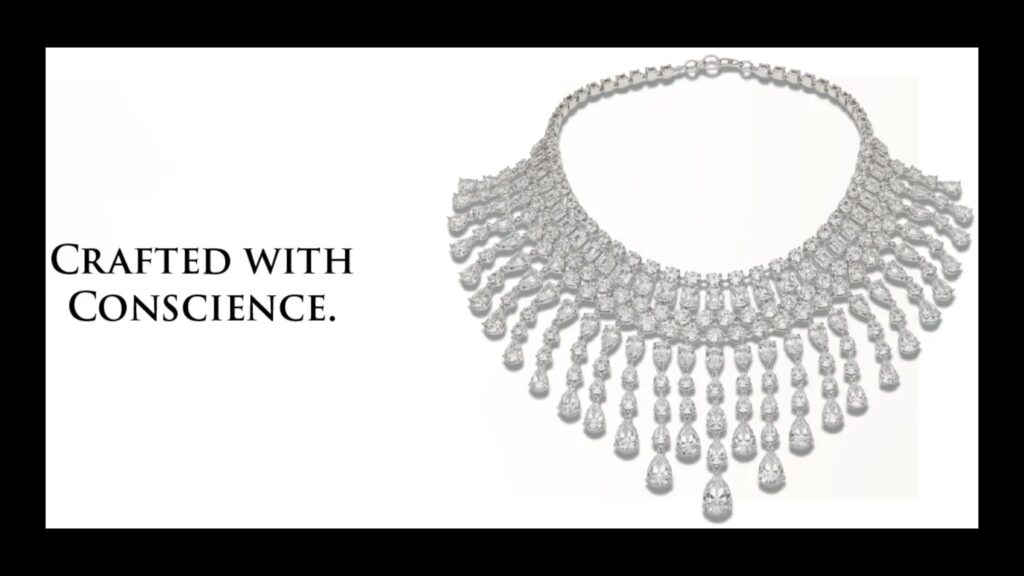
Carbon created a silver Stanley-style bottle studded with diamonds. It was practical, personalised and emotionally intelligent.
The daughter now uses it daily. That single story encapsulates Carbon’s identity. They are not selling ornaments. They are creating memories.
Structured Craft Across India
Carbon’s backend reflects operational intelligence. Polki craftsmanship is handled in Jaipur and Bikaner. Diamond expertise flows from Surat. Invisible settings are crafted in Mumbai. Each city contributes specialised skills!
This distributed production model ensures depth of expertise in every piece.
Behind the glamour lies rigorous coordination. This is what allows Carbon to hold large inventory volumes confidently.
Emotional vs Practical: The Real Market Divide
Param frames the diamond conversation clearly. If you are emotionally driven, natural diamonds may resonate. If you are practical, lab-grown offers scale and design flexibility.
But he makes one thing clear: jewellery is not a traditional financial investment. It is an aspiration; a celebration and a personal legacy.
That clarity builds trust. Trust builds repeat business.
Carbon and the Future of Entrepreneurship in Gujarat
Carbon represents more than a jewellery brand. It reflects how business in Gujarat is evolving.
Legacy businesses are upgrading with global exposure. Young entrepreneurs are blending tradition with structured execution. Systems are replacing intuition-driven growth.
Carbon plans steady expansion. Domestic consolidation first. International ambition later. The sequencing matters.
Conclusion
Carbon did not rise because lab-grown diamonds became popular. It rose because it understood the emotional psychology of luxury. They built systems before stores and prioritised education before persuasion. It crafted stories before campaigns.
In an industry dominated by sparkle, Carbon focused on substance. And that is why it stands not merely as a jewellery brand, but as a case study in modern entrepreneurship.
In Gujarat’s growing landscape of business stories, Carbon reminds us of something essential:
Luxury is not what you display. It is what people remember long after they leave.
Keep visiting Gujpreneur for more such business insights!