There are some towns you visit, and they leave you with a quiet aftertaste as a sense that life here moves to an older rhythm, one that hasn’t hurried to match the world outside. Patan is one such place.
Driving into the town, you don’t immediately see the grandeur that Gujarat is famous for. No towering facades or bustling markets are shouting for attention. Instead, Patan draws you in gently through its carved temple doors, its soft chants at dawn, and its artisans who sit patiently at their looms, weaving stories into silk.
It’s a town that lives in two worlds at once: one deeply spiritual, shaped by centuries of Jain heritage, and the other artistic, defined by the legendary Patan Patola, a textile so meticulous that it almost feels unreal.
And together, these two forces quietly power Patan’s economy.
The Old Jain City Where Every Stone Feels Sacred
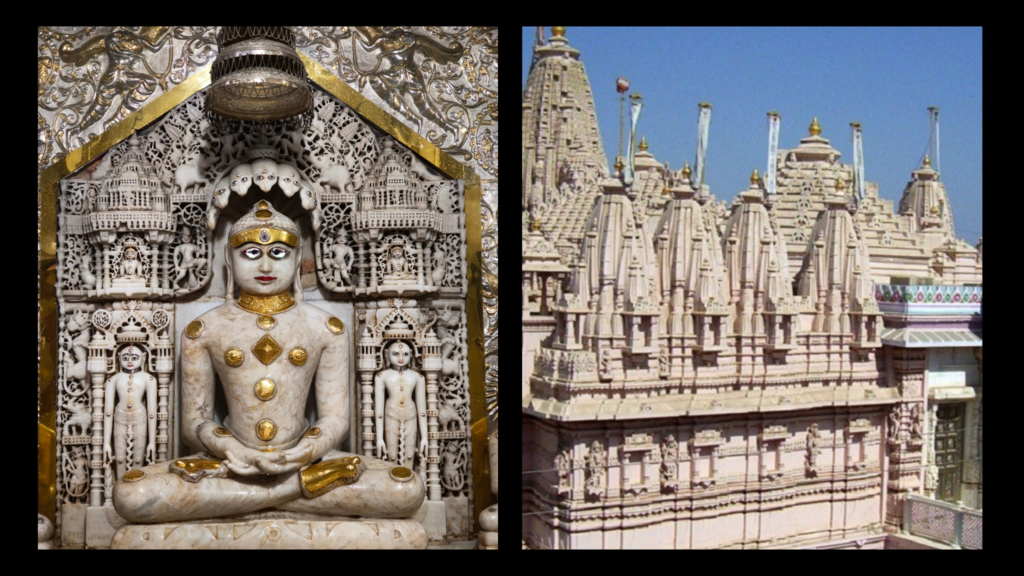
Ask anyone in Patan what defines the town, and before Patola is even mentioned, they will speak of the Jain temples. Hundreds of them, like large, small, ancient, renovated, each with its own history, its own community of devotees.
The most famous among them, the Panchasara Parshwanath Derasar, is not just a temple; it’s an anchor for the people who visit Patan every year. Step inside its marble corridors, and time slows. There’s a cool serenity in the air, and the kind that makes you instinctively lower your voice and straighten your spine.
Pilgrims come here for reasons that go beyond sightseeing. They come to fulfil vows, to celebrate family rituals, or simply to reconnect with a silence that’s hard to find in larger cities. And wherever pilgrims travel, an ecosystem follows.
In Patan, that ecosystem is surprisingly significant.
Guesthouses, thali restaurants, sweet shops, auto-drivers, and flower vendors all rely on the steady flow of visitors who walk into the town through the temple gates. Unlike seasonal tourism, Jain pilgrimage doesn’t spike only during holidays. It runs throughout the year, with festivals like Paryushan, Mahavir Jayanti, and various tirth days drawing even larger numbers.
For a town this size, that consistency is economic oxygen.
And Then There Is Patola, The Silk That Has Made Patan’s Name Travel the World
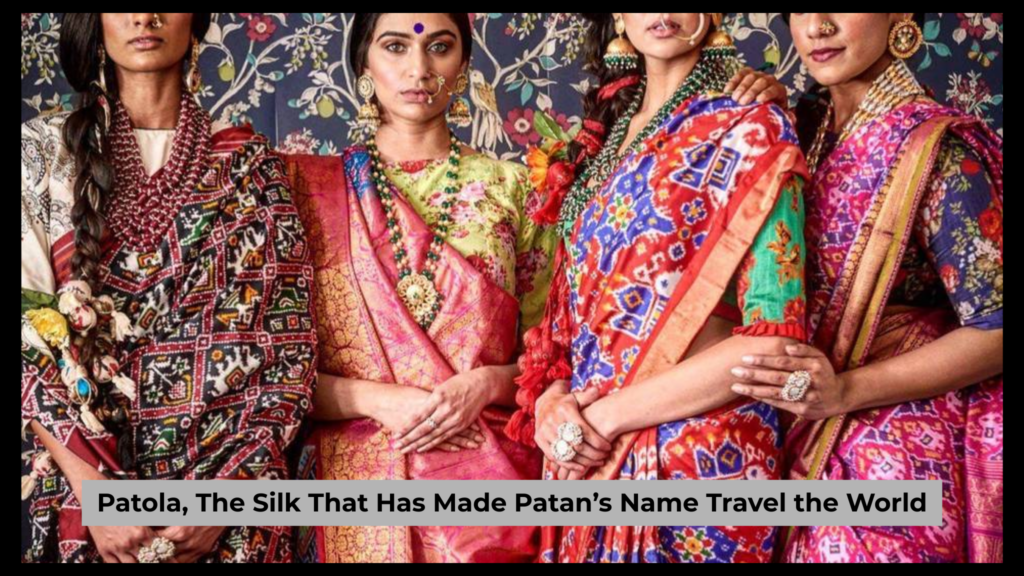
If the temples give Patan its spiritual identity, Patola gives it artistic prestige.
You can’t talk about Patan without speaking of Patola weaving, a craft so intricate that even seasoned textile lovers pause in disbelief when they learn how it’s made.
A single saree takes months. Every thread is tied and dyed separately, and patterns must align perfectly on both sides; one mistake means starting over.
This is not just craftsmanship, as it’s a discipline, devotion, and inherited genius. The Salvi family, among the keepers of this tradition, still weave Patolas in the same painstaking way their ancestors did centuries ago. Their workshop doesn’t feel like a factory, as it feels like a sanctum of art.
Visitors who come to see the weaving often describe the experience as unexpectedly intimate. The looms creak softly. Colours soak quietly in clay pots. The artisans barely speak; their hands do the conversation.
Economically, Patola plays a very different role compared to the Jain pilgrimage. The number of visitors who buy Patolas may be much smaller, but each purchase carries enormous value. A single saree can bring income equivalent to months of hospitality-based revenue. Collectors and NRIs often come specifically to Patan for this, turning the textile into a magnet for premium tourism. You could say Patola brings depth, while temple tourism brings width.
And Patan shines because it has both.
Two Economies, One Shared Destiny
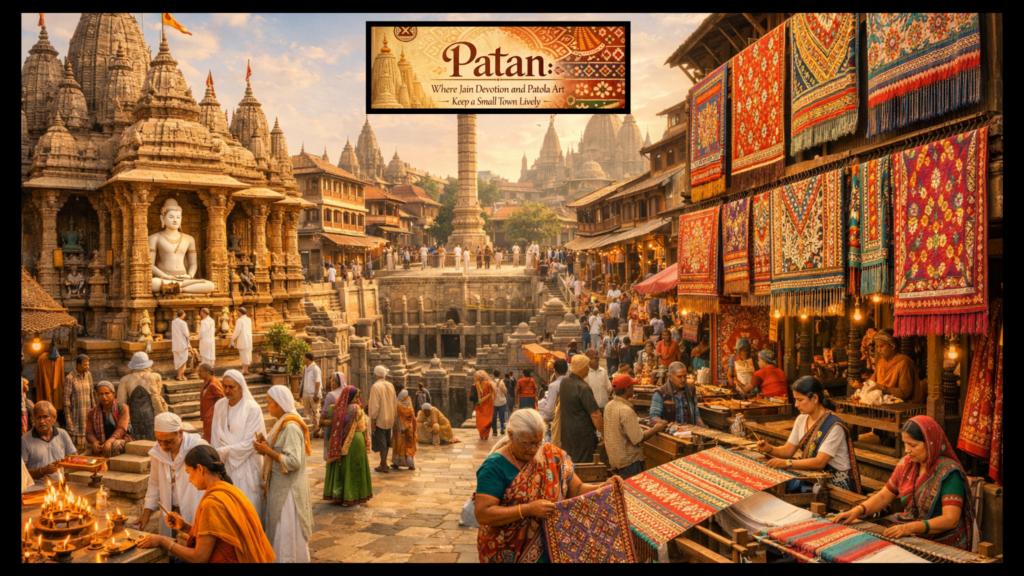
Many assume Patan’s economy leans mainly on spiritual tourism because pilgrims are everywhere, and it’s true that roughly 60–65% of visitors come primarily for Jain temples, creating steady footfall that keeps daily businesses alive.
During major festivals, this number can multiply several times over, giving the town a surge of revenue that supports small hotels, food stalls, auto drivers, and flower vendors. A typical pilgrim family may only spend a few thousand rupees, but the sheer volume of these visitors, arriving throughout the year, forms the backbone of Patan’s service economy.
But the Patola industry, though smaller in footfall, operates with far more economic weight. Only 5–10% of visitors come for Patola, yet each Patola buyer can contribute as many as dozens of pilgrims combined. With sarees ranging from ₹1.5 lakh to ₹5 lakh, even 20–30 sales a year can sustain artisan families.
The Patola workshops and museum attract NRIs, designers, and textile enthusiasts who often spend more per person than regular tourists. And interestingly, the two streams fuel each other: many pilgrims end up exploring Patola workshops out of curiosity, while Patola visitors often step into the temples because they are part of Patan’s cultural fabric.
This overlap creates a rare economic balance as temples give Patan its stability, Patola gives it value, and together they keep the town culturally alive and economically resilient.
A Town That Doesn’t Shout, But Leaves an Impression
The beauty of Patan lies in its subtlety. Nothing here feels loud or staged for tourists. The temples are still places of genuine worship. The Patola looms are still run by families, not factories. Even the markets feel untouched by the rush of modernity like slow, deliberate, authentic.
But beneath that calm surface is a town that has built its economy on two rare treasures: devotion that never goes out of fashion, and a craft that cannot be mechanised, copied or replaced.
That combination is Patan’s strength. And maybe that’s why anyone who spends even a few hours here returns with the same feeling that this small town carries a quiet confidence built on centuries of culture, skill and spiritual depth. Patan doesn’t try to impress you.
It simply is… and that’s enough. If you’ve never visited Patan, put it on your list. Go for the temples. Stay for the Patola. And leave with a piece of history. To explore more stories, culture, and hidden gems across Gujarat, head over to Gujpreneur.