Some towns carry their history lightly. Vadnagar is one of them. At first glance, it feels like a modest settlement in north Gujarat, calm and unhurried. But beneath its streets lies a story that stretches back more than 2,500 years, making it one of the oldest continuously inhabited towns in India. For decades, this legacy remained largely unseen, known mainly to historians and archaeologists. That changed with the opening of the Vadnagar Archaeological Museum, a space that brings buried history into public view and, in doing so, reshapes the town’s present and future.
A Town Older Than Memory
Vadnagar’s history is not tied to a single empire or faith. Archaeological evidence shows continuous habitation from the early Iron Age, through the Mauryan and Gupta periods, and later under Solanki, Sultanate, and Mughal rule. Buddhist monasteries once stood here, Jain and Hindu institutions flourished, and trade routes passed through the town, connecting it to wider economic networks.
Chinese traveller Hiuen Tsang is believed to have referenced Vadnagar in his accounts, describing it as a centre of learning. Over centuries, each era added a layer rather than replacing what came before. This rare continuity is what makes Vadnagar historically exceptional.
The Vadnagar Archaeological Museum was created to present this layered story in a way that feels accessible, not academic. Instead of isolating artefacts, it connects them to the lived reality of the town.
Inside the Museum, History Feels Lived
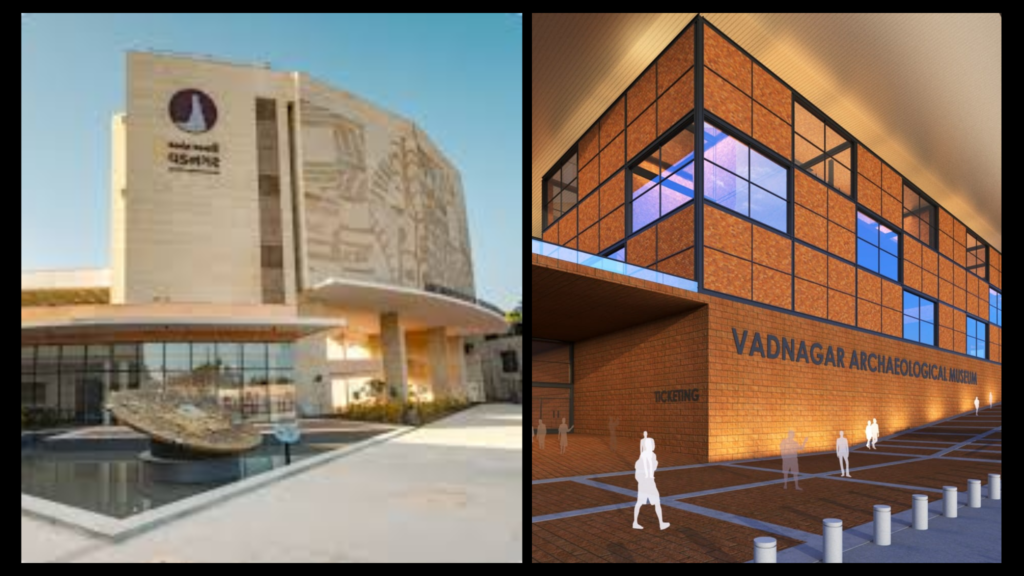
Walking through the Vadnagar Archaeological Museum, visitors move chronologically through time. Pottery, coins, terracotta figurines, tools, and architectural remains are displayed alongside digital reconstructions that explain how people lived, worked, and worshipped across different periods.
One of the museum’s most striking features is its direct connection to the excavation site. Visitors can look down at exposed layers of earth, seeing history exactly where it was uncovered. Interactive displays and visual storytelling help explain how archaeologists interpret fragments to reconstruct entire civilisations.
Rather than presenting Vadnagar as a frozen relic, the museum shows it as a living town shaped by constant adaptation.
National Attention and a Personal Connection
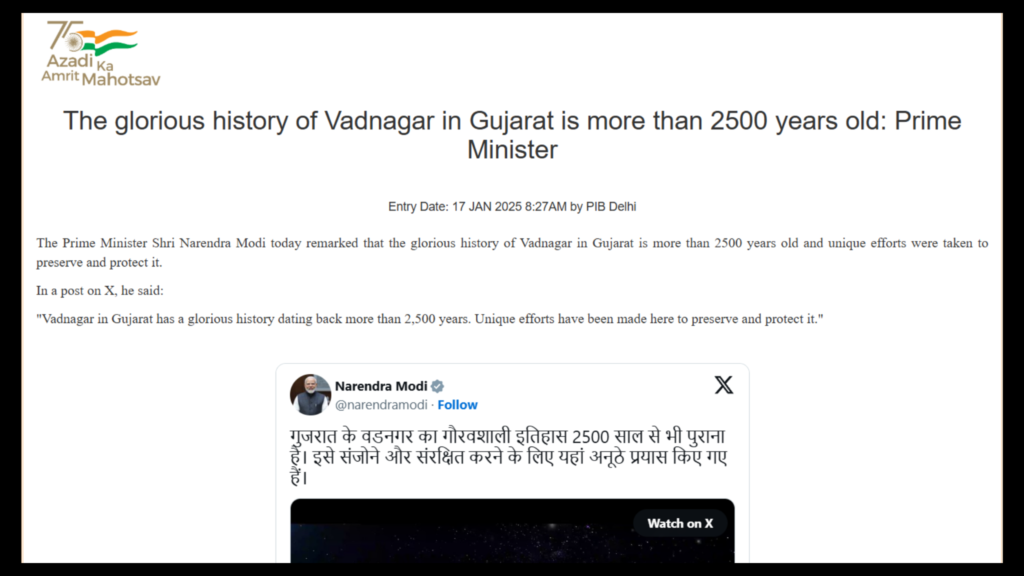
Vadnagar received national attention when Prime Minister Narendra Modi shared a video highlighting the town’s heritage. In his message, he stated, “The glorious history of Vadnagar in Gujarat is more than 2500 years old. Unique efforts have been made here to preserve and protect it.”
The video brought wider awareness to the Vadnagar Archaeological Museum and reinforced its importance as a cultural institution. While our PM Modi’s personal connection to the town is well known, the focus of the message remained firmly on history and preservation rather than biography. This helped position Vadnagar as a site of national heritage, not just personal memory.
Tourism That Supports the Local Economy
Since opening to the public, the Vadnagar Archaeological Museum has become a steady driver of tourism. According to media reports, the museum attracted more than 95,000 visitors within its first few months of operation. This influx has had a visible impact on the local economy.
Vadnagar is not a high volume tourist destination like major heritage cities. Visitors tend to arrive in smaller numbers but stay longer. This benefits local guest houses, small hotels, eateries, transport providers, and licensed guides. Heritage walks linking the museum to nearby sites such as Kirti Toran, stepwells, and old town precincts encourage extended visits.
From an economic perspective, this is sustainable tourism. Visitor spending is distributed across many small businesses rather than concentrated in a few large operators.
Employment, Education, and Long Term Value
The museum has also created direct and indirect employment. Local residents are engaged as staff, guides, security personnel, and maintenance workers. Educational programs and school visits have increased awareness of archaeology and conservation as career paths, especially among students from nearby towns.
Cultural tourism now acts as a secondary economic pillar for Vadnagar, alongside agriculture and local trade. Even a modest average spend of ₹1,500 to ₹2,500 per visitor translates into meaningful revenue when multiplied across tens of thousands of annual visitors.
Importantly, this income circulates locally, supporting families rather than leaving the town.
A Model of Quiet Cultural Revival
Vadnagar does not try to compete with larger heritage destinations, and that is its strength. The Vadnagar Archaeological Museum does not rely on spectacle. It relies on evidence, clarity, and respect for history.
By presenting archaeology in a way that feels human and grounded, the museum has given Vadnagar something rare: cultural confidence backed by economic relevance.
The town’s past is no longer buried or forgotten. It is carefully documented, openly shared, and steadily contributing to local livelihoods. Vadnagar reminds us that when heritage is preserved thoughtfully, it does more than tell stories. It builds futures.
To explore more stories, culture, and hidden gems across Gujarat, head over to Gujpreneur.