
Gujarat is not only an industrially powerful state, but it is speedily becoming the Indian powerhouse in green-energy. The state is at the forefront of clean energy development with ambitious policies, huge renewable power facilities, and a booming economic effect. This article disaggregates the solar, wind, and green innovation which is transforming the jobs, villages, sustainability, and economy.
Gujarat’s Renewable Boom: Leading India
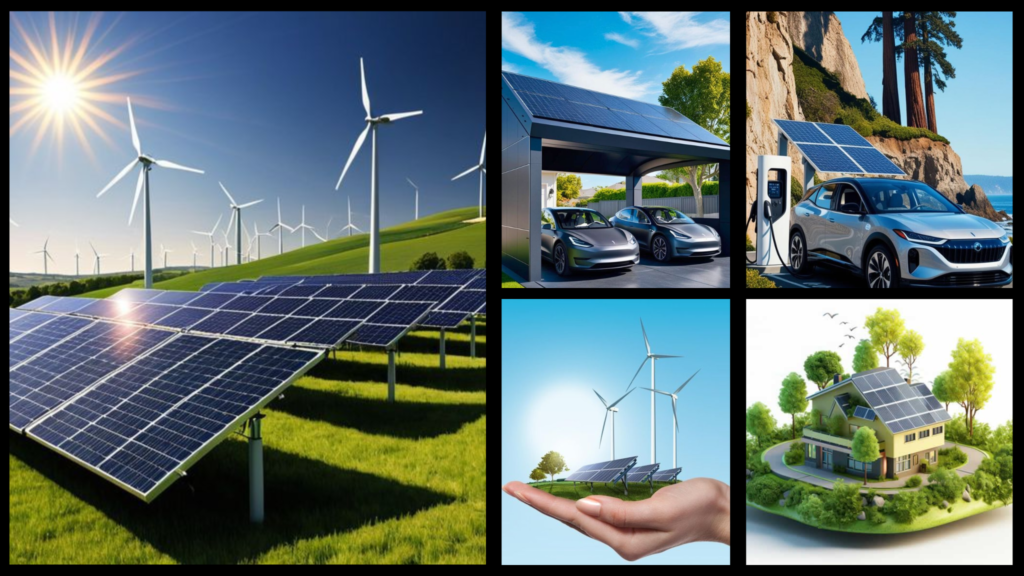
Gujarat has become the leading state in terms of the renewable energy capacity in India. In the state, clean power installation of 42.58 GW (as of December 2025) delivers 16.5 percent of the total renewable energy of India (higher than any other state).It is also the leader in wind energy as well as rooftop solar installations.
This transformation is centered around solar. Solar capacity in Gujarat exceeds 25 GW, supported by massive solar parks, roof tops and hybrid ones. Its wind energy facilities are more than 14.8 GW making the state diversified in energy.
This revolution includes even villages. Such projects as the solar-powered village in Modhera indicate that distributed renewable solutions could provide stable electricity to the rural population and empower them.
Creating Jobs and Driving Local Economies
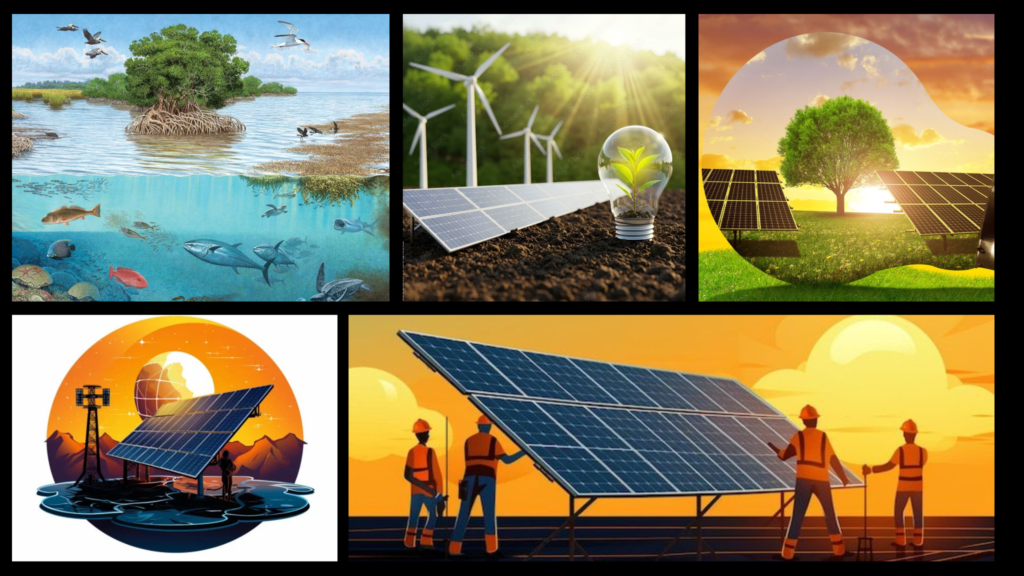
Employment is being energized throughout Gujarat by green energy. The renewable projects have created a total of 2.37 lakh direct and indirect employment positions including project development, project construction, project operation, clean tech services, and supply chain positions.
The use of rooftop solar has created the chance of local entrepreneurship. A small business ecosystem has been created around clean energy solutions, which is made up of installation teams and maintenance services.
Furthermore, the big renewable parks and hybrid projects have led to the emergence of ancillary industries in the field of logistics, manufacturing and the assembly of the components. This has increased the career opportunities to young people both in urban and rural settings.
Transforming Villages & Everyday Life
Renewable energy is taking development to the village level. The solar installations also guarantee power outages, less reliance on diesel generators, and make life better.
Such systems as battery-stored solar systems in places such as the village of Modhera have lights that are on at all times. This saves energy and improves the productivity of the households as well as local business.
Rural residents are provided with practical skills through workforce training programs that are concerned with clean energy. Such programs generate the opportunities of employment which were non-existent 10 years ago and they stem this migration of people in urban areas and they establish strong local economies.
Economic Impact: Powering Growth
Rural residents are provided with practical skills through workforce training programs that are concerned with clean energy. Such programs generate the opportunities of employment which were non-existent 10 years ago and they stem this migration of people in urban areas and they establish strong local economies.
The workforce training programs concerned with clean energy equip the rural residents with practical skills. It is through such programs that the opportunities of employment that never existed 10 years ago are created and as a result of this they bring about the migration of people to urban areas and create strong local economies.
Upgrades to transmission and energy-storage will guarantee that renewable energy will be able to supply the demand when needed. This will form the basis of economic stability in the long run and will facilitate the growth of green industries in the future.
Environment & Sustainability Benefits
The practical effects of switching to renewables include benefits to the environment of Gujarat. Green electricity aids in minimizing the adverse emission of coal and fossil fuels that cause air pollution and greenhouse gases.
Solar and wind projects reduce carbon footprints and save water resources in relation to the traditional power stations. Rooftop solar systems reduce pressure on the transmission systems and losses incurred during distribution.
Moreover, renewable projects promote land planning that is supportive of biodiversity particularly in desert and semi-arid areas where solar parks are located in close proximity with natural ecosystems.
Policies Fueling the Green Revolution
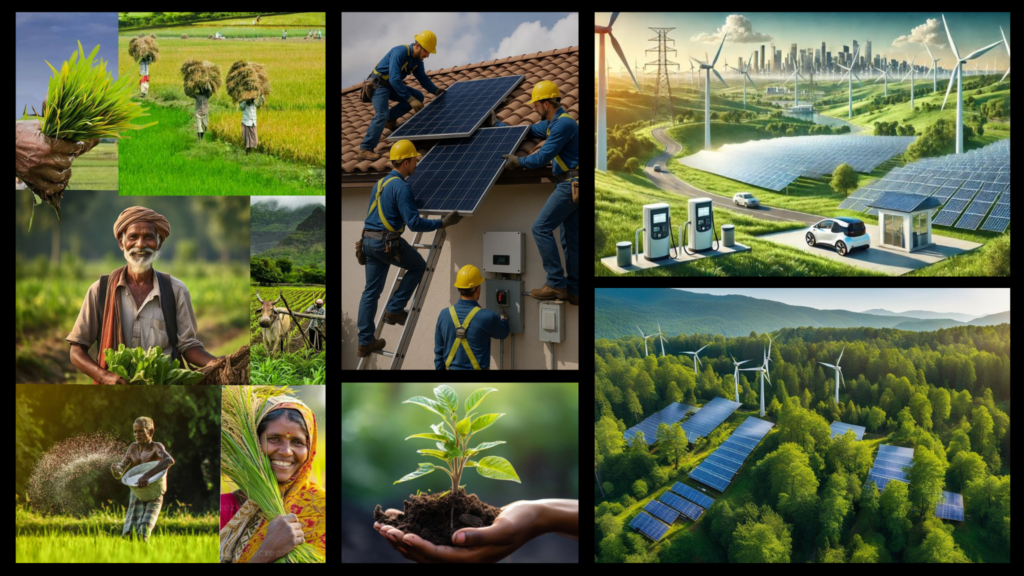
This is no coincidence that Gujarat has been successful. Its leadership has spearheaded proactive policies that render attractiveness and ease to the investment of green energy. Some of them are open grid integration, streamlined land registration and battery storage implementation.
Online approval and streamlined portals have enhanced fast implementation of projects. Such policies as net-metering have increased the use of rooftop solar and clean energy has become a viable choice among citizens, businesses, and institutions.
Such actions will place Gujarat in a good position to achieve future clean energy ambitions, such as the national net-zero emissions objectives and more renewable proportion in 2030.
What’s Next for Gujarat’s Green Journey
Renewable energy in Gujarat is still in its infancy. The state is going to have more giant solar and hybrid parks, battery energy storage systems as well as the growth of wind farms. This will also incorporate green power into the grid.
Gujarat can shortly be able to derogate whole districts using renewable energy and also send clean energy abroad with constant investment and innovation. Sustainability, employment and economic development prospects are exciting in the future.
Follow Gujpreneur now – and make the green economy of tomorrow!