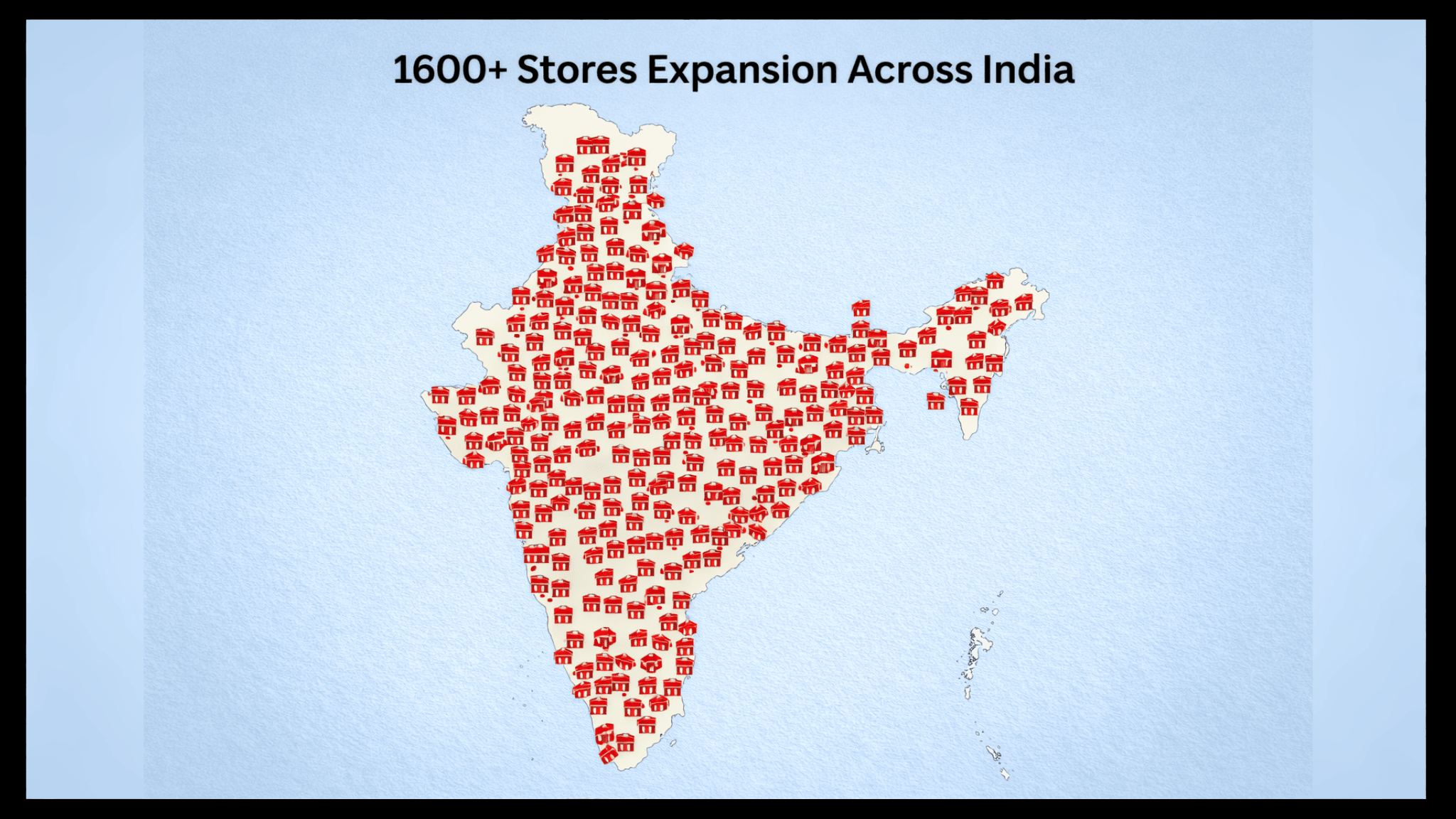
In the early 2000s, Subhiksha Retail felt like a genuinely exciting idea. Small neighbourhood stores. Everyday groceries at lower prices. No giant malls, no complicated setup – just products people needed, closer to where they lived, for a little less than what they’d normally pay. Customers responded fast. By the late 2000s, the company had grown into one of the largest retail chains in the country – around 1,600 outlets across India, selling groceries, fruits, vegetables, medicines, and mobile phones. That’s not a small number but a serious operation.
And then, within months, it was gone. By 2009, nearly all those stores had shut down. Employees lost their jobs. Suppliers hadn’t been paid. A chain that looked unstoppable had collapsed – and collapsed hard. The Subhiksha story is still discussed in business schools and retail circles. For supermarket owners and grocery entrepreneurs in Gujarat, it’s worth understanding why – not as a cautionary tale in the abstract, but as a practical map of exactly how things can go wrong.
Where Subhiksha Retail Started
Subhiksha Retail was founded in 1997 in Chennai by R. Subramanian, who graduated from IIT-Madras and IIM-Ahmedabad. The model was straightforward: discount retail through small neighbourhood stores, not large malls. Get close to where people live, keep costs lean, price slightly lower than the local kirana – and let volume do the work.
It worked. Customers liked it. And as the chain expanded across states through the early 2000s, the growth numbers started looking impressive. But behind those numbers, the financial systems holding everything together weren’t keeping up. And that gap between how fast the company was growing and how well it was actually managed is what eventually broke everything.
The Inventory Problem Nobody Fixed in Time
Retail businesses live by inventory management. Too little stock and you’re turning away customers. Too much and your cash is tied up in shelves instead of running the business.
As Subhiksha opened stores rapidly, inventory became a mess. Products piled up in some locations while other stores ran short. Demand was uneven across hundreds of outlets and no system was managing that gap properly. Retail case studies from this period show that the company’s fast expansion delayed the very operational upgrades it needed to handle that expansion.
In grocery retail, that kind of imbalance hits your cash flow quickly. Slow-moving stock doesn’t bring money back in. And without cash coming in, everything downstream like payments, restocking, and rent starts falling behind.
The Credit Trap
Subhiksha ran its operations on heavy supplier credit. Vendors supplied goods and expected payment after a set period. That’s normal in retail. But as the company kept adding stores, its working capital kept thinning out. Payments to suppliers started getting delayed. Then delayed further. Then suppliers stopped supplying.
Once that happened, the actual problem became visible – the company didn’t have the cash flow to keep its own stores stocked. Founder R. Subramanian was open about it during the crisis, saying the company needed support from bankers and lenders just to restart operations. By early 2009, many Subhiksha stores had empty shelves. Rent was unpaid. The shutdowns followed fast.
The Real Mistake: Expansion Without the Foundation
The discount model itself wasn’t the problem. The problem was the speed of expansion with no financial base to support it. Between 2004 and 2008, Subhiksha went from a few hundred outlets to over 1,600. Every new store meant rent, staff, logistics, and inventory – all requiring capital upfront. But the cash flow systems to sustain all of that never caught up.
Opening stores is exciting. It looks like growth. But growth that pulls working capital away from the stores already running is not growth – it’s a slow bleed.
What Modern Retail Did Differently
DMart is the most obvious example to look at here. Founded by Radhakishan Damani in 2002 – the same era as Subhiksha’s rise – DMart took a completely opposite approach.
Stores were opened gradually. Supply chains were kept tight and efficient. Inventory control was treated as a core business priority, not a back-office concern. That discipline in operations is widely credited as the reason DMart keeps turning profits consistently while many other retail players around it have struggled.
Where Subhiksha chased scale first and tried to sort out the operations later, DMart built the operations first and then scaled. That single difference in thinking changed everything.
What Gujarat Retailers Should Take From This
Organised grocery retail is picking up fast in Gujarat. Ahmedabad, Surat, Vadodara – all have supermarkets, hypermarkets, and now digital grocery delivery platforms competing for the same customer. Local entrepreneurs are also entering this space with neighbourhood supermarkets and modern grocery stores.
For anyone building in this space, the Subhiksha collapse points to a few things worth taking seriously:
- Don’t let expansion speed outrun your cash flow. Opening multiple stores quickly looks like momentum, but if each new store is pulling from the same thin pool of working capital, you’re building a house that’s already leaning.
- Keep track of inventory turnover. Slow-moving stock is not just a storage problem – it’s a cash problem. Money sitting on a shelf isn’t paying your suppliers.
- Pay suppliers on time, consistently. Your relationship with vendors is one of the most important assets a retail business has. Break it and the ripple hits your shelves almost immediately.
- Use technology. Digital inventory tools, POS systems, and demand forecasting exist today at accessible price points. Retailers in the Subhiksha era didn’t have these options easily. There’s no excuse now.
The Market Itself Has Evolved
It’s also worth noting that the retail ecosystem of 2009 looks nothing like today. Large retailers now run warehouses, distribution centres, and full logistics networks that let them track inventory across dozens or hundreds of outlets in near-real time. Quick commerce platforms like Blinkit, Zepto, and Swiggy Instamart have taken this even further – their dark store model is essentially built around hyper-controlled inventory in small, precise quantities. Everything is tracked. Very little sits around. The tools exist. The question is whether retailers use them with discipline.
Conclusion
Subhiksha had the right idea. The discount model had a real market. The demand was there. But weak financial discipline and expansion without a proper foundation destroyed a business that could have worked. More than fifteen years later, that story is still worth knowing. Not because it was dramatic, but because the mistakes it made are mistakes that any retailer, small or large, can make today. Build strong operations first. Keep cash flow healthy. Expand when the foundation can hold the weight. Subhiksha tried to fix the foundation while the building was already up. Most businesses don’t survive that.
Stay connected with Gujpreneur for more such business stories and lessons!