
India’s startup story began with Startup India in 2016. The policy was designed to support entrepreneurs and legitimize risk-taking. It provided legitimacy to a new generation of innovators. Registrations grew. Unicorns multiplied. Valuations climbed.
In ten years, startups became central to India’s economic aspirations. They are now linked with growth, employment, and opportunity. Over time the focus shifted from the number of startups to deeper structural issues. Leaders began to look at where startups were emerging. They studied their geographic spread and their contributions to real economic value.
Despite early success, most startups were concentrated in major cities. Metro hubs drew capital, talent, and attention. This left vast parts of India’s districts with untapped potential. India’s future workforce will increasingly reside outside major cities. By 2030 India will have the world’s largest working-age population. Many of these young people live in smaller towns and rural areas.
Because of this demographic reality, focusing only on big cities became a constraint. This risked reproducing inequalities rather than solving them. The next wave of innovation, many believe, must come from districts and tier-two and tier-three cities.
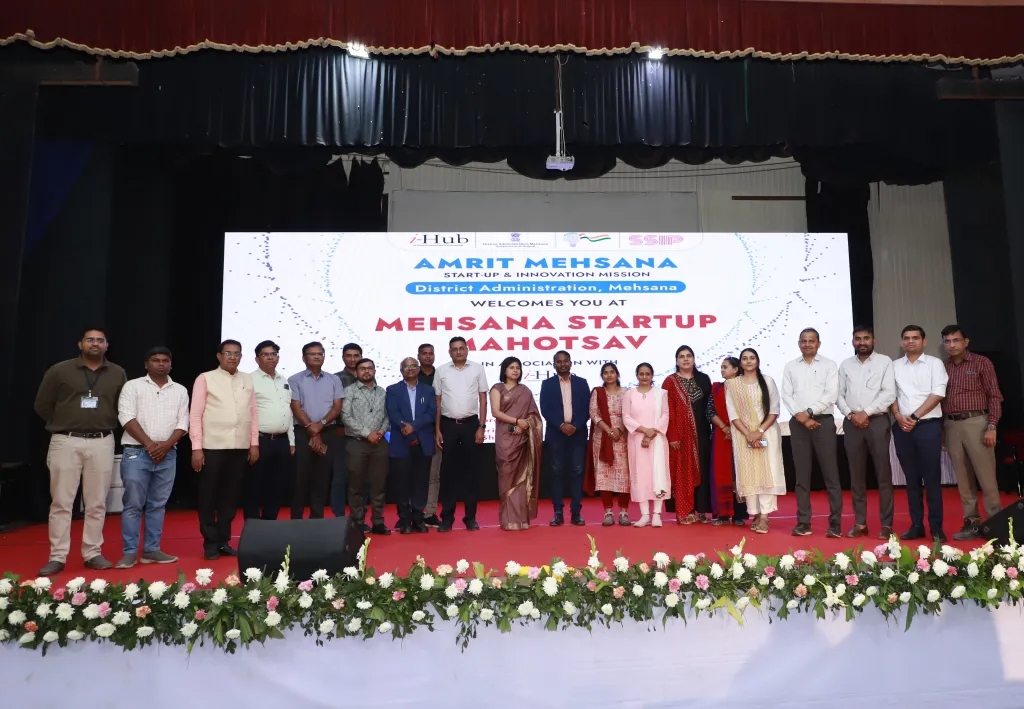
Gujarat’s Amrit Mehsana Startup and Innovation Mission (AMSIM) shows how this can happen. This initiative is rewriting how entrepreneurship functions outside metros. It offers a model for district-level innovation ecosystems that could shape India’s future.
The Vision Behind Amrit Mehsana
AMSIM began in Mehsana district in North Gujarat. It grew out of the belief that innovation should not be limited to big cities. The project was launched with a simple idea. Every district can be a site of innovation. It can be more than an administrative unit. It can be a place where ideas grow and startups form.
M. Nagarajan, a senior bureaucrat, believes India can become a startup nation by 2047 only if its districts also innovate. He has said that Startup India helped create momentum. The number of recognised startups grew from about 400 in 2016 to more than 100,000 today. But the real future of the movement is in tier-two and tier-three towns. That is where most people live, study, and work.
Amrit Mehsana’s strategy addresses several challenges that usually slow down entrepreneurs outside cities. These include limited mentorship, difficulty accessing early-stage capital, weak institutional networks, and poor connections between schools, industry, and government. The mission tackles these issues by bringing stakeholders together on one platform.
Building a District Innovation Engine
AMSIM treats innovation as a continuous pipeline, not a one-off event. This means creating pathways that move ideas from simple problems to scalable ventures. It links schools, colleges, universities, corporates, investors, and government in a shared framework. The goal is to support ideas across all stages of growth.
The mission aligns innovation with local strengths. In Mehsana, these include agriculture, dairy, food processing, healthcare, and engineering. Instead of copying metro trends, AMSIM works with what the district already does well. This allows startups to address local problems with regional solutions that can scale nationally or globally.
By anchoring entrepreneurship in local economies, Mehsana becomes a prototype for other districts. The approach can be adapted across India’s diverse regions and industries.
BharatNext Accelerator
One of AMSIM’s key programs is the BharatNext Accelerator. This is a twelve-week hybrid accelerator designed for startups from tier-two and tier-three regions. It attracted more than 500 applications from sixteen states, showing strong interest beyond Gujarat. Forty-eight startups were selected for an intensive programme covering business planning, operations, marketing, and capital mobilisation.
The programme culminated in a pitching event before more than fifty investors. Around twenty-five came from outside Gujarat. Letters of intent worth about ₹41 crore were issued to startups after this event. Such outcomes demonstrate that quality deal flow can emerge from districts when proper support structures exist.
This challenges long-held beliefs in venture capital that innovation outside metros is too risky or unsophisticated. The success of BharatNext proves that strong institutional scaffolding can unlock credible startups from districts.
Regional Recognition and Beyond
The success of Mehsana’s model gained visibility at Vibrant Gujarat regional conferences. In Mehsana and in nearby Rajkot, startups supported by AMSIM showcased their innovations. Fifteen startups from Mehsana exhibited at the Vibrant Gujarat Saurashtra Regional Conference. The district framework was also presented to the Union Minister of Commerce and Industry, suggesting national policy interest.
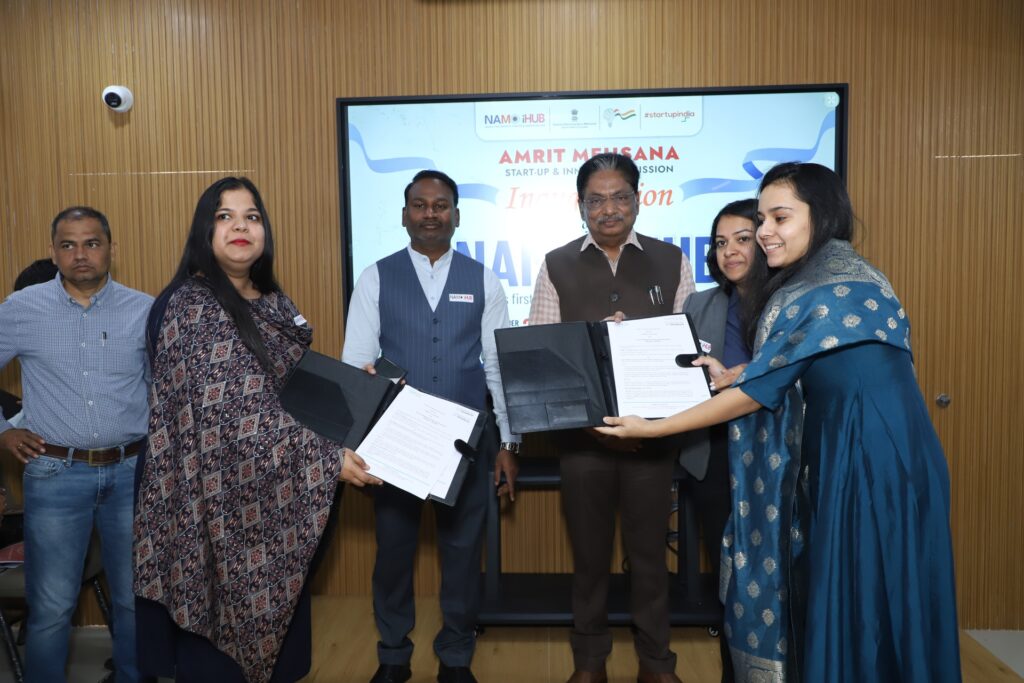
Experts argue that regional economic hubs are emerging as new centres of development. They are beginning to engage global partners directly rather than through metropolitan intermediaries. This shift could change India’s growth geography in the long term.
The Bigger Picture for India
The larger ambition of the district innovation model is transformative. If districts can nurture ideas and finance risk, entrepreneurship stops being a city privilege. It becomes part of national capability. This could mean jobs where people live and innovation where problems originate. It could help balance growth across regions.
Governance also changes. Instead of being distant regulators, district administrators become active partners in economic creation. As India aims for 2047, such models could unlock the potential of millions of young innovators across the country. Mehsana offers one possible blueprint. It shows that India’s startup future can grow steadily from its districts. If you like reading such innovative stories from the state of Gujarat then Gujpreneur is your place to be. Subscribe to our newsletters and read many such stories.