Most successful businesses begin with a market opportunity. Some are built around technology, others around manufacturing, and many around solving an existing customer problem. Belgrey started with a very simple question:
What if a water bottle didn’t have to be treated as waste?
That question led to one of the hospitality industry’s most sustainable solutions, now found in luxury hotels and restaurants across the country. Today, Belgrey’s innovative refillable glass water bottles are used in some of the country’s most prestigious hospitality spaces.
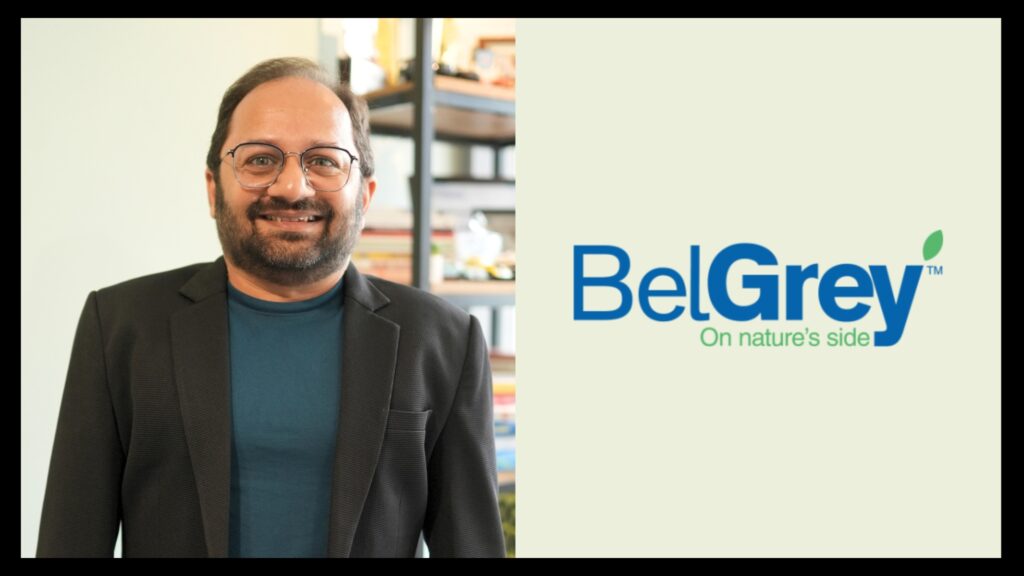
In conversation with Gujpreneur, Belgrey founder Ashit Chandaria shared how years of running an export business across more than 55 countries eventually led him to build a company focused on reducing single-use plastic. His journey demonstrates that environmental responsibility and commercial success can go hand in hand.
An Entrepreneurial Journey That Began with Exports
Long before Belgrey was established, Ashit Chandaria already determined that he wanted to pursue a career in entrepreneurship. He decided to focus on exports as an industry during his school days. Three pragmatic reasons prompted him to make that choice.
The first was his desire to travel the world. The second was financial independence. He wanted to build a business of his own rather than depend on his family’s resources. The third was self-awareness. Although he excelled academically, he knew he did not want a career driven primarily by numbers.
Before launching his own venture, Ashit worked with several companies in the medical exports industry. Those years gave him insights that no classroom could have offered.
Travelling extensively across Africa and other international markets long before smartphones and the internet transformed global trade, he experienced international business in its most practical form. The experience taught him the importance of consistency, long-term relationships, and understanding how business is conducted across borders.
More importantly, he realised that overseas clients were rarely looking for manufacturers alone. They were looking for partners they could trust. That insight eventually became the foundation of every business he built, including Belgrey.
One Magazine Sentence Sparked an Entirely New Business
Even as the export business thrived, Belgrey was never part of the original plan. It began with a casual conversation Ashit Chandaria had with his business partner after they came across a striking statistic in an in-flight magazine: every minute, one million plastic water bottles are sold across the globe, and most are never recycled.
The statistic stayed with them. But instead of thinking about recycling, they began asking a different question: what if the bottle could simply be reused?
What if the bottles were designed well enough for people to want to keep using them? What if hospitality businesses moved away from disposable packaging? What if sustainability became part of everyday life rather than a separate concept?
At first, it was simply a conversation between two entrepreneurs, with ideas being exchanged while travelling. However, unlike many business conversations that are quickly forgotten, this one stayed with them.
Curiosity soon turned into research.
The two partners began exploring everything from logistics and manufacturing feasibility to product design, customer behaviour, economics, and operations. Every answer raised new questions, but with each step, the idea became clearer. Gradually, those insights evolved into the business model that would become Belgrey.
Building a Business Despite Every Possible Disadvantage
Many entrepreneurs talk about the importance of focusing on their strengths, but Ashit and his partner took a completely opposite approach when starting Belgrey. Instead of focusing on their strengths, they began by recognizing their seven key weaknesses: insufficient experience in manufacturing, little experience in the fast-moving consumer goods (FMCG) sector, limited understanding of domestic marketing, no contacts in the field of hospitality, no marketing team, no budget for advertising, and absence of an established product brand.
Nevertheless, rather than giving up, Ashit and his partner accepted their shortcomings and started finding solutions to each one. Rather than assuming they knew the market from top to bottom, they actually took the necessary time to understand it from the ground up. Every challenge became an engineering problem. Instead of complaining about their limitations, they focused on solving them.
Launching Just Before the Pandemic
By the beginning of 2020, all the preparations were in place.
The factory had been set up, the branding had been completed, machinery had been installed, and production tests were initiated. Then the COVID-19 pandemic changed everything. The business had yet to officially launch when the nationwide lockdown was announced. Revenue disappeared before it had a chance to begin, while fixed costs continued to mount. Hotels and restaurants—the company’s primary target customers—were among the sectors hit the hardest, with the industry taking nearly two years to recover.
Selling Sustainability Without Selling Sustainability
One of the biggest lessons Belgrey learned was that customers do not always choose environmentally friendly products simply because they are sustainable. They choose them because they offer value and enhance the overall experience.
From the very beginning of the company’s journey, Ashit Chandaria understood that Belgrey was not competing with other eco-friendly products. Instead, it was positioning itself within the luxury hospitality industry.
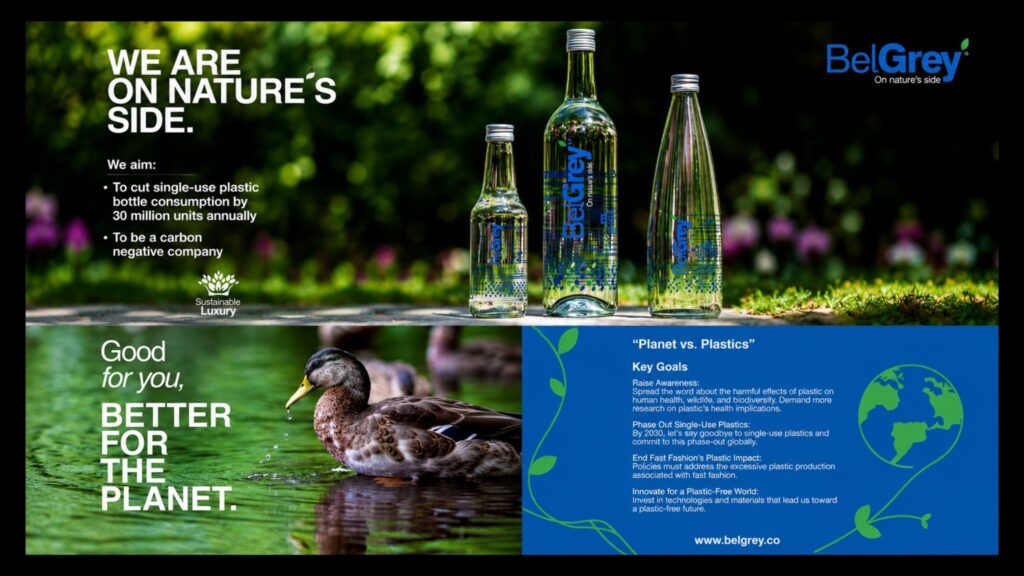
Refillable glass bottles needed to possess good visual characteristics to be accepted at boutique hotels and haute cuisine restaurants. Accordingly, the design brief was rather simple but quite bold because the product had to signal its intended usage in the fine dining field.
This philosophy shaped every business decision, from branding and product design to pricing and market positioning. Sustainability was not the only selling point of the product. It was important that the product looked good and was successful from a commercial point of view.
According to Ashit Chandaria, in order to have a successful purpose-driven business, it must also consist of strong business fundamentals. A business with a good cause will not be able to prosper if it benefits only some stakeholders instead of all of them.
Designing an Entire Circular Ecosystem
Manufacturing reusable glass bottles was only part of the challenge. The real challenge was building an entire return ecosystem. Belgrey designed its own crates to safely transport bottles over long distances while keeping breakage rates low. A restaurant receives fresh bottles and returns the empty ones, thus creating a refill loop.
Ashit Chandaria explains that many people assume glass bottles are automatically environmentally friendly. In reality, manufacturing glass generates significant carbon emissions. Their environmental benefits are realised only when the bottles are reused over an extended period.
Building Businesses Through Observation
Ashit believes much of his entrepreneurial thinking comes from continuous travelling, reading, and observing people’s behaviour. Whether shopping in supermarkets, eating in restaurants or visiting international markets – every experience gives him a chance to understand consumer behaviour.
He still quietly visits restaurants that use Belgrey bottles without revealing his identity. Watching how staff serve the product, how customers react, and where there is room for improvement gives him insights that no market research report can provide.
The Future of Sustainable Entrepreneurship
Looking ahead, Ashit Chandaria believes that sustainability will slowly become integral part of businesses. Carbon accounting, circular economy principles, responsible production, and eco-friendly consumption will likely become essential business practices. Belgrey’s long-term goals reflect this belief. The company intends to grow across India while staying true to its founding purpose: replacing single-use packaging with high-quality, reusable alternatives that create value for both businesses and consumers.
The company wasn’t created merely by hopping on a trend or having a new bottled water product. Rather, it was established by redefining a simple product and changing it into a market-leading sustainable answer for the hospitality sector. By doing this, Belgrey has shown how a simple glass bottle can change the way businesses think about packaging, reuse, and disposal of waste.
Follow Gujpreneur for more inspiring stories of global entrepreneurs, brands, and businesses changing the economic landscape of Gujarat.