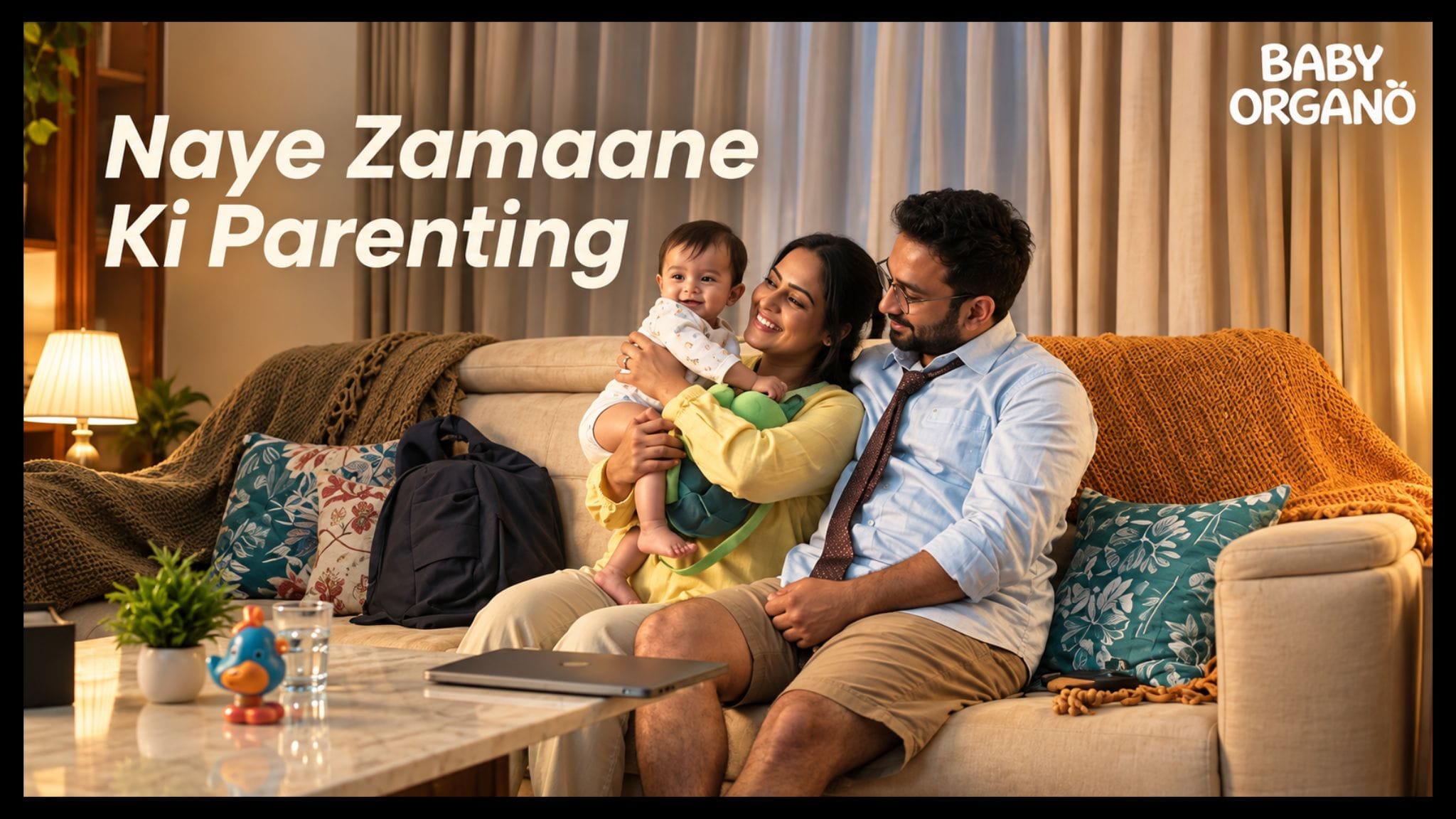
A product can solve a problem. A brand becomes memorable when it understands the life around that problem. That distinction sits at the heart of BabyOrgano’s latest campaign. The Ayurvedic wellness brand for kids has launched its first brand film around a subject that extends far beyond children’s wellness; modern co-parenting and the changing dynamics of Indian families.
The film follows a young couple at a familiar crossroads. The mother returns to work after her maternity break, while the father begins taking greater ownership of the everyday responsibilities of childcare. There is no dramatic confrontation, no perfect-parenting checklist, and no attempt to present equality as something that can simply be declared.
Instead, the film captures the small adjustments that happen when two people are genuinely learning to share the responsibility of raising a child. And that is precisely where BabyOrgano finds its marketing insight.
The Insight Hiding in Everyday Parenting
For years, parenting communication in India often revolved around a familiar picture: the mother as the primary caregiver and the father as the supporting character.
But the household being addressed by brands today is evolving. Mothers are building careers. Fathers are becoming more involved in childcare. Both parents are making decisions around wellness, routines, education and everyday consumption. Yet the mental load of parenting can remain unevenly distributed.
Riddhi Sharma, Founder of BabyOrgano, articulates the tension:
“Parenting today is spoken of as an equal partnership, but in most homes the everyday weight of it still quietly falls on the mother. We wanted to sit with a couple who are genuinely figuring it out and let parents see a little of themselves in that.”
The important part is what the brand does with that observation. It does not turn it into a lecture. That is a powerful distinction in advertising. The campaign does not tell consumers what modern parenting should look like. It shows them what figuring it out can look like.
Watch the Campaign Here
When the Consumer Becomes the Story
A children’s wellness brand has plenty of functional territories to own: Ayurveda, ingredients, safety, routines and product benefits.
BabyOrgano chooses to step outside that obvious territory. Not away from the product, but closer to the consumer. Because parents don’t experience children’s wellness as a category. They experience it at 7 a.m. before school, during a rushed breakfast, while packing a bag, between work calls. during bedtime; in the hundred small decisions that rarely make it into advertising. That is where BabyOrgano places its products.
Ripul Sharma, Co-founder of BabyOrgano, says:
“It is about those small, safe, everyday choices parents make for their children. That is exactly how the brand shows up in this film, in the ordinary moments of a family’s day to day life rather than looking like straight product marketing.”
This is the difference between product placement and product relevance. The product is not forced into the emotional narrative. It belongs there because the narrative is built around the consumer’s actual life.
Emotion Gets Attention. Insight Builds the Brand.
Emotional advertising is often reduced to powerful music, family moments and a moving ending. But emotion alone is not the strategy — the insight is.
BabyOrgano’s campaign works because its emotional story is rooted in a real consumer shift: parents are redefining what shared responsibility looks like. The brand doesn’t just create a touching moment; it connects itself to a truth its audience is already living. And importantly, it doesn’t over-sell.
The products appear naturally within the family’s everyday routine, allowing the brand to participate in the story without taking it over. In an increasingly crowded advertising landscape, knowing when not to shout can be as powerful as knowing what to say.
That also makes the campaign culturally relevant without feeling opportunistic. Co-parenting is not a borrowed conversation for BabyOrgano — it sits close to the brand’s relationship with parents and children.
A trend can give a brand visibility. A genuine consumer connection gives it permission to be part of the conversation.
What Marketers Can Take Away
- Look beyond the category: A children’s wellness insight may begin with family dynamics rather than product benefits.
- Find the invisible tension: What people have stopped complaining about may reveal what they have simply learned to live with.
- Build relevance before reach: A campaign can reach millions and still say nothing meaningful. Relevance gives reach something to carry.
- Make emotion serve the insight: A moving story may earn attention. A sharp consumer truth is what can build brand memory.
The Bigger Brand Lesson
BabyOrgano’s co-parenting campaign points towards a larger evolution in brand marketing. Consumers are not just buying products based on what they do. Increasingly, brands are being noticed for whether they understand the world in which those products live.
For BabyOrgano, that world is changing, and the brand has chosen to acknowledge the change. Because the strongest consumer insight may not be the one that tells a brand what people want to buy. It may be the one that tells a brand what people are quietly living through. And when a brand can recognise that reality before selling anything, marketing becomes more than communication. It becomes understanding.
For more insights at the intersection of business, culture and consumer thinking, discover more stories on Gujpreneur.