A city’s heritage is reflected not only in its historic buildings but also in its architecture, traditions, communities and the stories passed down through generations. Bringing these elements together, Ahmedabad celebrates World Heritage Week 2026 from November 19 to 25, with a series of cultural initiatives across its historic precincts.
Organised by the Ahmedabad Municipal Corporation (AMC) in collaboration with heritage organisations, artists and cultural institutions, this year’s celebrations feature three major programmes: Bhadra Festival, Varsa no Utsav – Ahmedabad Heritage Utsav and the Water Heritage Series.
The initiatives aim to bring residents, particularly younger generations, closer to the city’s architectural and cultural legacy through performances, heritage walks, exhibitions and artistic experiences.
Why Is World Heritage Week Significant for Ahmedabad?
Ahmedabad holds a distinctive place in India’s heritage landscape. Founded by Sultan Ahmad Shah in 1411, the city’s historic Walled City became India’s first UNESCO World Heritage City on July 8, 2017.
Its recognition goes beyond individual monuments. Ahmedabad’s traditional pols, wooden houses, religious structures, community spaces and historic street patterns reflect centuries of architectural development and cultural exchange.
World Heritage Week provides an opportunity to create greater awareness about the importance of preserving these historic spaces and keeping their cultural traditions relevant for future generations.
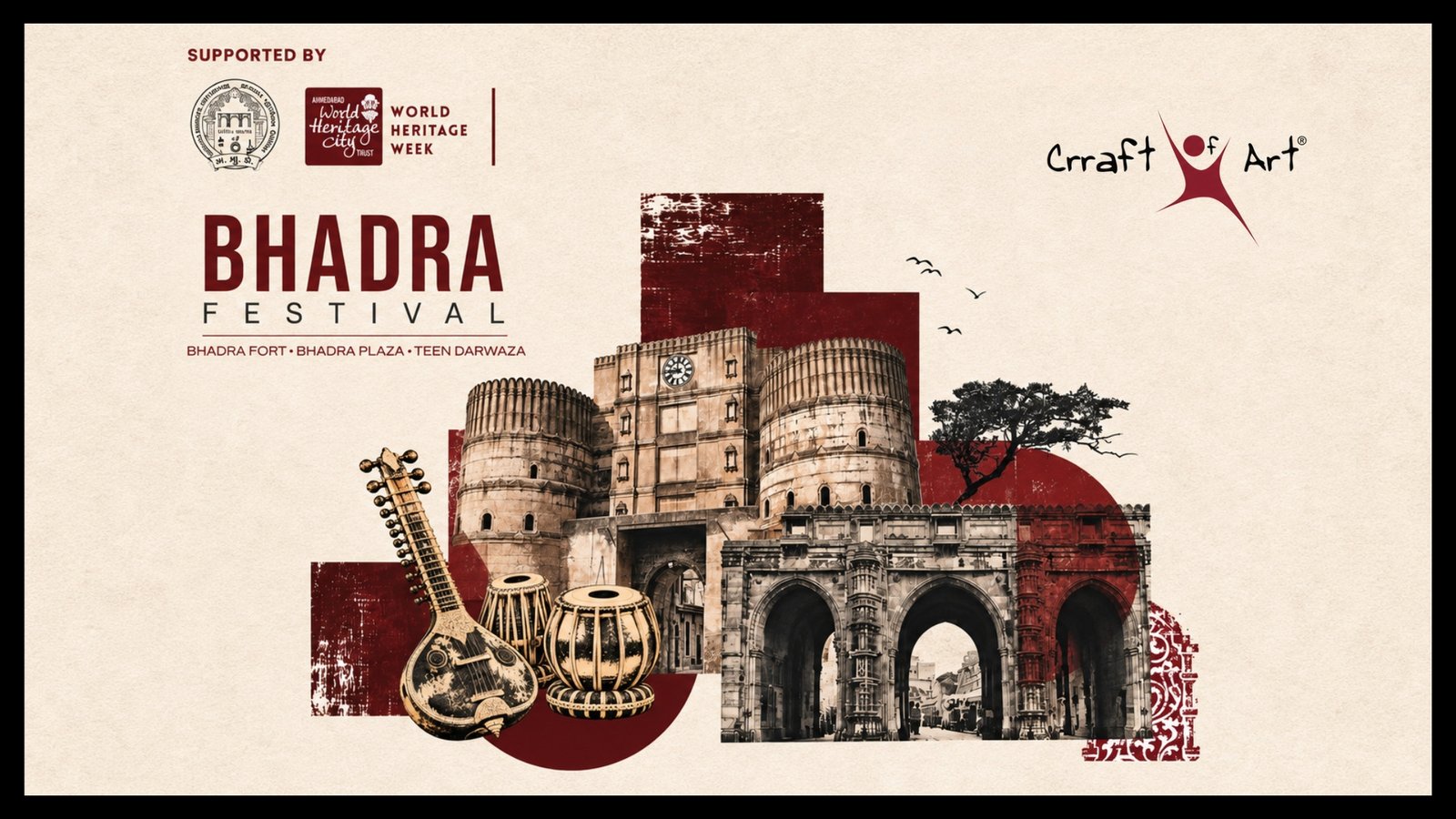
1. Bhadra Festival 2026: Returning After 12 Years
Date: November 19, 2026
Time: 4:00 PM onwards
Venues: Bhadra Fort, Bhadra Plaza, Premabhai Hall and Teen Darwaza
Conceived and Curated By: Crraft of Art
Supported By: Ahmedabad Municipal Corporation
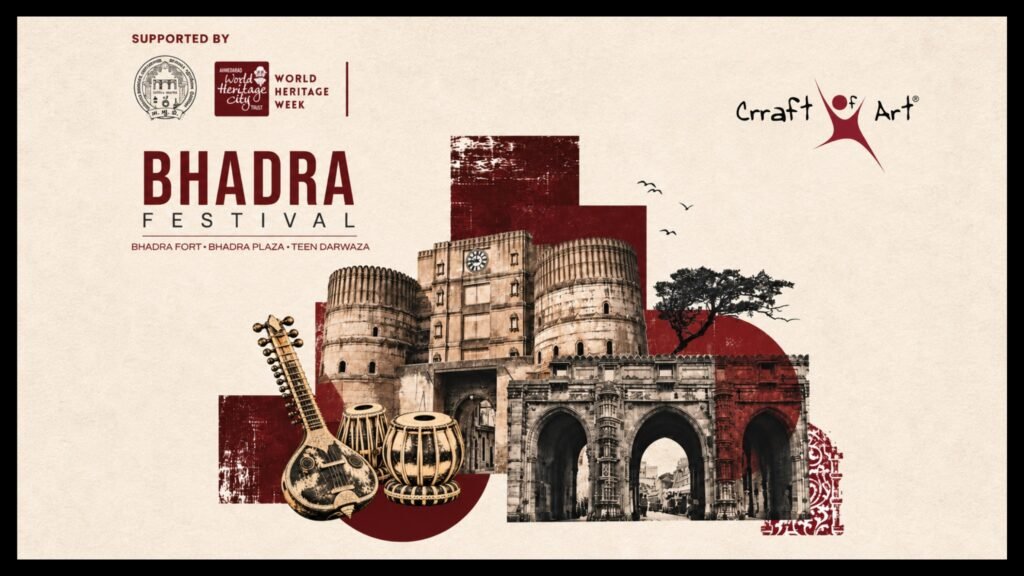
First organised in 2014, Bhadra Festival returns to Ahmedabad after 12 years, bringing together traditional music, theatre, storytelling, folk performances and visual arts.
The programme features Nagara, Ravanhatta, Sidi Dhamal, Mallakhamb, Gujarati storytelling and Natya Sangeet, alongside a giant puppet parade by Dadi Pudumjee’s Ishara Puppet Theatre.
Key Performance Schedule
| Timings | Performance & Artist | Venue |
| 4:00 – 4:08 PM | Ceremonial Opening – Nagara Nathulal Solanki & Troupe | Bhadra Plaza |
| 4:10 – 4:30 PM | Giant Puppet Parade Ishara Puppet Theatre – Dadi Pudumjee | Bhadra Plaza |
| 4:35 – 4:45 PM | Dastan-e-Darwaza Dastangoi by Utopia | Stage 1 |
| 4:50 – 5:00 PM | Mallakhamb Incredible Mallakhamb | Stage 2 |
| 5:05 – 5:20 PM | Bhadraakhyan Traditional Gujarati Storytelling by Utopia | Stage 1 |
| 5:25 – 5:55 PM | Natya Sangeet Gems of Gujarati Rangbhoomi – Nisarg Trivedi & Actors | Stage 2 |
| 5:55 – 6:05 PM | Dastan-e-Darwaza Dastangoi by Utopia | Stage 1 |
| 6:05 – 6:25 PM | Sidi Dhamal Sidi Goma Dance Group | Stage 2 |
| 6:30 – 6:40 PM | Mallakhamb Incredible Mallakhamb | Stage 2 |
| 6:40 – 7:00 PM | Nagara & Giant Puppet Parade Nathulal Solanki & Troupe; Dadi Pudumjee’s Ishara Puppet Theatre | Bhadra Precinct |
Stage locations:
- Stage 1: Chinhubhai Baronet Statue, Bhadra Plaza
- Stage 2: Open-Air Stage, Bhadra Plaza
- Stage 3: Main Concert Stage, Teen Darwaza
A special Ravanhatta presentation by Vijanand Turi and Troupe will also take place at Bhadra Fort Courtyard from 4:30 PM.
The festival will feature three exhibitions: RANG SMRUTI – The Living Archives of Gujarati Theatre, curated by Manvita Baradi; BHADRA UNPOSED, featuring photographs by Vinay Panjwani; and an archival exhibition exploring Bhadra’s history.
Projection mapping on Bhadra Fort and a Mata ni Pachedi-inspired presentation at Premabhai Hall will add another dimension to the celebrations.
Musical Concert at Teen Darwaza. The evening will conclude with a musical concert beginning at 7:15 PM, hosted by actor Manav Gohil.
The line-up features Ustad Fazal Qureshi on tabla, accompanied by George Brooks, Sheldon D’Silva, Arun Kumar and Rahul Wadhwani. Sitar maestro Ustad Shujaat Khan will also perform alongside tabla artists Amit Choubey and Sapan Anjaria.
2. Varsa no Utsav – Ahmedabad Heritage Utsav 2026
Dates: November 20–22, 2026
Venue: Near Kavi Dalpatram Chowk, Walled City
Organiser: The Doorbin
Under the theme “Mari Pol, Maru Ahmedabad, Mari Virasat”, Varsa no Utsav focuses on the neighbourhoods, traditions and community life that shape Ahmedabad’s identity.
The three-day programme will feature heritage walks, Kavi Sammelan, bhajan jamming sessions, live painting, traditional games for children and photography and reel-making competitions.
The initiative brings attention to the city’s pols and everyday cultural practices, encouraging people to explore the heritage that exists within their own neighbourhoods.
3. Water Heritage Series: Exploring Ahmedabad’s Historic Stepwells
Date: November 25, 2026
Conceived and Curated By: Crraft of Art
Supported By: Ahmedabad Municipal Corporation
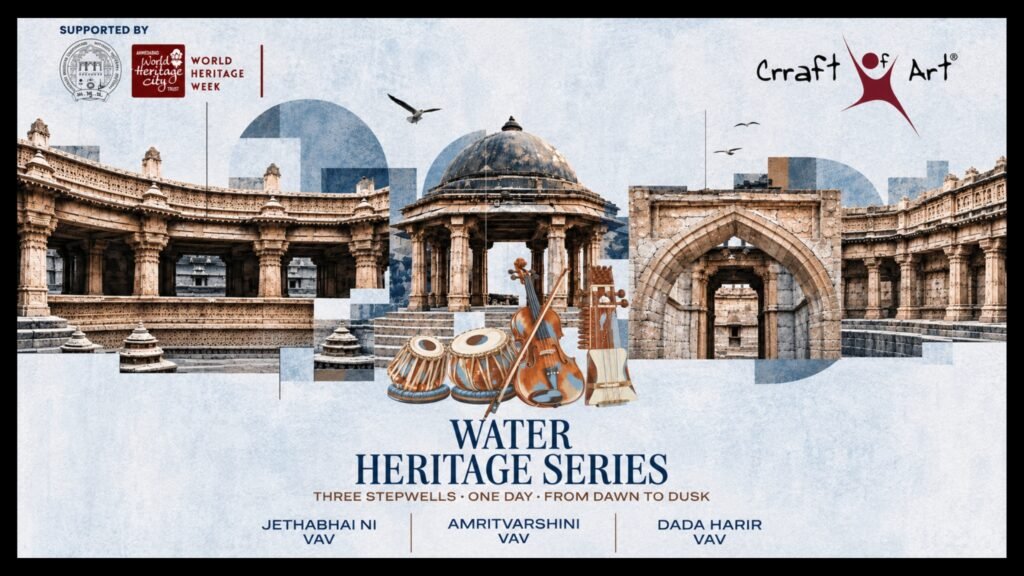
The Water Heritage Series will take audiences across three historic stepwells, combining classical music, poetry and performing arts with the architectural significance of these structures.
Programme Schedule
| Programme | Venue | Time | Featured Presentation |
| VAAV SUR | Jethabhai Ni Vav | 6:30 AM | Hindustani classical vocal recital by Pandit Jayateerth Mevundi |
| VAAV VARTA | Amrutvarshini Vav | 11:00 AM | Poetry by Soumya Joshi and Anil Chavda, with Bharatanatyam by Prachi Saathi |
| VAAV TARANG | Dada Harir Ni Vav | 7:00 PM | Musical presentation led by Ustad Fazal Qureshi |
The concluding presentation, VAAV TARANG, will bring together musicians performing on the tabla, sarangi, cello, kamaicha and khartal, with Himali Vyas Naik joining as a special guest vocalist.
Entry to the Water Heritage Series is free, with prior registration and limited seating at all three locations.
Keeping Ahmedabad’s Heritage Relevant
Ahmedabad’s heritage is not confined to its monuments. It lives through its neighbourhoods, architecture, traditional art forms and communities that continue to preserve its cultural identity.
Through Bhadra Festival, Varsa no Utsav and the Water Heritage Series, World Heritage Week 2026 creates opportunities to experience these traditions beyond historical records and architectural landmarks.
More importantly, these initiatives highlight the role of cultural organisations, artists and local communities in preserving and sharing the city’s legacy.
Because preserving a city’s heritage is not just about protecting what it has inherited. It is about ensuring that its stories, traditions and cultural identity continue to remain relevant for generations to come.
At Gujpreneur, we believe that understanding a city’s heritage is also understanding the people, ideas and cultural foundations that shape its identity.