
Sometimes life breaks us before it builds. We question why setbacks happen, but later realise they push us exactly where we are meant to be. The story of the Balaji wafers is proof of that. A journey that began with loss and struggle eventually shaped India’s biggest entrepreneurial journey.
From standing with almost nothing to ruling the wafer market — The story of the Virani brothers built on grit, timing, and belief. Balaji Wafers wasn’t born from a grand business plan. It began with a simple intention: Fulfilling the consumer needs.
Today, it holds 90% of Gujarat’s potato wafer market, setting benchmarks for consistency and trust. A brand in its own league, built not by luck, but by resilience and adapting with time.
Now let’s uncover how this remarkable journey unfolded.
Before Balaji – The Days of Struggle
The story goes back to the early 1970s, in Dhundhoraji, Gujarat, the birthplace of Chandubhai Virani (Founder of Balaji Wafers). As a farming family, their ancestral land was everything that the Virani family had, but severe drought hit the village, leaving them with no choice but to sell their ancestral land. The land money was divided among the three brothers, leaving each of them with ₹20,000.
Chandubhai was 15 during this period and shifted to Rajkot to make something big out of that money. With no experience and limited knowledge, the Virani brothers decided to try a fertilizer business. But things didn’t go well, and the little money they had disappeared quickly.
Left with nothing in hand, they took up any work they found to survive. From hanging movie posters to sweeping floors, serving food, and making sandwiches at Astron Cinema. — They did everything to earn a living. Their dedication eventually got them an opportunity at the Astron Cinema, where they were offered the canteen operations. It was a ray of hope after months of hardship.
The Turning Point – Taking Action
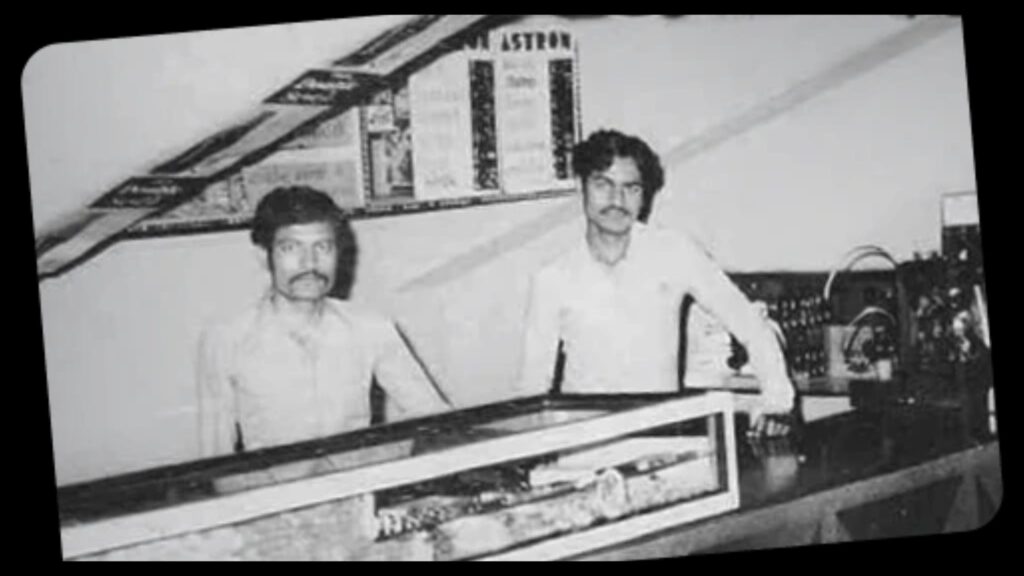
Working at the Astron Cinema canteen changed everything for the Virani brothers. Every movie interval felt like a mini stampede at the snack counter. After working there for a long time, they realised one usual pattern – people loved to munch on potato chips, but there was a big problem they understood.
- Even after other options available for food, people go for potato wafers
- Due to High demand and a lack of consistent supply on time, Potato chips are always out of stock
- The price, quality, and quantity of the chips were not up to the mark.
Watching this every day, the Virani brothers noticed an opportunity to solve this inconsistency and make money. People wanted potato wafers — good ones, fresh ones, and more quantity for their money. That’s when a thought struck them: Why not make Potato wafers ourselves?
And that one decision changed everything. Making their own potato chips and selling them at competitive prices. With a new aim in mind, they started moving forward, working at the canteen by day and making wafers at night. From slicing potatoes, frying them in small batches, to packaging, everything is done by hand. No machines. No fancy setup, just hard work and commitment to quality.
When they first introduced their wafers in the canteen, they had an instant hit. People loved the taste of simplicity. They appreciated the quality and quantity. They named their brand Balaji Wafers, inspired by Lord Hanuman — “Balaji” — whose temple stood close to their workplace. A name that symbolised faith, strength, and courage.
Growth Phase – From Home Kitchen to a Household Name
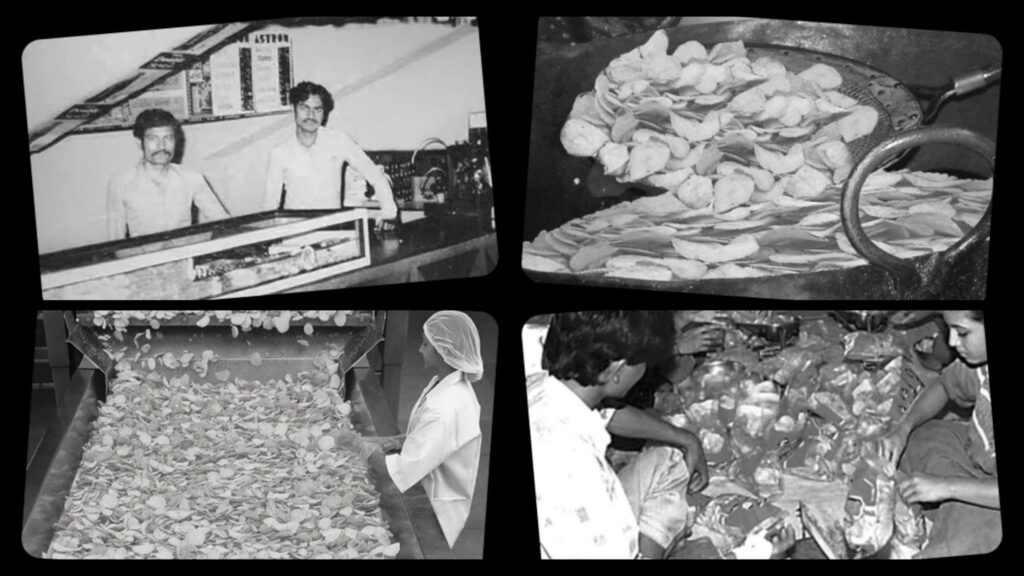
Success brings new challenges. As word spread beyond the cinema, demand began to rise from nearby stores as well. People wanted Balaji wafers everywhere. And with that, the Virani brothers realised something important — manual production could not keep up.
Making wafers by hand was exhausting. Maintaining the exact same taste every single batch, every day, became difficult. And without consistency, growth was impossible. So they took their next brave step — investing in a semi-automatic chips-making machine. It was a big risk, especially with their limited savings. But it changed everything. Production increased. Quality became stable. And the quantity finally matched the demand.
With confidence rising, they started distributing to more stores in Rajkot and surrounding towns. What began in a small compound slowly turned into a structured business. Balaji Wafers was no longer just a cinema snack — it became a daily favourite for families.
As demand continued to multiply, they kept evolving:
- 1989: Semi-automatic machines increased speed and scale.
- 1995: Shift to a fully automatic manufacturing plant.
- 2002: Built India’s largest potato wafer factory at that time.
- 2006: Dominated Gujarat with 90% market share.
- 2008: Set up one of Asia’s biggest plants in Valsad.
- 2024: Crossed ₹5,454 crore in annual sales.
But machines alone don’t create loyalty. What truly set Balaji apart was understanding Indian taste better than anyone. While big brands focused only on one category, Balaji listened to real customers. People wanted flavours that reminded them of home. And Balaji delivered — Simply Salted, Masala Masti, Chaat Chaska, Katak Batak, and more — each name that connected instantly and stayed forever.
Every packet carried consistency, value for money, and a taste no one could forget. That trust built a brand stronger than any advertisement.
Balaji didn’t grow by chance. It grew by reading the market, improving every day, and respecting the customer.
The Decision That Shocked Everyone

As Balaji kept growing, it started drawing attention from global giants. In 2013, PepsiCo made a huge offer — ₹4,000 crore to buy Balaji Wafers. For most people, that amount means the end of struggle forever. But for the Virani brothers, the decision was about something bigger than money.
They built Balaji with years of effort, sleepless nights, and trust from millions of customers. Selling it would mean giving away the identity they created from scratch. They believed one thing strongly — a brand loved by people should stay with the people. Not everything has a price.
So they said no. A bold decision; standing strong with their belief. Today, that decision stands taller than any investment.
Because time proved them right.
By 2025, Balaji’s valuation touched nearly ₹40,000 crore, and global investors were competing for just a 10% stake. ITC, PepsiCo, TPG, Temasek — everyone wanted to be part of this success.
Balaji stayed independent. And India gained a brand built on conviction.
What can you learn from Balaji Wafers?

Finding opportunities hidden beneath layers of self-doubt is never easy. Most people miss it. But the Virani brothers didn’t. They looked closely, understood the problem, and stepped in when others ignored it. That’s where greatness begins.
Many times, we doubt ourselves instead of taking action. Imagine if they had never tried making wafers themselves. Imagine if they stayed limited to one cinema canteen. The story would never reach where it stands today.
Consistency and adaptability changed everything. They faced countless roadblocks, but every setback sharpened their path. Being a Gujarati brand, they understood India’s taste in a way no global brand could. With patience, research, and deep market understanding, they created products that were honest, affordable, flavourful, and always full, not filled with air.
Conclusion
The story of Balaji Wafers isn’t just a business case, but a guide for next-generation entrepreneurs. Built in Gujarat, built for India, built with heart, Chandubhai Virani is a true Gujpreneur, and for every Gujarati entrepreneur dreaming big, this inspirational story is your guiding light.
Love such an entrepreneur story? We have more stories to share. Follow Gujpreneur for future posts.