For centuries, India’s traditional knowledge systems have placed deep emphasis on the development of the body, mind and inner self. Yoga has been one of the most visible expressions of that knowledge. Today, Patanjali is seeking to connect this ancient wisdom with the needs of a new generation through Vedic Manas Yoga.
The initiative aims to bring together Indian knowledge traditions, Yoga, cognitive development, neuroscience, assessment and technology. Its larger focus is children and their ability to learn, concentrate, regulate emotions and develop confidence.
At the centre of this effort is the organisation’s CEO Darpan Vyas, whose journey spans more than 15 years of entrepreneurship, education, child assessment and programme development. His association with Patanjali has given him an opportunity to bring together his experience with the institution’s established knowledge and research ecosystem. He says:
“When my experience in education and child development came together with the enormous knowledge, research, institutional ecosystem and vision available at Patanjali, I saw the possibility of creating something much larger,”
Under the guidance of Param Pujya Swami Ramdev Ji and Shraddheya Acharya Balkrishna Ji, he believes Vedic Manas Yoga can take India’s traditional wisdom to children in a structured and accessible form.
“Patanjali brings tremendous depth in Yoga, Ayurveda and Bharatiya knowledge traditions,” he says. “My role is to complement that foundation with my experience in education, technology, child assessment, programme development, institutional partnerships and scalable implementation.”
For him, the association goes beyond a professional role.
“It is a mission to take something deeply rooted in Bharat and make it relevant to the children of today’s world,” he says.
From Understanding Potential to Developing It
His journey towards Vedic Manas Yoga began long before he became its CEO.
He has spent more than 15 years as an entrepreneur. His work has largely focused on education, human potential, assessment and understanding individual capabilities.
A significant part of his journey has been his association with Dermatoglyphics since 2009. This work allowed him to interact with thousands of children, parents, educators, schools and entrepreneurs.
Those experiences gradually changed the questions he was asking. Initially, the focus was on understanding a child’s potential.
“How do we understand the potential of a child?” was the central question.
Over time, however, another question became more important.
“Once you understand a child’s potential, what are you actually going to do to develop it?”
That question changed the direction of his work.
It moved him from assessment towards development. It also moved his attention from simply identifying potential to creating programmes that could help nurture it. That evolution eventually brought him towards Vedic Manas Yoga.
Today, his role as CEO involves much more than organisational management. He is responsible for building strategy, systems, partnerships, technology, research frameworks and implementation capabilities.
The goal is ambitious. It is to take the programme to a large number of children while also creating systems that can measure its effectiveness.
“I have been an entrepreneur for many years, and entrepreneurship teaches you something important,” he says. “Your failures educate you, your challenges strengthen you, but your purpose gives you direction.”
For him, Vedic Manas Yoga brings together several strands of his professional journey.
These include education, entrepreneurship, technology, child development, Indian Knowledge Systems and institution building.
He therefore does not view becoming CEO as a final achievement.
“I don’t look at becoming CEO as an achievement or destination,” he says. “I see it as the beginning of a much bigger responsibility.”
An Integrated Approach
The field of children’s mental wellbeing and cognitive development has grown in recent years. More organisations are working on concentration, mindfulness, emotional wellbeing, memory and holistic development.
He views that growth positively. “If more organisations are talking about children’s mental wellbeing, concentration and holistic development, it means society has recognised the need,” he says.
At the same time, he believes Vedic Manas Yoga has a different positioning.
Many existing programmes focus on individual areas. One programme may focus on Yoga. Another may focus on meditation. Others may work on memory, mindfulness, brain exercises or emotional wellbeing.
Vedic Manas Yoga seeks to connect these different areas.
“Our approach is integrated,” he says.
The programme brings together ancient Indian wisdom, Yoga, cognitive development, neuroscience, assessment, technology and continuous practice.
This integrated approach is central to the organisation’s vision. The idea is not simply to conduct a session and leave children with a set of activities. The larger objective is to create a process that can be practised continuously and evaluated over time.
This also explains why the organisation does not want to view Vedic Manas Yoga simply as a workshop business.
Its ambition is broader. The focus is on creating a structured programme that can work within schools and institutions and potentially reach large groups of students.
From Concept to Validation
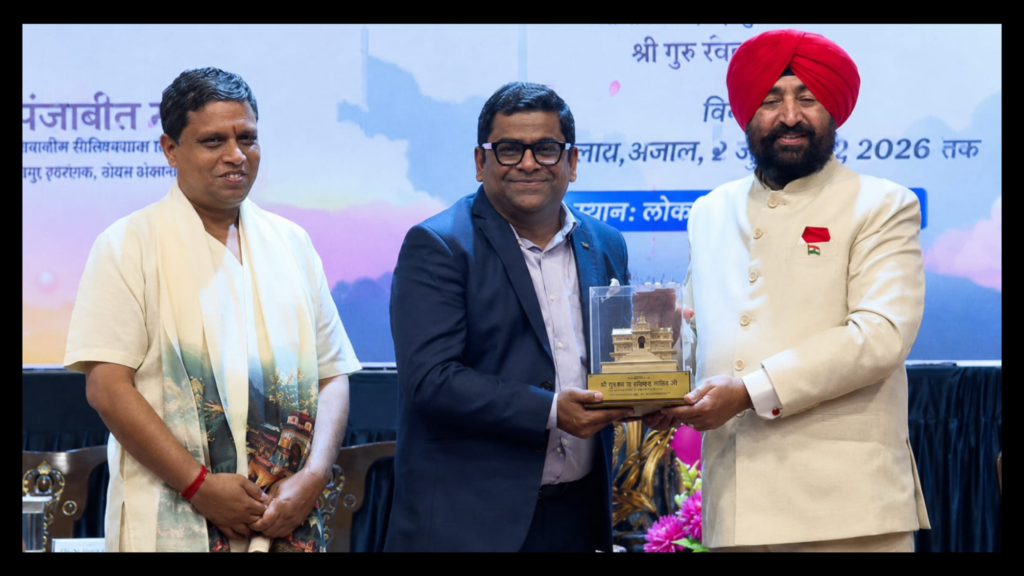
The early response to Vedic Manas Yoga has been encouraging. One significant milestone was a two day Vedic Manas Yoga programme at Lok Bhavan, Uttarakhand. The programme received encouragement in the presence of respected dignitaries and leadership.
However, the most meaningful feedback has come from those who work closely with children.
Parents, teachers, trainers and educators have shown interest in the programme. Their interest goes beyond the fact that children enjoy the activities.
They see possible relevance to challenges that children face every day.
These include attention, emotional regulation, confidence, discipline and learning readiness.
For the organisation, however, positive feedback is only one part of the journey. The leadership recognises that anecdotes cannot establish the effectiveness of a programme on their own.
“As we scale, one of our priorities is to build stronger assessment, documentation, research and impact measurement systems so that the programme’s outcomes can be evaluated objectively,” he says.
This focus on measurement could become an important part of Vedic Manas Yoga’s next phase.
The organisation is working towards partnerships with schools, institutions and government bodies.
It is also developing a roadmap for larger implementation. One of the possibilities under consideration is a model that can reach students across entire districts.
The organisation therefore sees itself at an important transition point.
“We have moved from the stage of concept to validation,” he says. “And now we are entering the most exciting phase: validation to scale.”
Taking Indian Wisdom to a New Generation
The larger idea behind Vedic Manas Yoga is rooted in a simple question. How can India’s traditional knowledge be presented to children in a way that is relevant to the world they live in today?
The answer, according to the organisation, lies in combining traditional wisdom with contemporary tools.
Technology can support assessment and implementation. Research can help evaluate outcomes.
Neuroscience can provide another framework for understanding cognitive processes. Education can provide the environment in which the programme reaches children.
Yoga and Indian knowledge traditions provide the philosophical and practical foundation.
The combination is intended to make the programme both rooted and contemporary. That balance may be one of the biggest challenges ahead.
Traditional knowledge must be presented in a manner that children can understand. At the same time, claims about cognitive development need to be supported through appropriate assessment and research.
The organisation appears conscious of this responsibility.
Its emphasis on documentation, research and impact measurement suggests that scaling the programme will not only involve reaching more children. It will also involve developing evidence around what works.
For Patanjali, the opportunity is potentially significant.
India has a large school going population. Schools and parents are increasingly interested in concentration, emotional wellbeing and holistic development.
A structured programme that can operate at scale could therefore have a wide reach.
Yet the organisation’s stated ambition extends beyond India.
The larger vision is to demonstrate how Indian wisdom can contribute to the development of children in a modern world.
A Mission Beyond Business
The journey of Vedic Manas Yoga reflects a broader shift in the way the CEO Vyas views his own work.
His earlier experience focused on identifying potential. The current role focuses on creating pathways for development.
That distinction is important. Development asks what happens next. Vedic Manas Yoga is positioned around that second question.
Its objective is to create practices that can support children in developing cognitive abilities and other aspects of their overall development.
The leadership sees entrepreneurship as a foundation for taking on that challenge.
Years of experience have taught him that setbacks are inevitable.
But they can also provide direction.
That philosophy appears to influence his approach to Vedic Manas Yoga.
The Larger Vision
If Vedic Manas Yoga succeeds in its stated ambition, it could become an example of how traditional Indian knowledge can be presented through a contemporary educational framework.
Today, Vyas is working to build an ecosystem that attempts to answer that question for a much larger number of children.
His vision for the programme can be summed up in one thought.
“For centuries, Bharat has taught the world how to strengthen the body through Yoga. The next opportunity is to show the world how the same wisdom can help strengthen the mind of a child.”
Gujpreneur brings to you all the latest happenings from various sectors. We hope you enjoyed reading the same. Follow us for more such updates!