Ahmedabad’s Bhadra precinct has long been part of the city’s everyday rhythm. From the bustling markets of Lal Darwaza to the historic gateways of Teen Darwaza, thousands pass through these streets daily. Yet, beyond the commercial activity lies a cultural legacy that often remains unexplored.
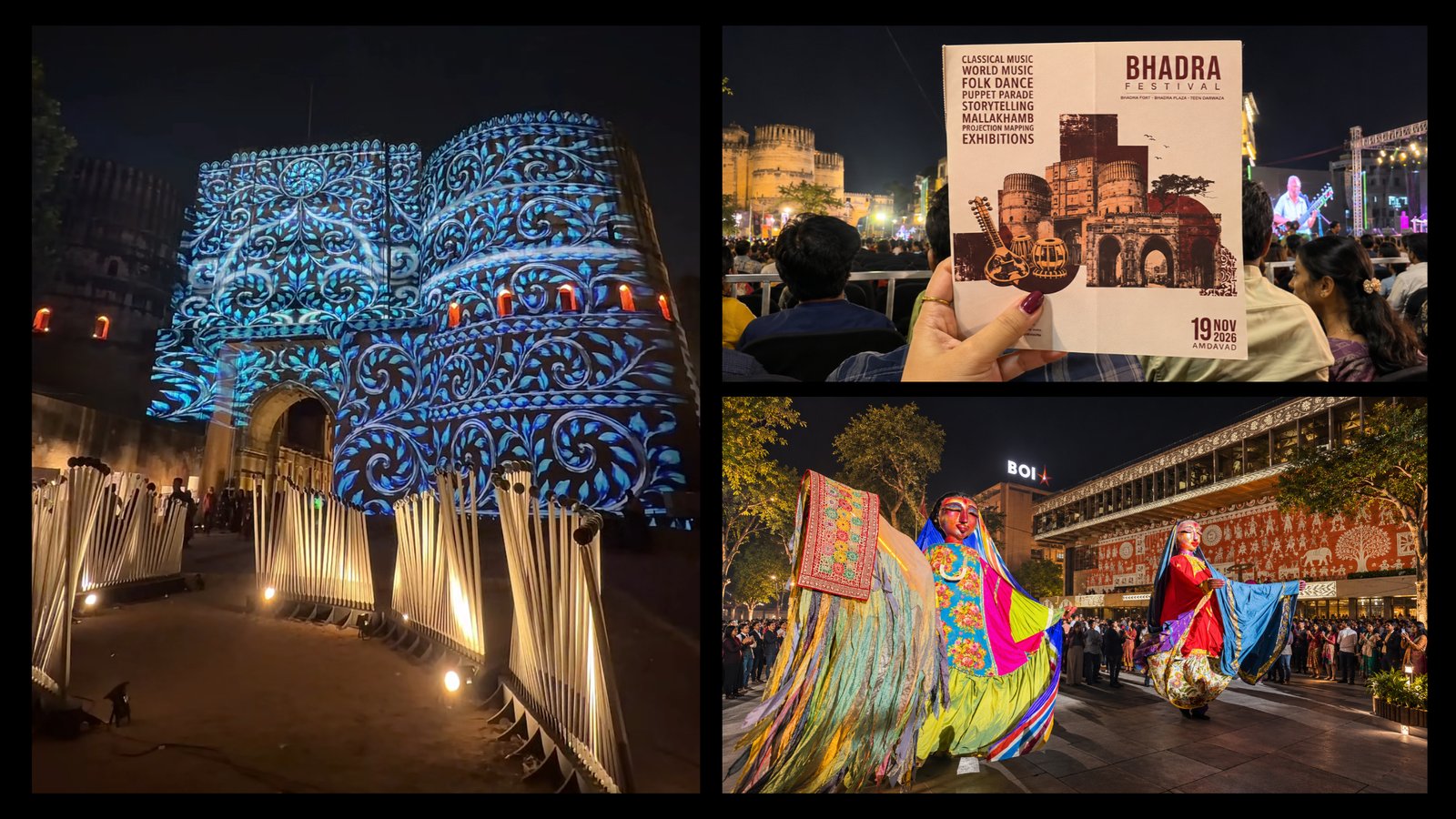
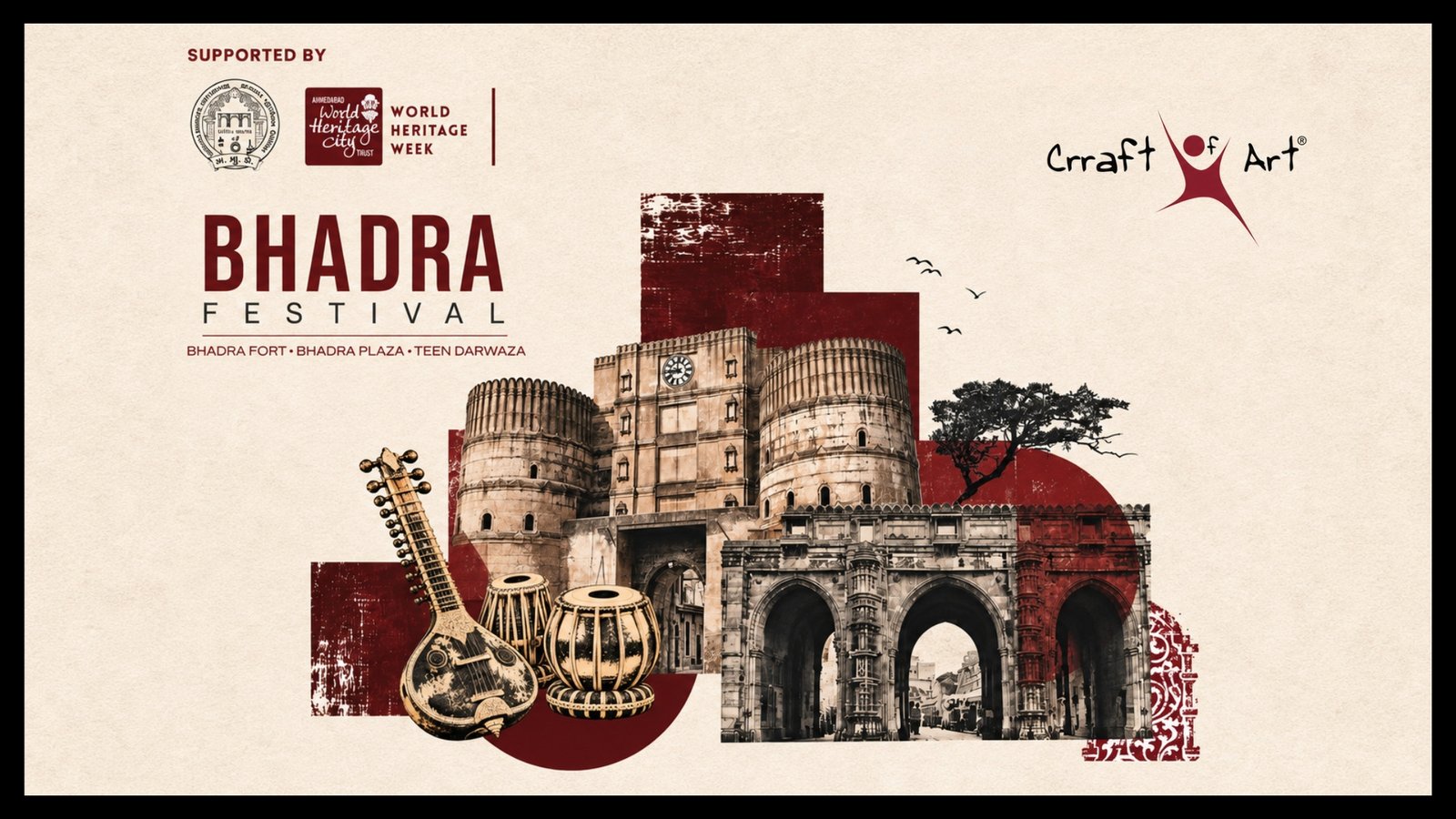
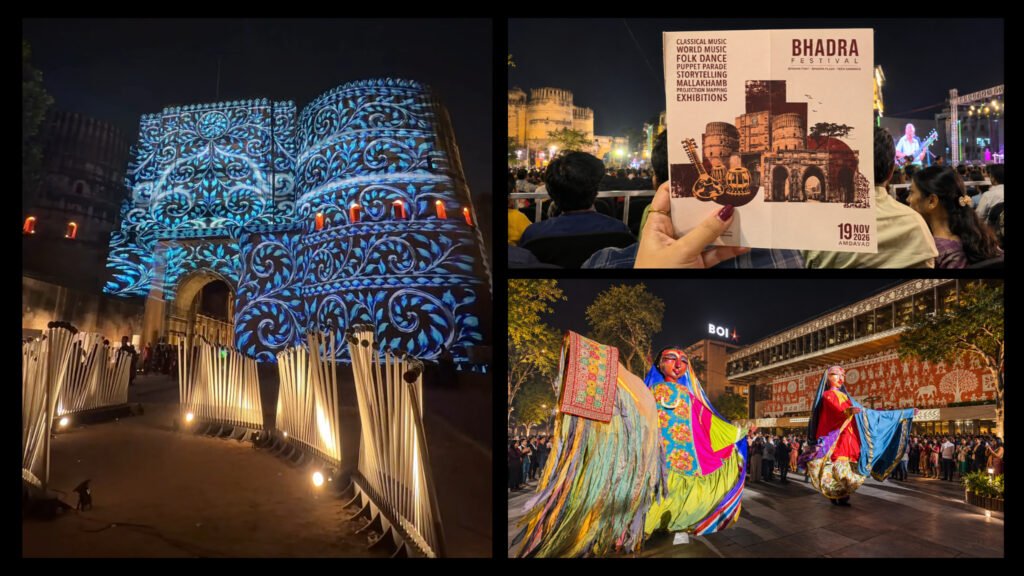
Bhadra Festival 2026 brought this legacy into focus, transforming familiar historic spaces into destinations for art, music, theatre and cultural discovery. From a giant puppet parade by Dadi Pudumjee’s Ishara Puppet Theatre and Mallakhamb to Sidi Dhamal, Gujarati storytelling, Natya Sangeet and Mata Ni Pachedi-inspired presentations, the festival brought diverse artistic traditions into the heart of the city.
Beyond the performances, the celebration opened up a larger conversation about heritage, public spaces and how residents experience their own city.
Rediscovering Ahmedabad Beyond Its Familiar Streets
Heritage destinations often become part of everyday routines without people fully engaging with their historical or cultural significance. Bhadra Festival offered an opportunity to change that relationship by opening up historic spaces and presenting them through a cultural lens.
For Sakshi Shah (Mind That Cheeese) and Anam Pathan (Foodartic) the festival offered a fresh perspective on a part of Ahmedabad she had known for years.
“we’ve passed through Bhadra, Lal Darwaza and Teen Darwaza so many times, but I never really got a chance to see what’s inside Bhadra Fort. So seeing it for the first time, filled with music, art, performances and projection mapping, was quite something. It actually made me feel more connected to my city and made me realise how much beauty Ahmedabad has to offer,” they shared.
Their experience reflects an important aspect of heritage festivals: creating opportunities for residents to engage with places beyond their conventional identities. What is usually recognised as a commercial or transit destination can also become a space for discovery and cultural appreciation.
Taking Traditional Art Forms Beyond Familiar Audiences
A significant part of Bhadra Festival’s appeal was its diverse programming. By bringing together traditional performances, regional storytelling, classical music and visual art, the festival created an environment where audiences could encounter cultural expressions beyond mainstream entertainment.
The giant puppet parade, Mata Ni Pachedi presentation at Premabhai Hall and musical performances featuring sitar and tabla added different dimensions to the experience.
For them, the distinctiveness lay not just in the art forms themselves but in how they were presented.
This highlights the importance of presentation in keeping traditional art relevant. When heritage is experienced through engaging formats and thoughtfully curated spaces, it can attract audiences who may not ordinarily seek out such performances.
Creating Cultural Connections Across Generations
Cultural participation also depends on creating spaces where different generations can share experiences. One of the encouraging aspects of the festival was the presence of younger visitors alongside audiences with an established appreciation for classical music and traditional art.
They observed this diversity as one of the highlights of her visit.
“There were so many people from my age group, but also people who were genuinely interested in classical music and traditional art forms. I loved seeing that mix. It’s quite nice to see different generations coming together and enjoying something rooted in our culture.”
Such encounters demonstrate how cultural platforms can introduce audiences to artists and traditions they may not have discovered otherwise.
Giving Historic Landmarks a New Identity
Perhaps the festival’s most interesting contribution was the way it reimagined familiar locations. Lal Darwaza and Teen Darwaza, traditionally associated with crowded marketplaces and commercial activity, became part of a larger cultural experience.
For them, this shift challenged the way she had always perceived these spaces.
“we’ve seen these markets full of rush, chaos and street shopping all my life. I never imagined the same spaces could look and feel so different.”
The transformation points towards the potential of heritage-led initiatives. Historic landmarks can become more than preserved structures; they can serve as active platforms for artistic expression, public participation and community engagement.
Keeping Ahmedabad’s Cultural Identity Alive
A city’s heritage lives through its people, artists, traditional practices and shared experiences as much as its monuments. Bhadra Festival 2026 demonstrated how cultural programming can bring these elements together, creating renewed interest in historic destinations while making traditions accessible to contemporary audiences.
For Ahmedabad, a UNESCO World Heritage City, initiatives that connect architectural heritage with living cultural traditions hold particular significance.
The larger opportunity lies in making heritage an active part of urban life rather than something people encounter only on special occasions. By bringing art, history and communities together, such initiatives can strengthen a city’s cultural identity and create meaningful connections between its past and present.
Because preserving a city’s heritage is not just about protecting what has been built. It is also about keeping alive the stories, traditions and experiences that give it meaning.
Gujpreneur continues to spotlight the people, initiatives and cultural movements shaping Gujarat, bringing forward stories at the intersection of Business, Culture and Community.