From KBC to Netflix, how Gowardhan Ghee’s planned product placement evolved into an unexpected lesson in organic marketing and brand visibility.
Brands invest heavily in advertising to stay memorable. But sometimes, the strongest publicity emerges from conversations they never planned. The recent Gowardhan Ghee and Saif Ali Khan incident offers an interesting example. What began as a planned brand integration on Kaun Banega Crorepati (KBC) travelled across social media and eventually resurfaced on Netflix, turning an everyday household product into an unexpected pop-culture reference.
The interesting part? Saif wasn’t publicly announced as Gowardhan’s brand ambassador. Yet his reaction generated attention beyond the original sponsorship.
How Gowardhan Ghee’s KBC Moment Went Viral
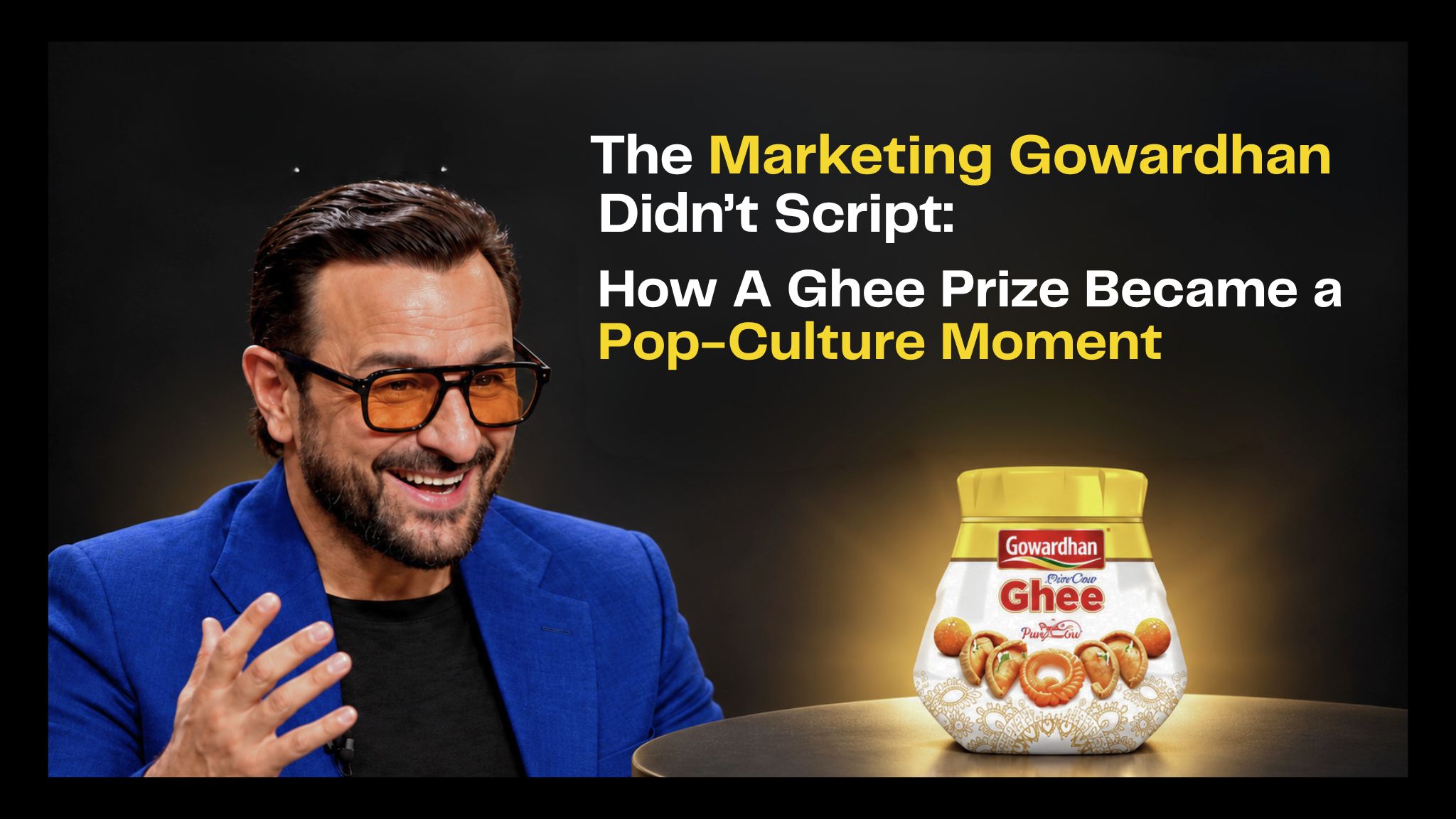
During a KBC episode featuring Saif Ali Khan and Akshay Kumar, Amitabh Bachchan announced an unusual reward: a two-year supply of Gowardhan Ghee.
Saif’s enthusiastic response, “This is it; this is why I came,” instantly transformed an ordinary prize announcement into an entertaining moment.
The internet picked it up. Clips circulated, memes followed, and Saif’s excitement over ghee became a recurring joke.
Gowardhan, owned by Parag Milk Foods, already had an established KBC partnership, offering its products as contestant rewards. While the product placement was deliberate, Saif’s reaction gave the brand something beyond planned television visibility: an association audiences voluntarily shared.
From KBC to Netflix: How the Brand Conversation Continued
The incident gained another dimension when Saif joined Instagram. Among the comments welcoming him were humorous references to his viral KBC moment. The conversation eventually resurfaced on Netflix’s The Great Indian Kapil Show, where Kapil Sharma read out one such comment during Saif and Kareena Kapoor Khan’s appearance.
Saif added another twist, joking that he still hadn’t received his promised ghee.
A product originally featured on KBC had now entered Instagram conversations and reached another major entertainment platform.
Interestingly, there is no publicly confirmed direct endorsement agreement between Saif Ali Khan and Gowardhan Ghee, nor verified evidence of a separate paid collaboration behind the Netflix exchange.
Gowardhan Ghee’s Marketing Strategy: Paid Visibility Meets Earned Media
Traditional advertising allows brands to control their messaging, placement and presentation. However, what audiences choose to remember and share is considerably harder to influence. Gowardhan’s KBC integration was planned. The subsequent conversations extended its visibility beyond the original placement.
The audience wasn’t necessarily discussing Gowardhan because it wanted to discuss ghee. It was discussing an entertaining celebrity moment in which the product played a central role. This is where paid visibility evolved into earned attention. Even when subsequent jokes referenced only ghee rather than Gowardhan by name, the original incident provided the context connecting audiences back to the brand.
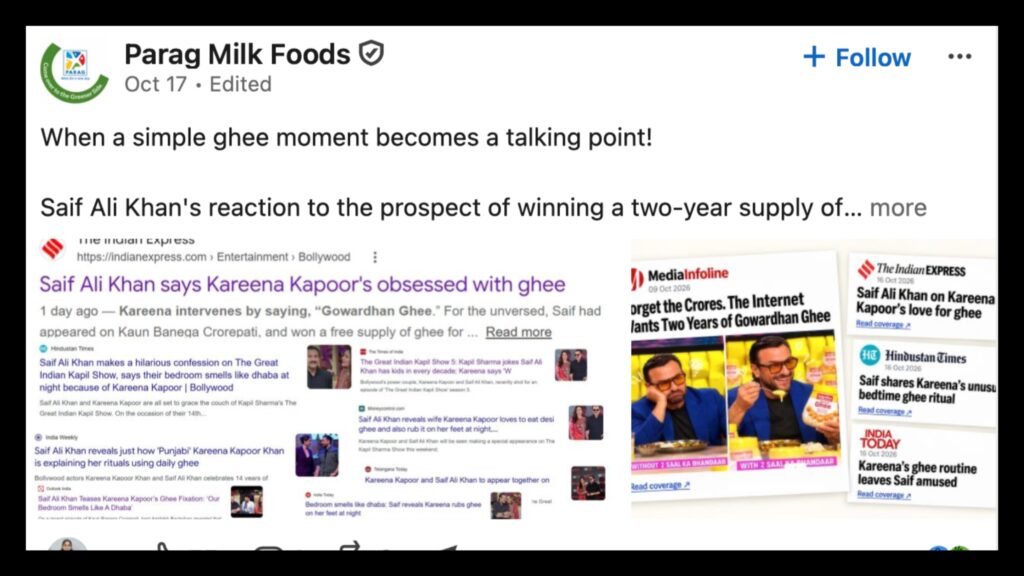
Parag Milk Foods subsequently acknowledged the media buzz through its official LinkedIn presence, recognising the unexpected publicity.
What Can Brands Learn from Gowardhan’s Viral Marketing Moment?
Celebrity marketing traditionally involves brands paying public figures to communicate predetermined messages. Gowardhan’s experience demonstrates another possibility: a brand can benefit from celebrity association without commissioning every subsequent mention.
For FMCG brands, particularly those selling everyday household products, this case highlights how cultural relevance can emerge through context rather than product reinvention.
While the incident generated considerable attention, its direct impact on sales or measurable brand growth remains publicly unverified.
Nevertheless, its marketing significance extends beyond immediate commercial results.
Beyond the Advertisement: The Bigger Business Lesson
Gowardhan’s KBC partnership created the opportunity. Saif’s reaction made it memorable. Audiences sustained the conversation, and Netflix gave it another stage.
For today’s brands and marketers, the takeaway goes beyond celebrity endorsements or viral trends. Strategic product placement creates visibility, but relevance, audience engagement and timely participation can extend its impact beyond the original investment. The key is to recognise organic opportunities, build on conversations audiences genuinely enjoy and understand that not every memorable brand moment needs to be scripted.
As Gujpreneur explores the evolving world of business and branding, this incident reinforces a valuable lesson: Brands can invest in being seen, but being remembered depends on the conversations they inspire.