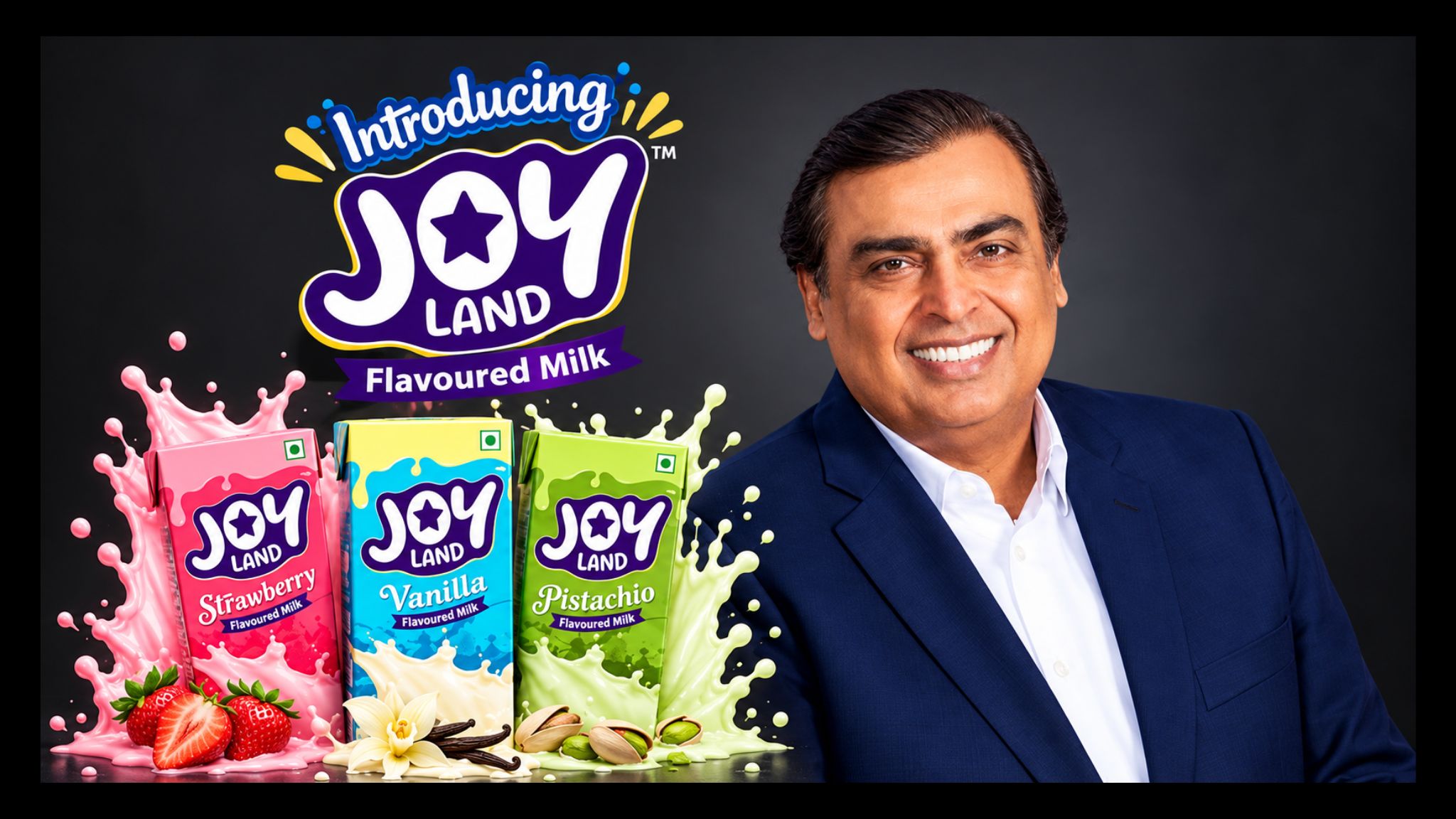
Reliance Consumer Products Limited has entered India’s flavoured milk market with Joyland at ₹20. But the bigger business story lies in its pricing, choice of launch market and ambition to build a wide consumer brand portfolio.
When a company as large as Reliance enters an established market, the interesting question is not simply what it is selling, It is why the category fits larger business ambitions.
On October 14, 2026, Reliance Consumer Products Limited (RCPL) the FMCG arm of Reliance Industries, launched Joyland, a ready to drink flavoured milk brand, in Tamil Nadu. Priced at ₹20, the product initially comes in strawberry and vanilla flavours, with additional flavours and a phased nationwide expansion planned.
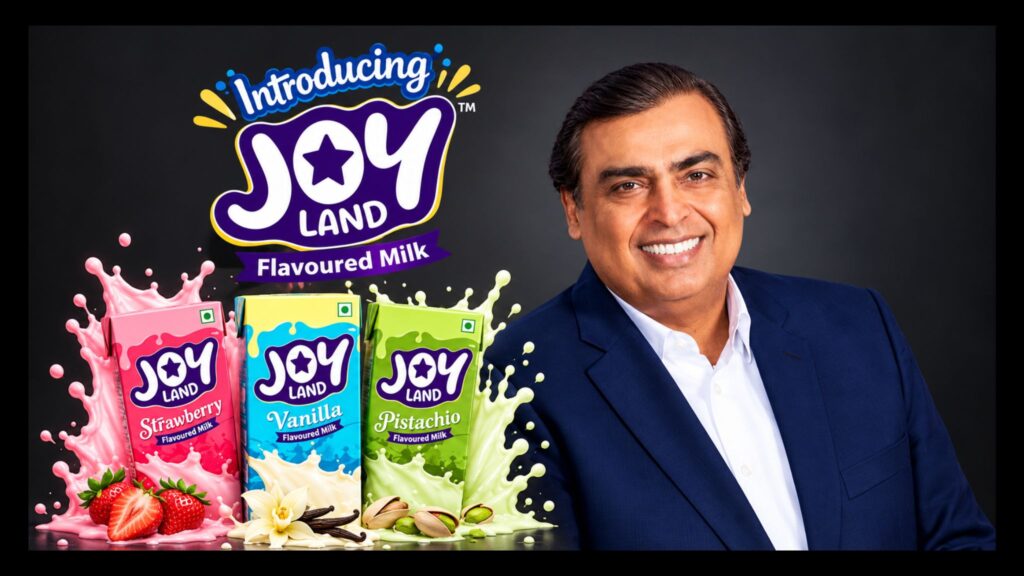
At first glance it is another beverage launch, but it offers four important business lessons.
1. Why Enter a Market Where Strong Brands Already Exist?
India’s flavoured milk segment already has established players, including Amul and Mother Dairy. So why enter a competitive category instead of creating something entirely new?
The answer may lie in portfolio expansion.
Reliance has already entered the carbonated soft drink market through Campa. Joyland extends its beverage portfolio into diary-based drinks, allowing the company to participate in another category of everyday consumption. The opportunity is to reach consumers on different occasions rather than depend on a single beverage category.
This approach is consistent with RCPL’s wider strategy of building a diversified FMCG business across multiple consumer categories. Its FY2025-2026 annual report describes ambition to expand organically, supported by distribution, product innovation and strategic acquisitions.
The Business Lessons: Growth does not always require inventing new category. Sometimes, it means identifying an existing category where your business has the capabilities to compete.
2. What Does the ₹20 Price Point Tell Us?
Price is not merely a number on a package. It can influence whether consumers try a product, how frequently they buy it and whether they consider it good value.
Joyland’s ₹20 price positions it at an accessible spending level. This could encourage trial among consumers who want a convenient, flavoured dairy beverage without making a large purchase commitment. But affordability alone cannot build a successful brand.
Consumers will still compare taste, pack size, ingredients, quality and competing products. Reliance must also account for manufacturing, packaging, distribution and retailer margins. Its broader business strategy offers useful context. RCPL’s annual report highlights cost efficiencies, supply chain development and wide distribution as important parts of its consumer products model.
The strategic opportunity therefore, is not simply to sell cheaply, it is to make an affordable product commercially sustainable while reaching enough consumers.
The Business Lesson: Before choosing a price, understand your customer, your costs and the value you offer. A low price attracts attention; a sustainable business model keeps the company running.
3. Why Did Reliance Launch Joyland in Tamil Nadu First?
This is perhaps the most interesting question behind the launch. Reliance has confirmed that Tamil Nadu marks the beginning of Joyland’s journey, followed by a phased expansion across India. However, the company has not publicly disclosed the specific factors behind selecting Tamil Nadu first.
There are several strategic possibilities worth examining.
- An established competitive landscape: Tamil Nadu already has a strong dairy ecosystem, including regional players and flavoured milk brands such as Cavin’s. Entering this market puts Joyland in front of existing competitors and consumers who are familiar with dairy-based products. It also means Reliance must work harder to earn shelf space and consumer preference.
- Distribution readiness: A company’s ability to manufacture a product is different from its ability to get it into stores consistently. RCPL says Joyland is supported by its distribution infrastructure and retail reach. Existing operational capabilities may help facilitate a regional launch, although the company has not confirmed that this determined its choice of Tamil Nadu.
- A phased expansion strategy: Introducing a product in one market before expanding nationally creates an opportunity to observe consumer response, identify operational challenges and refine execution. This is a plausible benefit of a phased rollout, not a confirmed explanation of Reliance’s internal decision-making.
For an FMCG business, launching everywhere at once can require substantial investment in distribution, inventory and marketing. Expanding in stages can help manage that complexity
The business lesson: Before entering a new market, evaluate demand, competition, distribution and your ability to serve customers consistently. The best launch market is not necessarily the largest one; it is one where your business can establish the right conditions for growth.
4. Is Reliance Building More Than a Beverage Brand?
Joyland’s launch announcement also points towards a broader ambition. RCPL has stated that it plans to introduce additional flavours and expand into multiple dairy beverage categories. That means the company’s stated ambition extends beyond the initial product.
This creates the possibility of developing a broader dairy beverage portfolio over time.
For businesses, this distinction matters. A single product can open the door to a category, but a portfolio can create more opportunities to serve the same customer.
However, expansion must follow consumer demand. Adding products without establishing demand for the original offering can increase operational complexity rather than strengthen the business.
The business lesson: Build a product that customers want before expanding the portfolio. Growth should follow evidence of demand, not replace it.
What Entrepreneurs Can Learn From Joyland
Reliance’s entry into flavoured milk offers a useful reminder for aspiring entrepreneurs: business growth is rarely about one decision alone.
Pricing, market selection, distribution and product expansion must work together.
A product priced attractively but unavailable in local stores will struggle. A widely distributed product that fails to meet consumer expectations will struggle too. And a promising launch does not guarantee repeat purchases.
Joyland’s real test will be whether Reliance can turn its existing capabilities into consumer preference in a market with established competitors.
For entrepreneurs, the takeaway is simple: do not just ask what product you should launch. Ask who will buy it, why they will choose it, where they will find it and what will make them return. Because launching a business creates an opportunity. Building a repeat customer creates a business.
Explore more business insights, founder stories, and strategic perspectives with Gujpreneur — where we look beyond the headlines to understand the dhandho behind every decision.