Some brands become part of Indian life so deeply that people stop noticing them. Ranjit has always been one of those brands. For years, it quietly existed inside wardrobes, shop shelves, family shopping lists, and local clothing stores across the country. Fathers trusted it. Shopkeepers recommended it without hesitation. Customers rarely questioned its quality because the relationship with the brand already felt inherited.
But somewhere inside all that trust, one image froze permanently in public memory: the baniyan. And maybe that’s the strange thing about legacy brands. People remember them strongly for one thing, even after the business itself has evolved far beyond it. Because while consumers still associated Ranjit with vests, the brand had already expanded into a much larger world of briefs, trunks, boxers, premium innerwear, activewear, and complete top-to-bottom essentials designed for changing lifestyles and younger consumers.
The products had moved ahead. Public perception stayed behind. That gap eventually became the starting point of Janhit Mein Ranjit, a campaign conceptualised by Ahmedabad-based creative agency Zero Gravity Communications (ZGC) featuring Ayushmann Khurrana.
And honestly, the brilliance of the campaign came from how human the insight felt. At Gujpreneur, while covering Business Stories, Entrepreneurship Stories In India, and the evolving face of Business In Gujarat, campaigns like these stand out because they solve emotional consumer behaviour before solving marketing.
How ZGC Understood Ranjit’s Real Business Problem?
The challenge was never visibility. Ranjit already carried decades of trust. The challenge was memory. Consumers instantly recognised the brand, but only through one category. That’s a very different branding problem. Many legacy brands react to this by trying to suddenly look younger, louder, trendier, or overly digital. But audiences disconnect quickly when familiarity disappears completely.
ZGC approached the campaign differently. Instead of replacing Ranjit’s identity, the agency expanded it. And that emotional understanding changed the entire communication.
The campaign did not try to tell people: “You were wrong about Ranjit.”
It simply told people: “There’s more to Ranjit now.” That distinction made the campaign feel effortless.
The Campaign Idea Came From Indian Pop Culture Itself
Some advertising ideas work because they are visually strong. Some work because they instantly belong to the public language. Janhit Mein Ranjit did exactly that.
The phrase “Janhit Mein Jaari” already exists deeply inside Indian culture. Generations have grown up hearing it repeatedly on Television notices, public announcements, government messaging, ZGC transformed that familiarity into: “Janhit Mein Ranjit.”
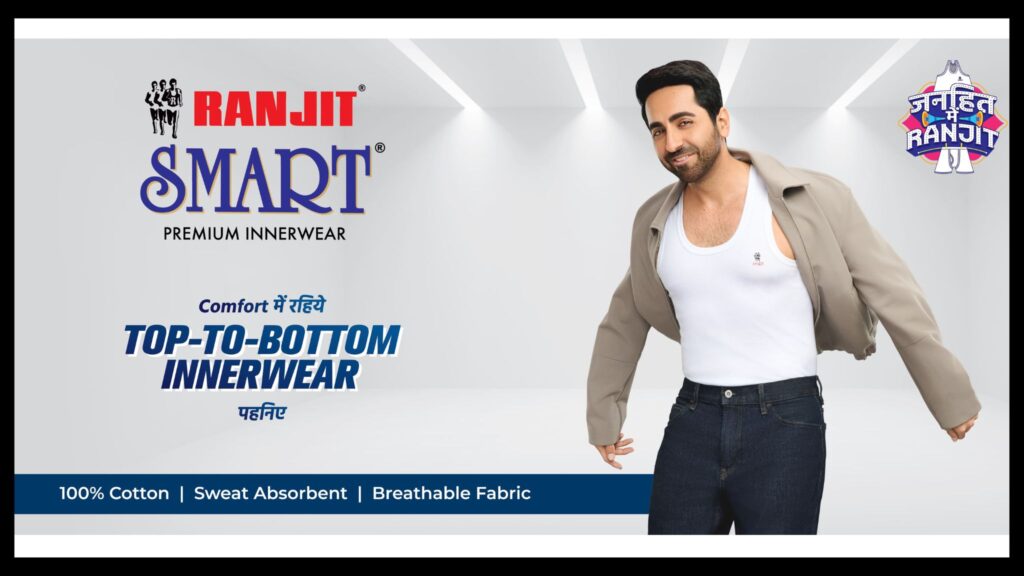
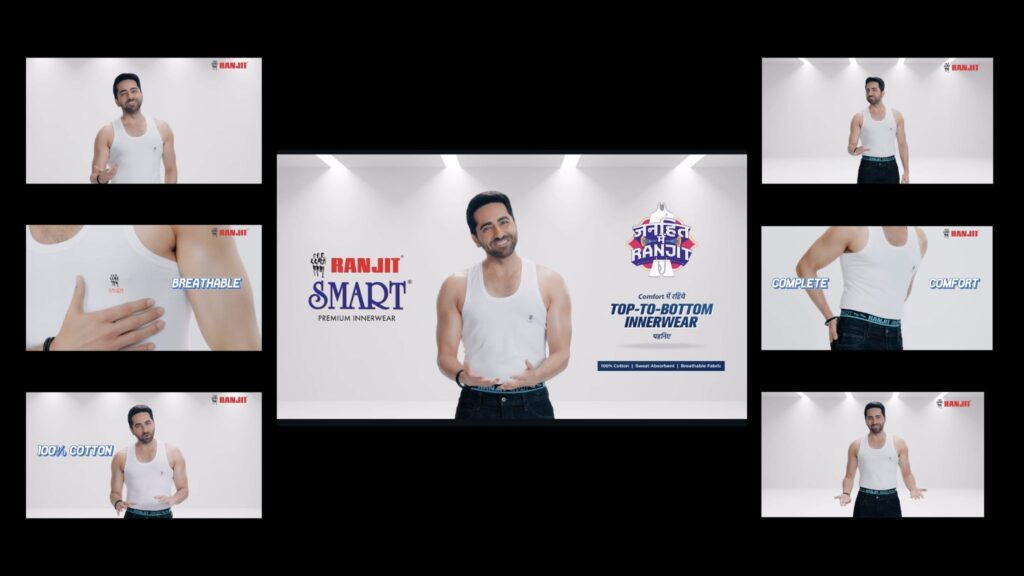
The line immediately felt recognisable, humorous, and conversational. And underneath that humour sat one very strategic communication objective: position Ranjit as a complete top-to-bottom innerwear brand. That eventually shaped the campaign’s core communication: “Comfort mein rahiye. Top-to-Bottom Innerwear pehniye.”
Simple language. Mass recall. No complicated storytelling. Exactly the kind of communication Indian audiences feel connected to and remember for long!
Why Ayushmann Khurrana Became The Right Face?
Ayushmann Khurrana’s association with Ranjit already existed before this campaign, but Janhit Mein Ranjit gave that partnership stronger narrative direction. Because Ayushmann carries a very specific kind of relatability. He feels familiar across generations. Younger audiences enjoy him. Older audiences trust him. His humour feels grounded. His screen presence feels accessible instead of distant. That energy perfectly matched the campaign.
Inside the film, Ayushmann directly addresses the exact perception gap the brand wanted to solve, people know Ranjit for baniyans, but still don’t realise the brand offers complete bottomwear too. The communication never sounds preachy. It sounds observational. Almost like somebody gently updating a story India has been telling itself for years. And maybe that’s why the campaign travelled so naturally.
How The Campaign Expanded Across Gujarat?
Once launched, Janhit Mein Ranjit quickly moved beyond digital films. The campaign expanded through:
- theatre advertising,
- social media,
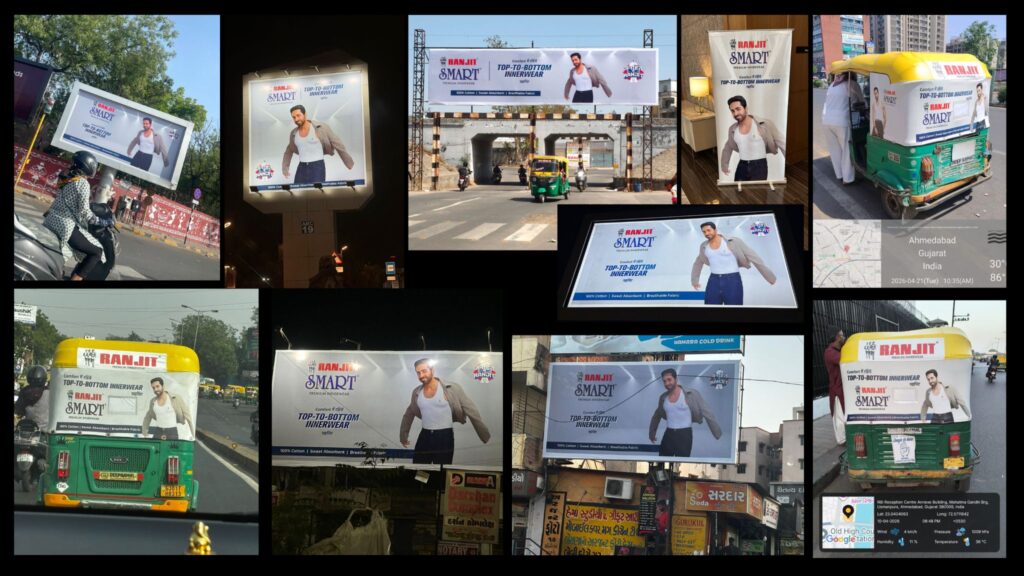
- outdoor hoardings,
- auto branding,
- retail visibility,
- and offline campaigns across Gujarat and Rajasthan.
Ahmedabad roads started carrying giant visuals of Ayushmann Khurrana alongside the new “Top-to-Bottom Innerwear” communication. Consumers encountered the campaign repeatedly while driving through everyday spaces.
And visually, the campaign remained extremely clean throughout. White backgrounds, Minimal clutter, Strong typography, One memorable line. That restraint worked beautifully because the communication already had one strong cultural hook driving the recall.
What This Campaign Says About Modern Entrepreneurship?
One of the biggest lessons from Janhit Mein Ranjit goes beyond advertising itself. For entrepreneurs, startups, and young businesses learning how to start a business today, the campaign highlights something important:
People don’t always remember businesses the way businesses see themselves.
Sometimes consumers reduce brands into one category, one memory, one old perception. And growth often begins by reshaping that perception carefully. That’s exactly what ZGC achieved here.
The agency didn’t rebuild Ranjit from scratch. It reopened the conversation around it. And in today’s attention economy, that’s powerful branding. Because modern consumers connect fastest with brands that feel culturally aware, emotionally familiar, and easy to remember.
Conclusion
The most interesting part about Janhit Mein Ranjit is that it never tried too hard. The humour felt natural. The communication felt familiar. The message stayed simple. And somewhere inside that simplicity, a legacy Indian brand quietly started entering younger conversations again.
For years, India heard “Ranjit” and instantly pictured a baniyan hanging inside local stores. Today, one culturally sharp campaign by Zero Gravity Communications, the same brand is slowly being seen differently as a complete innerwear label built for modern consumers while still carrying the trust of generations behind it. And honestly, that’s what strong branding really does.
It doesn’t erase memory. It expands it.
Keep visiting Gujpreneur for more such creative insights on marketing your brand publicly.