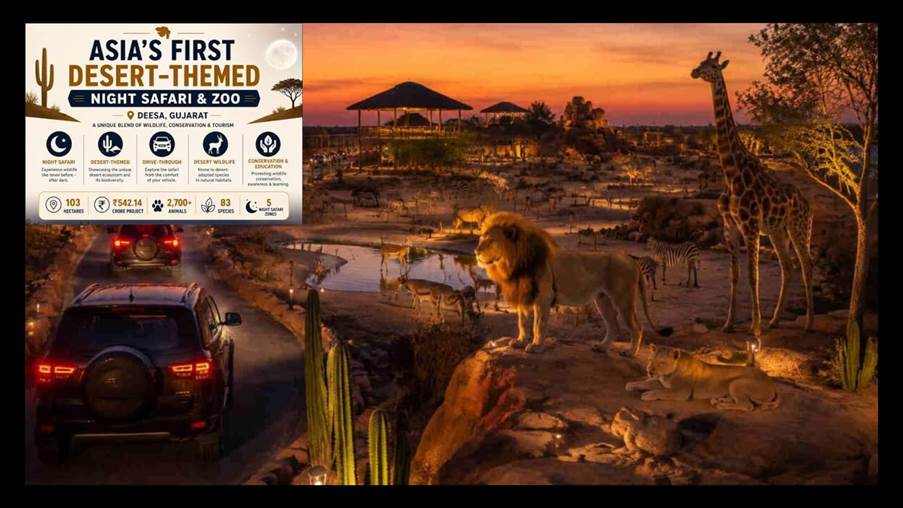
A ₹542-crore project is coming to Deesa. Gujarat Forest Department’s Rs 542.14-crore project will span 103 hectares of government land at Juna Deesa.
Forest and Environment Minister Arjun Modhwadia said the project had been designed in accordance with CZA guidelines and had now received the authority’s approval.
“The proposed Desert Zoological Park and Night Safari is being developed over about 103 hectares of government land at Juna Deesa. The project has been prepared in accordance with Central Zoo Authority guidelines and has an estimated cost of Rs 542.14 crore. It has now received approval from the Central Zoo Authority,” Modhwadia said.
But the bigger question is…
The bigger question is not how many animals the visitors will see. The real question is: How many businesses, jobs, visitors and new opportunities can it create around them?
The Gujarat Forest Department’s proposed Desert Zoological Park and Night Safari at Juna Deesa. And it has received approval from the Central Zoo Authority. The plan is spread across approximately 103 hectares of government land. The project is planned to be Asia’s first desert-themed drive-through night safari and zoological park.
Around 2700 animals and birds representing nearly 83 species are expected to be housed in the park. This includes: Daytime zoo, 5 dedicated night-safari insertions and other facilities. Conservation, rescue, rehabilitation, breeding and environmental education being the central objectives. Now that sounds like a wildlife project.
Economically, however, it could become something much bigger.
Tourism can become the first economic engine.
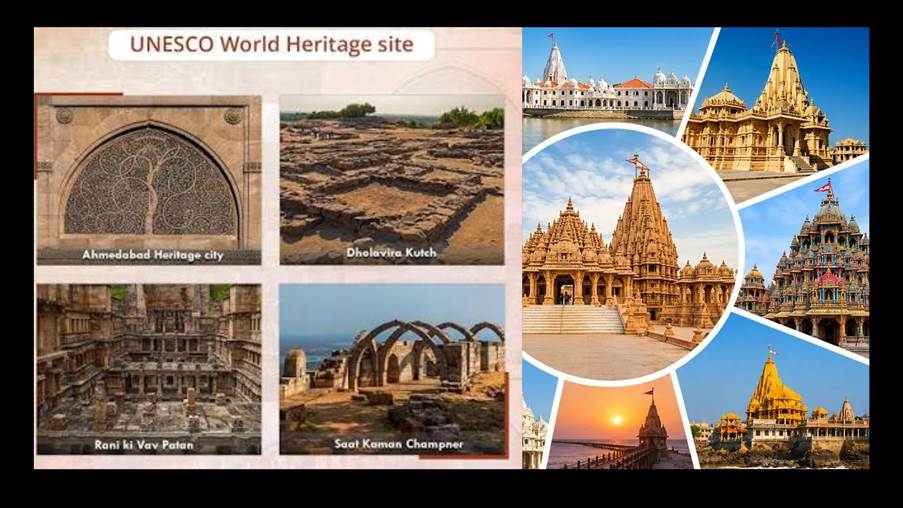
Gujarat has a very strong tourism empire: Kutch, the Statue of Unity, Gir, Dwarka, Somnath, Ahmedabad (World Heritage City). North Gujarat has the religiously followed Ambaji temple and several heritage-rich sites too. However, Deesa itself has not been positioned as a tourism hub. A distinctive night safari can change that equation.
Unlike a conventional zoo, a drive-through night safari creates an experience that can potentially attract families, school groups, wildlife enthusiasts, tourists and visitors travelling through North Gujarat. But tourism spending rarely stops at the ticket counter. A visitor who comes to Deesa may need transport, food, accommodation, fuel, shopping and other services. That creates what economists call a multiplier effect.
One tourism attraction can generate demand across several connected industries. And this is where Deesa’s opportunity becomes interesting.
Hotel room as important as the safari ticket
Suppose a family travels from Ahmedabad or Rajasthan to experience the safari. They may need a restaurant, a stay overnight, hire a local vehicle, or purchase local products. They may visit another attraction nearby. That means the economic beneficiaries do not have to be only the organisation operating the park. Other beneficiaries can be Restaurants, cafes, hotels, travel agencies, local vendors, taxi operators, fuel pumps, etc. They can all become part of tourism ecosystem. Places including Deesa, Palanpur and Ambaji have been listed by the Banaskantha district administration as accommodation options. The opportunity now is to build enough capacity and quality around Deesa so that visitors stay longer rather than simply pass through. That distinction matters.
A visitor for an hour and one who stays for one or two nights both contribute differently to the local economy.
Connectivity could make the project even more powerful.
The project’s timing in particular is significant because Deesa is simultaneously becoming more connected. The six-lane Tharad-Deesa-Mehsana-Ahmedabad National High-Speed Corridor (214km long) has an approved cost of ₹10,534 crore. It is designed to connect the Delhi-Mumbai Expressway and the Amritsar-Jamnagar corridor. Freight and passenger connectivity will also be improved by the same. The government estimates it will reduce the Tharad-Ahmedabad travel time by 60%, and distance by 20%.
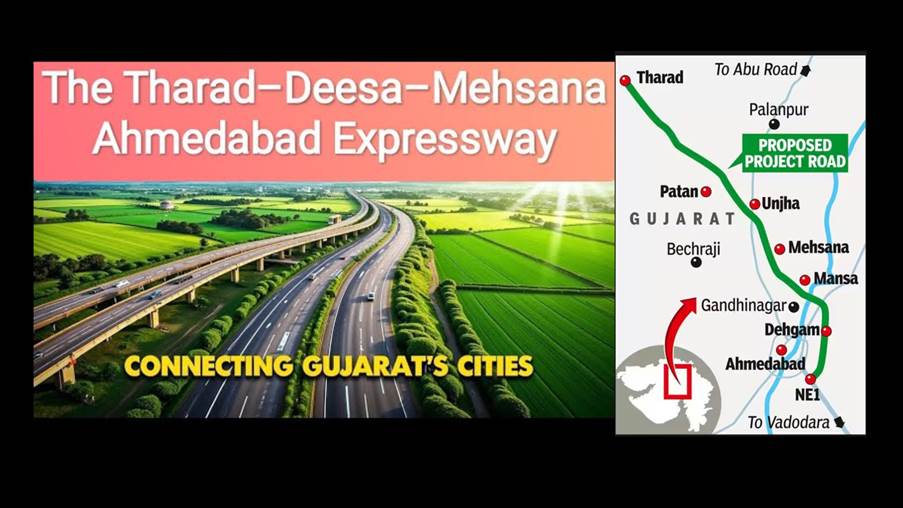
That changes the economic equation.
- Tourism needs visitors.
- Visitors need accessibility.
- And accessibility needs roads, railways and aviation.
Expanded Deesa Airbase is located roughly 130 km from the international border. In March 2026, the Prime Minister highlighted its strategic and developmental significance. This means Deesa is also gaining importance from an aviation perspective. Deesa could evolve from a place people travel through, into a place people deliberately travel to. If tourism development, road connectivity and aviation infrastructure progress together.
The biggest opportunity for local entrepreneurs
Large infrastructure projects often get measured in crores. But their long-term impact should also be measured in new businesses created around them. Imagine a local entrepreneur starting a desert-themed café. Another developing guided wildlife tours. Someone creating local handicrafts or souvenirs. A young photographer offering wildlife photography experiences. A transport operator building safari-linked packages. Hotels developing weekend packages for Ahmedabad and Rajasthan visitors. Schools organising educational wildlife trips. Startups creating digital tourism experiences. That is how infrastructure becomes entrepreneurship.
The government builds the physical attraction. The private sector builds the ecosystem around it.
Deesa could also become a gateway to North Gujarat
This may be the most interesting possibility.
The night safari does not have to function as an isolated attraction. It can become one component of a larger North Gujarat tourism circuit. A visitor could potentially combine Deesa with destinations such as Ambaji and other attractions across Banaskantha and the wider region. Projects such as the Taranga Hill-Ambaji-Abu Road railway line and road improvements have been highlighted by the Government. It will improve connectivity to tourism and pilgrimage destinations in which Gujarat has already invested.
The strategy, therefore, would not simply be:
“Come to Deesa for the zoo.”
It would become:
“Come to North Gujarat for the experience.”
That is a much bigger economic proposition.
Will infrastructure alone guarantee development?
The conversation needs some realism here. The project will need supporting infrastructure. A ₹542-crore investment doesn’t automatically convert into ₹542 crore of economic benefit for residents.
Infrastructure such as:
- Better hospitality.
- Reliable public transport.
- Clean streets and public spaces.
- Quality restaurants.
- Tourist information.
- Local guides.
- Digital booking systems.
- Safety and emergency services.
- Skilled manpower.
And, importantly, a mechanism to ensure local businesses actually participate in the tourism economy.
There is also an environmental responsibility.
The project is explicitly being designed around a desert ecosystem and has received Central Zoo Authority approval. The stated objectives are rehabilitation, conservation, rescue, breeding and environmental education. Without compromising on the very ecosystem it claims to celebrate, tourism should monetise the experience of nature. The central objective being conservation.
So, will the night safari boost Deesa’s economy?
Potentially, yes—but the safari itself is only the starting point. The ₹542.14-crore project will create tourism demand and increase direct employment. The bigger impact can come through new businesses and employment opportunities in hospitality, transportation, food, retail, tourism and services.
Impact can be amplified by improved connectivity. And a well-planned North Gujarat tourism circuit can amplify it further.
The real economic success of the project should therefore not be measured only by the number of animals, visitors or tickets sold.
It should be measured by questions such as:
How many local jobs were created, and how many new businesses were opened? tourists stayed for how long?
How much did visitors spend locally?
How many local entrepreneurs became part of the tourism ecosystem?
And perhaps the most important question:
Did Deesa become a destination—or did it merely get another attraction?
Because a zoo can bring visitors. But an ecosystem of tourism, infrastructure and entrepreneurship can build an economy. And that is where Deesa’s real opportunity lies.
For more such insightful pieces on Gujarat’s businesses, people, stories, ideas, opportunities and more, stay with Gujpreneur! There’s always another good read waiting for you.