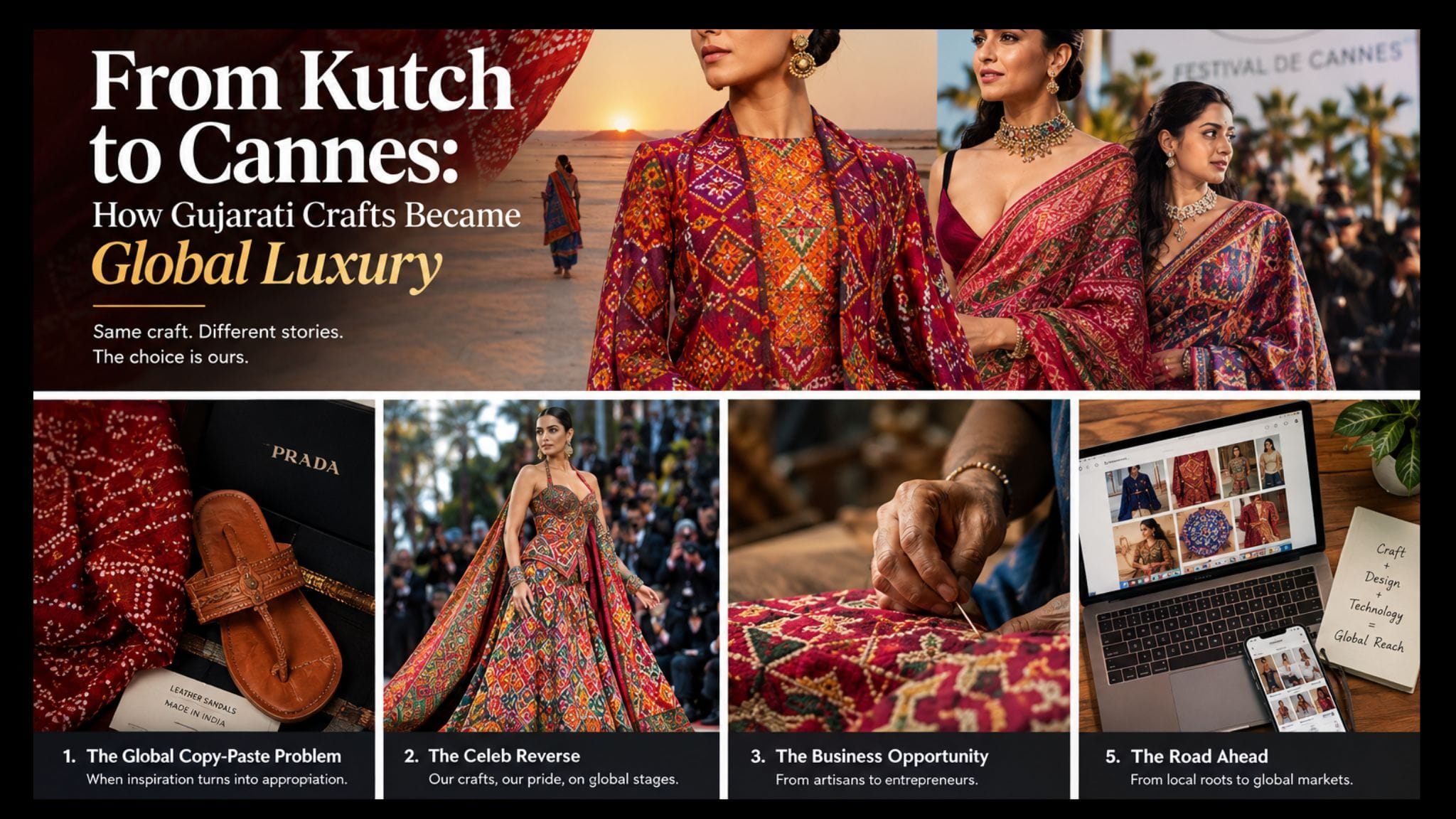
For decades, Gujarati crafts were seen as heritage. Today, they are becoming fashion statements.
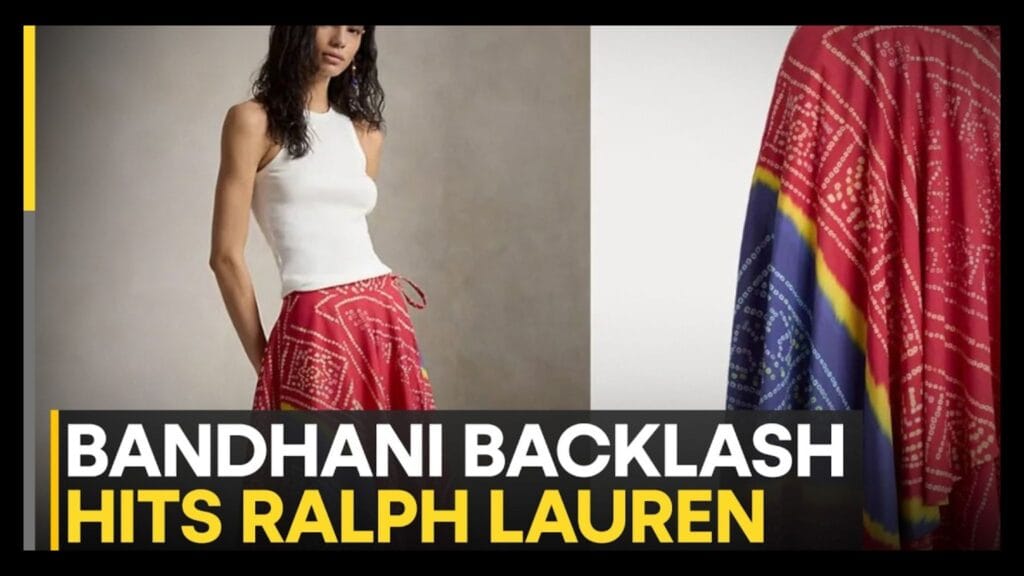
In April 2026, Ralph Lauren found itself at the centre of an online debate. The American luxury label listed a ₹44,800 cotton wrap skirt featuring a Bandhani-inspired pattern. The product was called a “Print Cotton Wrap Skirt” rather than being identified with Bandhani or its Indian roots. The controversy became larger because it followed criticism over the brand’s use of South Asian jhumka-inspired jewellery.
Then came the other side of the story.
At Cannes, Mouni Roy wore a Patola-inspired gown celebrating Gujarat’s textile heritage. She said the dress involved 300 hours of embroidery by artisans.
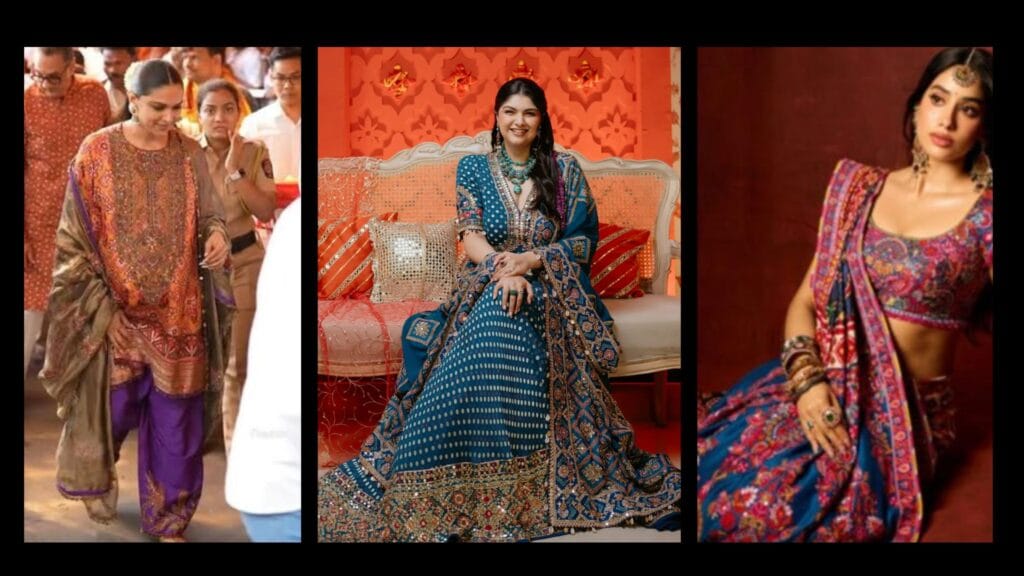
Deepika Padukone and Janhvi Kapoor, around the same time, brought Patola into contemporary wardrobes. For her Mehendi, Anshula Kapoor also wore a Patola-inspired lehenga.
Suddenly, a textile once associated mainly with traditional occasions was becoming aspirational couture. That contrast raises a much bigger question.
When the world wants our craft, who gets to own its story?
The Global Copy-Paste Problem
Fashion has always travelled across borders. Designers borrow silhouettes, colours, techniques and cultural references. Inspiration itself is not necessarily the problem.
The difficult conversation begins when the source disappears.
The Ralph Lauren Bandhani controversy is one example. The product recreated the visual language of tie-dye associated with Indian craft, yet its product description did not identify the tradition. That gap between the original craft and its commercial presentation became the centre of the backlash.
Prada faced a similar controversy in 2025.

Its Spring/Summer 2026 menswear collection featured leather sandals closely resembling traditional Kolhapuri chappals. The initial show notes described them simply as “leather sandals”. After criticism, Prada acknowledged their connection to traditional Indian handcrafted footwear.
The apology didn’t end the story here!
Prada launched a Made in India limited-edition collection in 2026, it was inspired by Kolhapuri footwear. This moved the conversation from inspiration to collaboration and production. This was because the project involved Indian artisan organisations.
That is an important distinction for the fashion industry.
Borrowing can create visibility. Collaboration can create value.
The difference often lies in attribution, participation and economics.
Who made it?
Where did the technique come from?
Who gets paid?
Who gets recognised?
And, perhaps most importantly, who gets to build a business around it?
From Heritage Saree to Contemporary Couture
This is where the Gujarat story becomes more exciting.
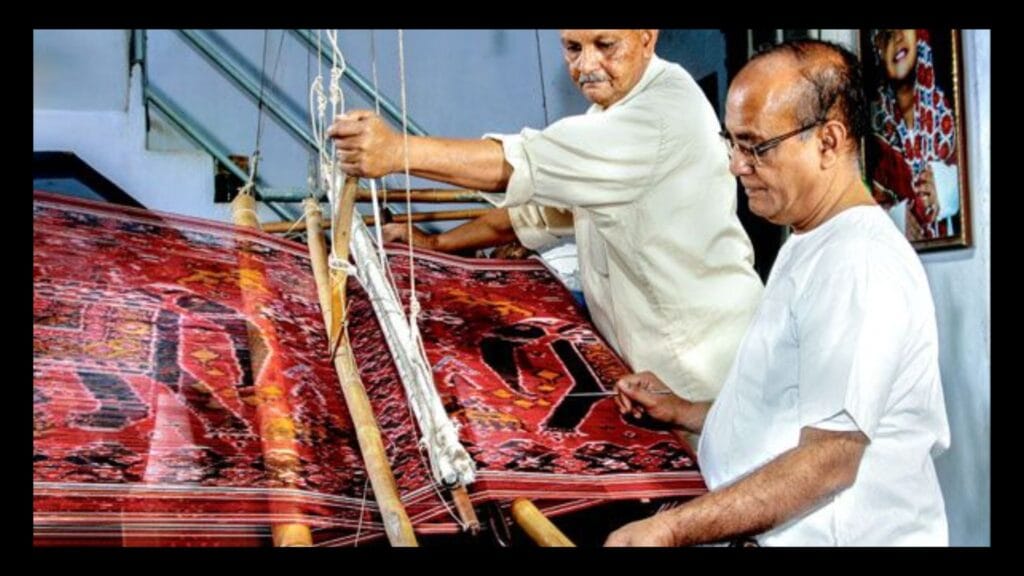
Patola is no longer appearing only as a saree reserved for weddings or traditional celebrations. Designers and celebrities are experimenting with the weave through kurtas, gowns, lehengas and contemporary silhouettes.
Deepika Padukone recently wore an orange-and-purple Patola kurta set. Janhvi Kapoor has also been part of the recent Patola fashion conversation. Anshula Kapoor’s mehendi outfit took the idea further, using a Patola-inspired design in a contemporary lehenga.
Then came Cannes.
Mouni Roy publicly highlighted the Gujarati craft and the artisans who worked behind it. Her Patola-inspired dress got Gujarat’s textile heritage global red-carpet recognition.
This matters because celebrities do more than create fashion moments. They change perception.
A textile can move from “traditional” to “desirable” when people see it in a new context.
A younger consumer may not buy a Patola saree because it represents heritage. They may buy a contemporary Patola jacket because it represents individuality.
That is how culture enters the market.
And Gujarat has plenty of culture waiting to enter it.
The Business Opportunity Is Bigger Than Fashion
For Gujarat’s entrepreneurs, this conversation should not end with outrage over foreign brands.
It should begin with opportunity.
The first opportunity is artisan-to-entrepreneur.
Traditional craftsmanship does not have to remain limited to an artisan producing for a middleman. It can become the foundation of a brand, design studio, export business or luxury collaboration.
The second opportunity is craft plus contemporary design.
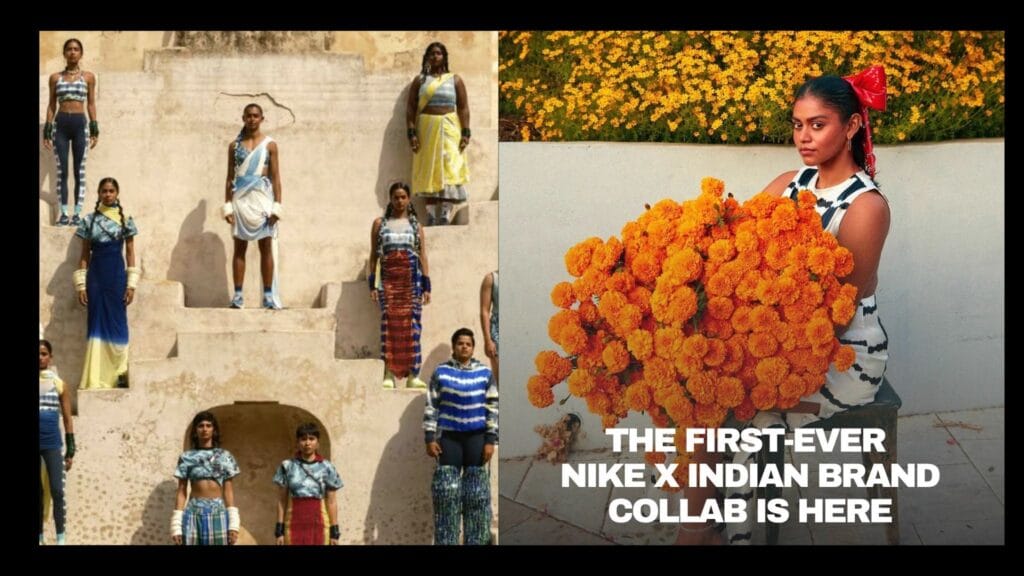
Nike’s collaboration with Indian label NorBlack NorWhite is a useful example. The 2025 collection used the visual language of Bandhani across sportswear and footwear. Nike said the collection was designed to bring Indian craftsmanship to a global audience, with the collection made available internationally.
So, what we learnt here?
Simple! A craft doesn’t have to stay frozen in its original form to stay authentic or relevant.
Bandhani can become sportswear.
Patola can become couture.
Kutch embroidery can become interiors.
Traditional motifs can become accessories.
Craft can become design.
And design can become business.
GI Tag Is a Business Asset Too
There is another important layer. Gujarat’s craft traditions are not merely cultural references. Several have formal geographical recognition. Kutch Bandhani of Gujarat received GI registration in 2024. Jamnagari Bandhani has been registered since 2016, while Patan Patola has been registered since 2013.
A Geographical Indication connects a product with its geographical origin and protects the recognised name and characteristics associated with that origin. But entrepreneurs need to understand what this means. A GI tag is not a magic shield against every form of imitation. It is an economic and legal tool that can help protect reputation, authenticity and geographical identity.
The bigger opportunity is using that identity commercially.
If a customer knows that a product is genuinely connected to its place, process and community, the story itself becomes part of the value.
That is where Gujarat can move from selling products to selling provenance.
The Instagram-to-Global Model
The internet has changed the equation for artisans. Earlier, an artisan could create something exceptional and still depend on a local trader to reach customers. Today, a well-positioned Instagram page can reach a customer in London.
A good website can sell to New York.
A designer collaboration can put a village technique into a global fashion collection.
A small reel or video can explain a 500-year-old method to millions of people out there in the world.
The challenge is no longer only production. It is branding, storytelling, packaging, digital distribution and customer experience.
In other words, it is entrepreneurship.
That is where Gujarat’s traditional business instinct can meet modern technology.
Gujarat Doesn’t Need to Hide Its Heritage
The global fashion industry will continue looking towards India.
The question is what happens when it does.
Do we complain every time a global brand discovers an Indian craft?
Or do we build brands that make the original craft impossible to ignore?
Do we wait for international luxury houses to validate Gujarati textiles?
Or do Gujarati entrepreneurs create luxury brands of their own?
Do we sell a Bandhani dupatta?
Or do we build a global Bandhani label?
The difference is not the craft. It is the business model around it. Gujarat does not need global validation for its heritage. But global fashion can create a much bigger market for Gujarat’s heritage. The opportunity is to ensure the artisan is not left behind as that market grows. Because the future of Gujarati craft may not simply be about preserving what our grandparents made. It could be about building what the next generation can sell to the world.
The question is no longer only, “Will they copy us?”
The bigger question is, “Will we own the narrative — and the business?”
Some stories give you answers. The interesting ones leave you with better questions. For more such stories, keep exploring with Gujpreneur.